


More news on this day
Europe’s budget airlines, long credited with turning spontaneous city breaks and ultra cheap cross-border commutes into a way of life, are facing a new financial headwind as tougher European Union climate rules increase the cost of flying and raise fresh doubts over how long rock bottom fares can last.
Get the latest news straight to your inbox!
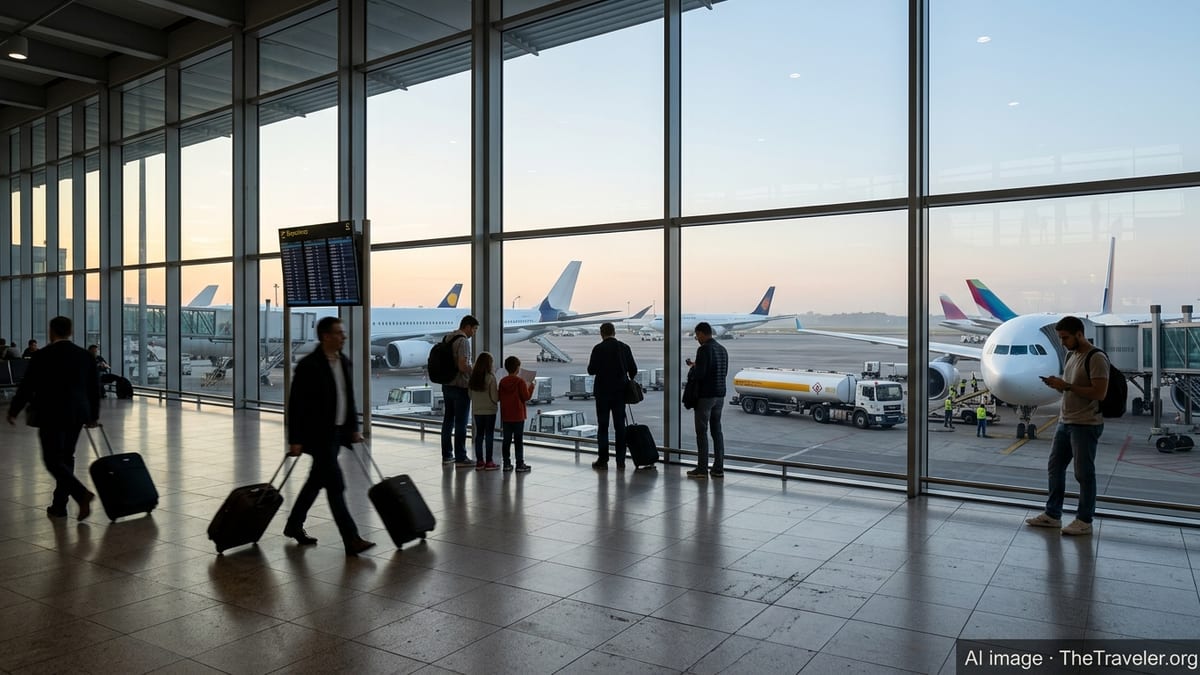
Aviation in the Crosshairs of EU Climate Policy
The European Union has made aviation a central test case for its wider climate strategy, using carbon markets, fuel mandates and prospective tax changes to reduce emissions from short haul flying. Aviation has been covered by the EU Emissions Trading System since 2012, but recent reforms are tightening the screws on airlines by phasing out free allowances and expanding monitoring of climate impacts from flights within the European Economic Area.
Publicly available information from the European Commission indicates that airlines operating flights within Europe must now buy a growing share of carbon allowances on the open market as free allocations are reduced. Aviation is often cited as one of the fastest growing sources of greenhouse gases in transport, and policymakers argue that ticket prices should begin to reflect this climate cost more fully rather than relying on implicit subsidies.
For low cost carriers that built their business on filling planes with highly price sensitive passengers, the direction of travel is clear. Analysts expect operating costs on intra European routes to rise steadily as the carbon price remains elevated and free allowances vanish, challenging the economics of fares that can dip below the price of a train ticket or even an airport coffee.
Research on carbon regulation in the European airline industry suggests that higher effective carbon prices reduce airline profits and can push weaker players out of marginal routes, even as the overall social value of avoided emissions increases. That sets up a political and commercial clash between climate goals and the continent’s appetite for inexpensive mobility.
ReFuelEU Aviation and Costly Green Fuel Mandates
Alongside carbon pricing, the EU’s ReFuelEU Aviation regulation, which entered into application in January 2025, is emerging as a major cost driver. The rules oblige fuel suppliers to blend a minimum share of sustainable aviation fuel, or SAF, into jet fuel at EU airports, starting at 2 percent in 2025 and ramping up progressively towards mid century according to data from the European Union Aviation Safety Agency.
SAF currently represents a tiny fraction of global jet fuel supply and is significantly more expensive than conventional kerosene. Briefing material from European aviation bodies suggests that market prices for SAF can be several times those of standard jet fuel, although support mechanisms using EU ETS allowances are designed to absorb part of the gap. Even with support, industry groups warn that compliance fees and surcharges linked to SAF uptake are already feeding into higher fuel bills for carriers based in Europe.
Low cost airlines are particularly exposed because fuel accounts for a large share of their cost base. Their point to point networks, high aircraft utilisation and focus on short haul leisure and migrant traffic have historically allowed them to offer headline fares that undercut legacy rivals. As SAF quotas ramp up over the next decade, the competitive edge that came from lean operations may be eroded by an externally imposed fuel cost that no carrier can avoid.
European agencies have argued that the impact on average ticket prices should remain modest compared with past swings in oil prices. However, the early experience of ReFuelEU described in industry briefs and technical reports is that some fuel suppliers are charging airlines compliance fees that exceed the underlying SAF premium, creating additional friction and uncertainty for operators trying to plan capacity and pricing.
Budget Airlines Sound Alarm Over Ticket Prices
Ryanair, easyJet and Wizz Air, which between them carry hundreds of millions of passengers a year across Europe, have repeatedly highlighted environmental levies and airport fees as headwinds in recent financial updates and public statements. Low cost carriers already rank among the largest individual buyers of emissions allowances in the EU system because of the sheer scale of their operations and their focus on short haul sectors where there are few practical alternatives to flying.
Company presentations and investor briefings show that carbon costs, including EU ETS expenses, have become a visible line item in budget airline accounts, rising over the past few years as free allocations shrink. While some carriers hedge part of their exposure, the trend is for more of the carbon bill to be passed through to passengers in the form of higher base fares and ancillary charges.
Frequent flyers across Europe are already reporting fewer ultra cheap deals on popular routes, particularly during peak summer months, as airlines prioritise yield over absolute volume. Online fare comparisons increasingly show low cost tickets starting at levels that would have been considered mid market only a few years ago, especially once luggage, seat selection and other add ons are included.
Budget airlines argue that they have been responsible for much of the sector’s efficiency gains by operating young, fuel efficient fleets and squeezing more seats onto aircraft. They contend that climate policies which significantly raise per passenger costs risk undermining the very business models that have delivered high load factors and comparatively low emissions per kilometre, while leaving premium long haul flying and private aviation less affected.
Will Europe’s Beloved Cheap Flights Disappear?
The question for travellers is whether Europe’s era of astonishingly cheap city hops, with fares under 20 euros on some routes, is drawing to a close. Economists point out that demand for leisure air travel is extremely sensitive to price, particularly among young and lower income passengers, meaning even modest increases in average fares can dampen growth or push some trips back to overnight buses and trains.
European Commission climate briefings acknowledge that higher carbon and fuel costs are likely to appear in ticket prices but suggest that the increases will remain manageable for most passengers. However, academic work on aviation pricing notes that cost increases from environmental policies can have regressive effects, as wealthier travellers are better able to absorb higher fares or shift to more expensive carriers, while budget conscious passengers may simply travel less.
In practice, the impact is expected to be uneven. Popular trunk routes linking major cities may continue to see aggressive competition and promotional deals, while marginal seasonal or regional routes that rely heavily on price sensitive demand could thin out. Airlines may redeploy capacity towards markets where environmental charges are lower or where they can sustain higher yields, affecting connectivity for secondary airports that have relied on low cost carriers for international links.
Some travel industry observers believe that cheap flights will not disappear entirely but will become less ubiquitous, with more restrictions on dates, baggage and flexibility. Rock bottom fares could survive as marketing tools and for off peak travel, while average prices trend higher as the true cost of carbon and cleaner fuels is gradually internalised across the network.
A Policy Balancing Act Between Climate and Connectivity
The emerging debate over EU aviation carbon pricing is increasingly framed as a balance between the bloc’s climate ambitions and its commitment to affordable mobility and regional cohesion. Policymakers face pressure both from environmental groups that argue current measures do not go far enough, and from airlines and tourism interests warning of damage to jobs and connectivity if flying becomes a luxury.
Future decisions will be critical. The EU is due to review the effectiveness of its aviation measures, including the scope of the Emissions Trading System and the progress of ReFuelEU Aviation, later this decade. That assessment could consider whether to extend carbon pricing more fully to long haul flights, introduce or harmonise fuel taxation, or support rail as a substitute for short haul air routes where viable alternatives exist.
For now, the trajectory points toward a steady rise in the structural cost of flying within Europe. Budget carriers are likely to keep experimenting with new revenue streams, sharper capacity management and potential consolidation to defend their low fare promise. Travellers, in turn, may need to adjust expectations forged in an era when a cross continent weekend break could cost less than a night out, as carbon pricing reshapes what “cheap flight” means in a climate constrained Europe.