


More news on this day
Sri Lanka is positioning its remote northern islands as a showcase for low-carbon tourism, harnessing new hybrid renewable energy projects to turn Delft, Nainativu and Analaitivu into model "green travel" destinations.
Get the latest news straight to your inbox!
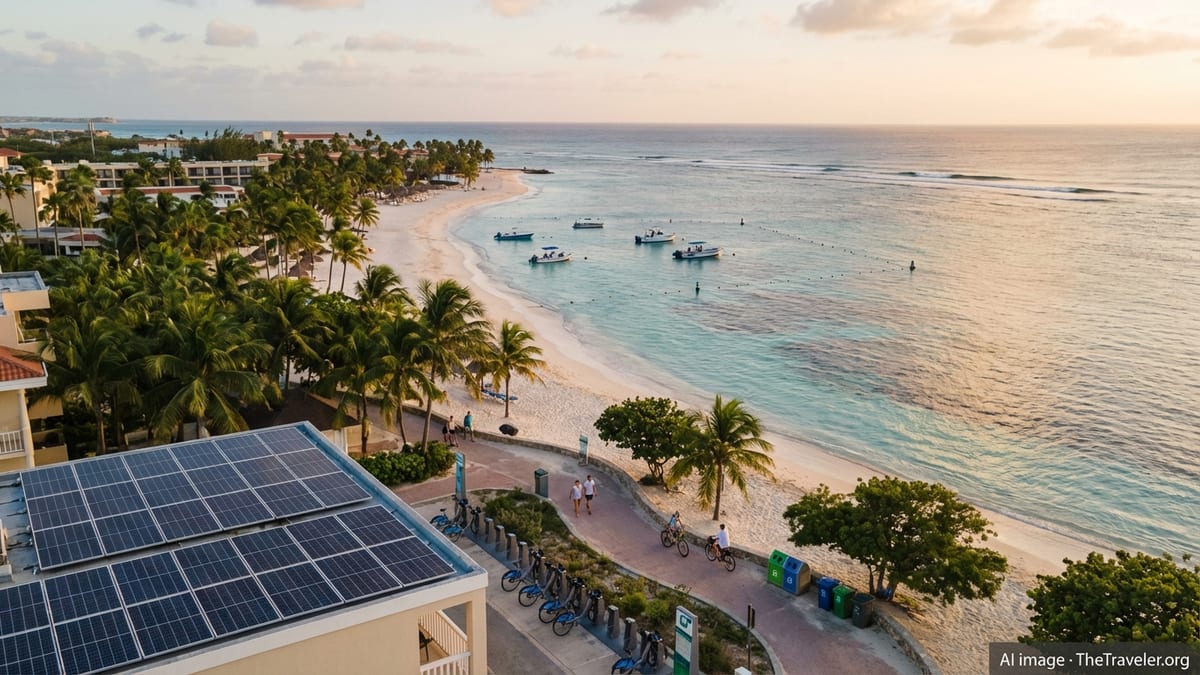
Hybrid Energy Projects Power a New Tourism Vision
Recent infrastructure developments in Sri Lanka’s far north are reshaping the tourism map, with a cluster of islands off the Jaffna Peninsula earmarked as a future green travel hub. Publicly available information from national media and energy sector documents indicates that Delft, Nainativu and Analaitivu are central to a program titled "Construction of Hybrid Renewable Energy Systems in Small Islands," financed in large part through an Indian grant estimated at around 11 million US dollars.
The initiative is designed to replace aging, diesel-based generation with integrated systems that combine solar, wind and battery storage. Progress reports linked to the Ministry of Energy outline sizeable new capacity on each island, including several hundred kilowatts of photovoltaic generation, complementary wind power and utility-scale battery banks. The goal is to secure 24-hour, low-emission electricity for communities that have historically depended on limited, costly power.
Coverage in Sri Lankan outlets over June 2026 highlights that uninterrupted supply is expected to reach households and businesses in the coming months, a step seen as critical for broadening tourism beyond day trips. Reliable, clean energy is viewed by planners as the foundation for sustainable guesthouses, small hotels, restaurants and ferry-linked experiences that can operate without a heavy fossil fuel footprint.
The new systems also align with Sri Lanka’s wider policy commitments, including recent reforms to the electricity sector and updated climate pledges that emphasize renewables, energy efficiency and low-carbon tourism. Observers in the sustainable tourism field note that these islands provide a compact testing ground for how decarbonized infrastructure can support regenerative travel models in developing destinations.
From War Frontier to Emerging Eco-Island Circuit
The northern province, once a conflict zone largely closed to international visitors, has been steadily reopening to tourism over the past decade. Academic studies on post-war tourism in Jaffna describe a shift from security-focused restrictions to renewed interest in culture, heritage and coastal landscapes. The islands now at the center of the energy transition are among the most distinctive of these settings.
Delft Island, also known locally as Neduntheevu, has long attracted a trickle of adventurous travelers with its wild horses, colonial-era ruins and coral-strewn coastline. Nainativu, an important pilgrimage site for both Buddhist and Hindu communities, draws domestic visitors to its temples and shrines, while Analaitivu retains a quieter, village-based character. Together they form a compact archipelago accessible by ferry from the Jaffna Peninsula, offering a mix of religious heritage, fishing culture and birdlife.
Jaffna town itself has been experiencing what local tourism coverage describes as a modest but notable boom, marked by new hotel openings and improved road and rail links from Colombo. Industry reports indicate that as visitor numbers grow, there is increasing interest in extending itineraries to offshore islands for day excursions and overnight stays. The green energy transition is expected to make such side-trips easier to market as climate-conscious, low-impact experiences.
With Sri Lanka’s overall tourism receipts recovering strongly since 2023, the inclusion of the northern islands in national marketing materials signals a strategy to spread benefits beyond traditional southern and central circuits. Tourism planners argue that a diversified map, built around both culture and conservation, can increase resilience in the face of future shocks.
Aligning Climate Goals With Community-Based Tourism
The transformation of the northern islands is also being framed within Sri Lanka’s broader climate and development strategy. The country’s recent submissions under global climate agreements highlight renewable energy, green jobs and sustainable tourism as linked priorities. Policy papers emphasize that islanded microgrids and hybrid systems can reduce greenhouse gas emissions while improving quality of life for peripheral communities.
Organizations working on ecotourism in Sri Lanka have long advocated for community-led models that integrate conservation, cultural preservation and local ownership of tourism revenue. The northern islands, with their small populations and constrained land area, are seen as suitable for carefully scaled ventures such as ecolodges, homestays, guided heritage walks and low-impact marine excursions rather than mass resort development.
Investment brochures from Sri Lanka’s tourism authorities reference renewable-ready infrastructure and environmental safeguards as selling points for new projects. Potential investors are encouraged to align with national sustainability guidelines, including energy-efficient construction, water conservation and responsible waste management. In this context, round-the-clock green power to Delft, Nainativu and Analaitivu is being presented as a key enabler of modern yet low-carbon tourism enterprises.
Local economic benefits are a central concern. Research on tourism in post-war Jaffna stresses the importance of involving residents in planning, skills training and enterprise development to avoid displacement and cultural erosion. The green travel push on the islands is expected to be closely watched as a test of how renewable infrastructure can underpin inclusive, community-centered tourism growth.
Access, Infrastructure and the Visitor Experience
While energy systems are at the heart of the current transformation, access and basic services will be equally important in determining whether the northern islands ignite a wider green travel boom. Existing accounts from travelers describe journeys by ferry from the Jaffna Peninsula, sometimes subject to weather delays and limited schedules. Improved reliability of electricity opens the door for better-managed ports, lighting and safety systems, as well as digital connectivity for booking and information services.
Tourism development materials highlight opportunities to link the islands with emerging experiences across the wider north, from heritage sites and lagoons on the peninsula to wildlife-rich coastal areas further west. The prospect of a coherent northern eco-route, anchored by renewable-powered micro-destinations, is being discussed in industry and policy circles as a way to differentiate Sri Lanka in a crowded regional market.
At the same time, environmental assessments carried out in the Northern Province point to the need for careful zoning and impact monitoring. Fragile marine ecosystems, limited freshwater resources and coastal erosion are among the risks identified by planners. Limiting visitor numbers during peak seasons, reinforcing waste regulations and engaging local communities in stewardship initiatives are being cited as practical tools to keep island tourism within ecological limits.
As the hybrid systems near completion and 24-hour power becomes a reality, the coming seasons will reveal how quickly operators, communities and travelers respond. If managed with a clear sustainability focus, Sri Lanka’s northern islands could emerge as a compact laboratory for climate-aligned tourism, offering a glimpse of how small destinations can grow visitor economies while reducing their environmental footprint.