


More news on this day
The European Commission is moving toward new legislation and financing tools designed to help triple high-speed rail traffic by 2050, as Brussels translates long-standing climate and mobility targets into binding rules for member states and rail operators.
Get the latest news straight to your inbox!
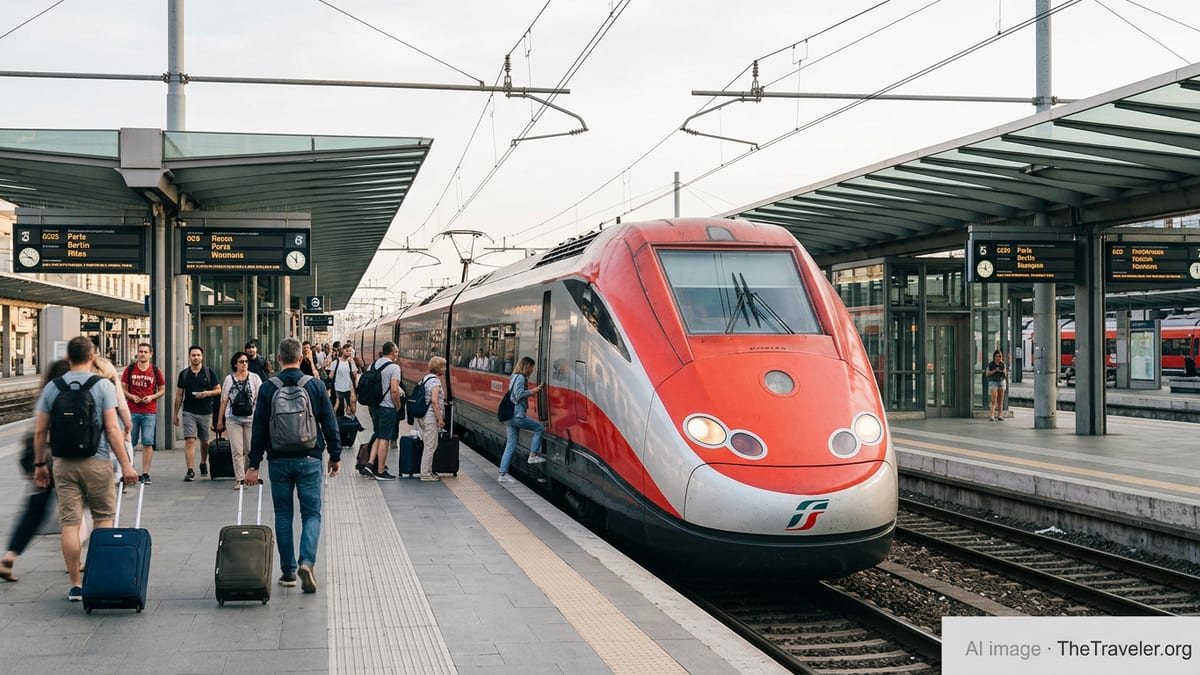
From strategy targets to binding law
The objective to double high-speed rail traffic by 2030 and triple it by 2050 was first set out in the European Commission’s Sustainable and Smart Mobility Strategy in 2020, positioning fast rail as a central pillar of the bloc’s climate-neutrality plans for 2050. Subsequent action plans on passenger rail embedded those targets in EU transport policy, but largely as strategic milestones rather than legal requirements.
Recent Commission communications on a continent-wide high-speed rail network by 2040 indicate that this is now changing. Publicly available information shows that Brussels is working on a dedicated high-speed rail plan linked to the Trans-European Transport Network, or TEN-T, with indicative travel times on major cross-border corridors and a roadmap for removing technical and administrative barriers to long-distance rail.
Reports indicate that the Commission intends to underpin these objectives with legislation that would tighten obligations on member states to complete core and extended TEN-T high-speed links on time. This includes aligning national planning with EU-wide journey time targets, standardising technical requirements such as signalling, and reinforcing passenger-rights rules so that more travelers can shift from short-haul flights to high-speed trains.
Advisory papers prepared for the European Parliament underline the scale of the task, noting that rail currently represents only a small share of cross-border passenger transport. They argue that without binding measures on capacity management, interoperable infrastructure and open markets, the 2030 and 2050 traffic goals are unlikely to be reached.
Commissioner signals new legislative push
Against this backdrop, the European Commissioner responsible for transport has recently highlighted that legislation is in preparation to give practical effect to the ambition of tripling high-speed rail traffic. According to published coverage, the emerging package is expected to draw together infrastructure, market-access, financing and passenger-rights initiatives into a single framework for high-speed routes.
The Commission has already presented a vision for a “truly European” high-speed rail network by 2040, with journey time benchmarks such as Berlin to Copenhagen in around four hours and faster connections on routes like Lisbon to Madrid and Sofia to Athens. These targets are intended to guide investment decisions and will likely be reflected in draft laws and delegated acts governing TEN-T implementation and technical standards.
Public documents from the European Union Agency for Railways signal institutional support for this approach, describing the high-speed rail plan as timely and ambitious and stressing that greater harmonisation of rules and signalling systems is essential to unlock cross-border traffic growth. The agency has indicated it stands ready to help translate policy goals into interoperable technical specifications.
In parallel, position papers from rail infrastructure managers and industry associations urge the Commission to streamline permitting, accelerate cross-border projects and ensure that new legislation creates stable long-term conditions for private and public investment. They point to persistent bottlenecks at national borders and fragmented regulation as obstacles that the forthcoming measures will need to address.
Financing strategy and “High-Speed Rail Deal”
The legislative shift is closely connected to a broader financing debate now underway in Brussels. In June 2026, the Commission convened a strategic dialogue with investors on funding high-speed rail, signalling work on a dedicated EU High-Speed Rail Financing Strategy and a prospective “High-Speed Rail Deal” to be unveiled in 2026.
According to Commission briefing materials, the goal is to pool and better coordinate existing EU funds with national budgets and private capital, creating a coherent pipeline of projects that can be financed at scale. This could involve expanding the role of the European Investment Bank, enhancing guarantees for long-lived infrastructure assets and revising rules governing user charges on rail infrastructure to make investment more predictable.
Industry analyses also highlight the need to synchronise infrastructure spending with rolling stock procurement and digital systems such as the European Rail Traffic Management System. Without coordinated investment across these areas, capacity gains on flagship high-speed corridors could be limited, undermining the objective of shifting passengers from road and air.
Legal experts following the file note that upcoming legislation is likely to embed elements of the financing strategy by tying eligibility for EU funds to progress on harmonisation and market opening. This would give Brussels additional leverage to keep national projects aligned with the overall European network design.
What tripling high-speed traffic means for travelers
If the EU succeeds in tripling high-speed rail traffic by mid-century, the change for travelers could be significant. Commission fact sheets on the high-speed plan describe a network where most major European cities are linked by fast, frequent services, with many cross-border journeys reduced to a few hours by rail.
Such a network would make rail a more viable alternative to short- and medium-haul flights on many routes, particularly when combined with simpler ticketing and better connections to regional and local transport. Previous action plans to boost long-distance passenger rail already identified integrated booking systems, through-ticketing and clearer passenger rights as essential components of the shift.
However, analysts caution that capacity on existing lines is limited and that infrastructure upgrades can be disruptive and costly. Bringing new high-speed sections into service often requires years of planning, environmental assessment and public consultation, and the resulting benefits tend to accrue gradually as individual segments are completed and connected.
Advocacy groups working on sustainable transport argue that, if properly implemented, the Commission’s legislative and financing package could accelerate this process. They point in particular to the potential for new rules to encourage more open access services and foster competition on some cross-border high-speed routes, which could lead to lower fares and more frequent departures.
Climate and competitiveness stakes
The push to triple high-speed rail traffic is framed as both a climate measure and an economic strategy. Transport remains one of the largest sources of greenhouse gas emissions in the European Union, and existing policy documents emphasise that a substantial shift to rail is necessary if the bloc is to meet its climate-neutrality objective for 2050.
High-speed rail is presented as a comparatively low-carbon alternative to aviation for many intra-European trips, especially on routes where journey times can be brought under four to six hours. By improving connectivity between major cities and regions, the Commission expects the network to support economic growth, tourism and labor mobility while reducing reliance on imported fossil fuels.
European rail operators and manufacturers see an opportunity to strengthen the continent’s industrial base through large-scale investment in high-speed technology, from rolling stock and signalling to construction and digital services. Studies produced with industry participation suggest that a more integrated high-speed network could stimulate innovation and support tens of thousands of jobs across the value chain.
As the Commission prepares the promised legislation and financing framework, attention in the coming months is likely to focus on the balance between ambition and feasibility. The final shape of the measures, and the extent to which they secure support from member states and the rail sector, will determine whether the goal of tripling high-speed rail traffic by 2050 can move from political slogan to concrete reality.