


More news on this day
European Union lawmakers have reached a political agreement to maintain existing compensation rules for delayed flights, keeping the three-hour delay threshold and established payout levels in a move closely watched by millions of air travelers.
Get the latest news straight to your inbox!
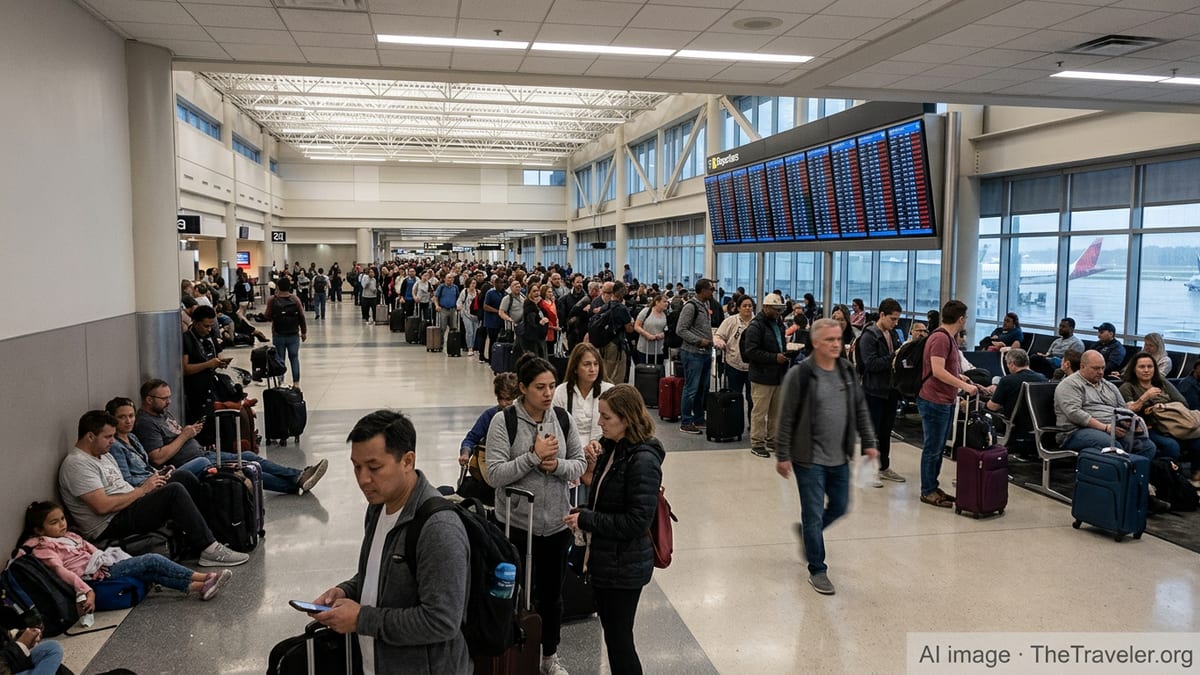
Decade-long reform talks end with status quo on payouts
The agreement, finalized in mid-June in Brussels, concludes more than ten years of negotiations over how and when airlines must compensate passengers for disruption. Initial proposals from EU governments had sought to lengthen the minimum delay before compensation is owed, arguing that current rules place a heavy financial burden on carriers in an increasingly competitive market.
Member states had previously pushed for thresholds of four to six hours depending on flight distance, alongside lower compensation bands. The European Parliament resisted those efforts, repeatedly backing a position that the three-hour rule and existing payment levels should be preserved. The latest compromise confirms that stance and effectively locks in the core features of the regime introduced in 2004 and expanded through later court rulings.
The deal still needs to complete formal steps in both the Parliament and the Council, but publicly available information indicates that no major hurdles are expected. Once the law is signed, governments and airlines will be given a transition period, expected to last around one year, to adapt systems and passenger information materials to the updated framework.
For travelers, the outcome means continuity after a lengthy period of uncertainty. Consumer groups that had warned of a possible weakening of rights are portraying the agreement as a clear signal that the bloc is not prepared to roll back established protections.
What the rules mean for passengers today
The maintained framework keeps the basic architecture familiar to frequent flyers in Europe. Passengers on eligible flights whose arrival at their final destination is delayed by three hours or more continue to have a right to standardised financial compensation, except where the disruption is caused by extraordinary circumstances such as severe weather, security incidents or air traffic control strikes.
The compensation levels, set according to flight distance, remain in the range of 250 to 600 euros per person. Shorter intra-European routes qualify for the lowest band, while longer intercontinental journeys fall into the highest. These sums apply in addition to care and assistance obligations, such as meals, refreshments and accommodation where necessary, which are governed by separate provisions.
The renewed legislation aims to clarify how and when passengers must be informed of their rights. Reports on the final text indicate that airlines will be required to provide digital notification when a delay could give rise to compensation, and to respond within defined deadlines to claims submitted by passengers. The intention is to reduce disputes and streamline a process that has often been criticised as slow and opaque.
For many travelers planning trips within or to Europe, the confirmed three-hour rule offers a concrete benchmark. It also underpins a growing ecosystem of legal-tech firms and claims agencies that help passengers pursue compensation, particularly in cases where carriers do not respond promptly or reject claims.
New measures on baggage, seating and transparency
While the three-hour compensation threshold has drawn most attention, the reform package also introduces several changes affecting everyday travel experiences. Published coverage of the negotiations indicates that passengers will be guaranteed the right to bring at least one personal item on board at no extra cost, typically a small bag or laptop case that fits under the seat in front.
However, lawmakers stopped short of enshrining a universal right to take a larger wheeled cabin suitcase for free. That issue had been a central demand from consumer advocates, who pointed to inconsistent airline policies and a landmark court judgment supporting no-fee cabin luggage. The final compromise leaves more discretion to carriers on how they price and manage overhead-bin baggage, although calls for greater price transparency are reflected in the text.
The agreement also addresses family and assisted-travel arrangements. Reports indicate that families with children and passengers requiring special assistance will have a clearer entitlement to be seated together with companions without additional charges. This is intended to curb practices in which families were separated unless they paid for seat selection, a growing source of criticism in recent years.
Alongside these provisions, lawmakers have pressed for clearer presentation of fares and extras at the time of booking. The goal is to reduce “drip pricing,” where low advertised base fares are followed by a cascade of optional fees, some of which are hard to compare across airlines.
Balancing airline costs with consumer protections
The political battle over air passenger rights has largely turned on how to share the cost of disruption between airlines and travelers. Industry representatives have long argued that the current compensation system exposes carriers to high and unpredictable liabilities, especially in an era of tight margins and volatile fuel and infrastructure costs.
Carriers also maintain that many delays stem from factors beyond their control, such as congestion in air traffic management or infrastructure bottlenecks at airports. They have warned that strict compensation rules can divert funds from fleet renewal and environmental investments, and can deter smaller or low-cost operators from opening marginal routes.
Legislators and consumer advocates counter that strong rights are necessary in a liberalised market where passengers may otherwise struggle to obtain redress. The European Union has seen traffic volumes rebound and surpass pre-pandemic levels, with more than a billion passengers a year using commercial flights within, to and from the bloc. With such volumes, even small percentages of delayed or cancelled flights translate into hundreds of thousands of affected travelers.
The final agreement reflects a compromise. While the most far-reaching industry proposals to lengthen delay thresholds were dropped, governments secured clarifications on what counts as extraordinary circumstances and on the limits of airlines’ duty to provide accommodation during extended disruptions. These details will shape how the rules are applied during events such as major storms or large-scale air traffic control failures.
What travelers should watch for next
Although the core delay-compensation regime remains unchanged, the coming months are likely to bring practical adjustments that travelers will notice. Airlines and online travel platforms are expected to update booking flows, notifications and claim forms to reflect the new information requirements and time limits.
Passengers are likely to see clearer pre-filled forms for compensation and reimbursement claims, as envisaged in earlier legislative drafts. National enforcement bodies and consumer agencies may also update guidance, making it easier for travelers to understand when compensation is due, how to document a disruption and where to escalate complaints if a claim is rejected.
Once the rules enter into force, attention will shift to how consistently they are applied across the single market. Previous experience with air passenger rights has shown that enforcement can vary between member states, prompting some travelers to rely on intermediaries or legal action to obtain payments. Observers expect that data on response times, payout rates and dispute volumes will shape future discussions over whether the system needs further refinement.
For now, the message for anyone flying to, from or within the European Union is that long-established protections remain in place. The three-hour benchmark for compensation survives intact, and lawmakers have added a series of incremental changes designed to make those rights both clearer on paper and easier to exercise in practice.