


More news on this day
The European Union’s sweeping climate legislation has put rail at the heart of its transport transition, yet specialists in sustainable mobility argue that plans for alternative fuels on non-electrified lines still fall short of the bloc’s wider green ambitions.
Get the latest news straight to your inbox!
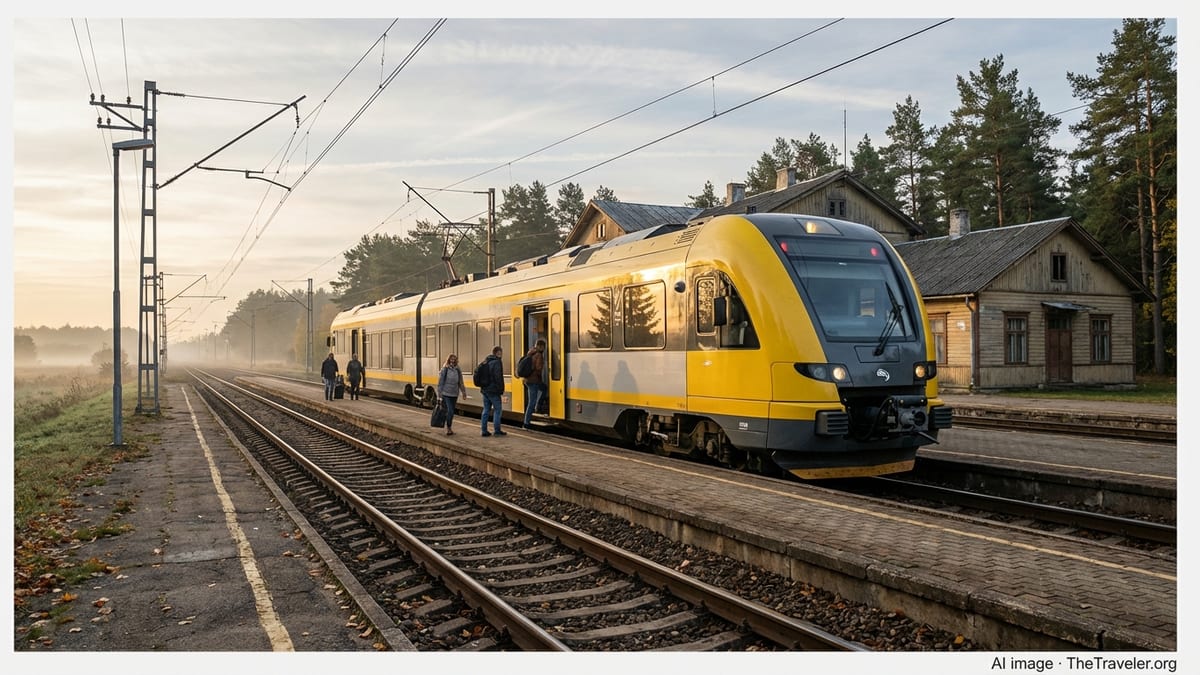
Rail’s Strong Climate Record Leaves a Diesel Blind Spot
Rail is already the lowest-emitting major mode of transport in Europe, and more than half of the EU network is now electrified. Publicly available statistics from European institutions show that around 57 to 60 percent of lines run on electricity, making rail a central pillar of the bloc’s climate strategy. Even so, a large share of regional and rural routes continues to depend on diesel traction, locking in local pollution and greenhouse gas emissions.
As the EU works toward cutting net emissions by at least 55 percent by 2030 and achieving climate neutrality by 2050, attention is increasingly turning to this remaining diesel segment. Analysts note that the political focus has largely been on road, aviation and maritime fuels, where binding targets for sustainable fuels and infrastructure have advanced more quickly. By contrast, alternative fuels for rail are still governed mainly through general energy and emissions rules, not rail-specific mandates.
Industry assessments suggest that many non-electrified routes carry relatively low passenger volumes, which has historically made full catenary electrification difficult to justify on cost grounds. That economic reality has encouraged national railways to prolong the life of diesel fleets, even as cleaner technologies mature. Critics of this approach argue that without stronger EU-level direction on alternative fuels, these lines risk lagging behind the rest of the transport system.
Fit for 55 Delivers on Infrastructure, but Rail Fuels Lag
The EU’s Fit for 55 legislative package has reshaped transport decarbonisation across the bloc, revising emissions trading, renewable energy rules and fuel standards for several modes. Within this framework, the Alternative Fuels Infrastructure Regulation sets binding targets for charging and refuelling networks for road vehicles, ships and aircraft, aiming to remove a key barrier to low-carbon fuels in those sectors.
However, the regulation pays little direct attention to rail propulsion, largely because much of the sector already relies on fixed electrical infrastructure. Observers point out that this leaves a policy gap for the extensive stretches of track where installing overhead wires is not planned in the near term. While rail benefits indirectly from cleaner electricity and broader renewable energy targets, there is no EU requirement that fuel used on diesel-operated rail lines progressively shift to low-carbon alternatives.
Parallel initiatives on high-speed rail corridors and upgrades to the trans-European transport network are expected to expand electrified mileage in the coming decades. Yet these long-distance investments do not automatically resolve the situation on feeder and regional routes, where diesel multiple units often provide the only rail connection. In this context, commentators argue that Fit for 55 has delivered more for rail infrastructure than for the fuels that power trains on non-electrified sections.
Hydrogen, Batteries and Biofuels Advance in Pilots
Across member states, a wave of pilot projects is testing hydrogen fuel cells, battery-electric trains and advanced biofuels on lines where full electrification is not yet planned. Public data compiled by the European Alternative Fuels Observatory indicates that multiple regions in Germany, France, Italy and the Nordic countries are experimenting with these technologies, often supported by EU research and regional funds.
Hydrogen trains have captured particular attention, operating on routes where refuelling points can be clustered at depots or key termini. At the same time, battery trains configured for partial charging on electrified segments offer an alternative for lines with mixed infrastructure. In parallel, some operators are turning to hydrotreated vegetable oil and other sustainable liquid fuels as an interim measure for existing diesel engines, seeking to cut emissions without immediate fleet replacement.
These initiatives demonstrate technical feasibility, but they remain limited in scale compared with the overall number of diesel-operated kilometres in Europe. Analysts note that the current pattern resembles a patchwork of national and regional experiments rather than a coordinated market rollout. Without EU-level fuel or emissions targets specific to rail, investment decisions in alternative propulsion are largely left to operators and national governments.
Calls Grow for Clearer Targets on Non‑Electrified Lines
Transport think tanks and sustainability advocates are increasingly calling for explicit EU objectives on the decarbonisation of non-electrified rail. Proposals in the public debate include setting a deadline by which all remaining diesel train services must switch either to electrification or to verified low-carbon fuels, as well as intermediate milestones aligned with the 2030 and 2040 climate targets.
Some stakeholders argue that binding targets for renewable content or lifecycle emissions in rail fuels would mirror policies already in place for aviation and maritime transport. They contend that such measures could give manufacturers and operators the market certainty needed to scale up hydrogen, battery and advanced biofuel solutions beyond demonstration projects. Others caution that prescriptive mandates could strain smaller regional railways unless accompanied by dedicated funding and technical support.
Debate also surrounds the best allocation of scarce green hydrogen and advanced biofuels across the economy. Energy-system analyses commonly suggest prioritising these fuels for sectors that are hardest to electrify, such as shipping, heavy industry and long-haul aviation. Advocates for a stronger rail component respond that targeted use on specific non-electrified corridors could still be justified, particularly where modal shift from cars or short-haul flights would deliver additional emissions savings.
Implications for Travellers and Cross‑Border Connectivity
For passengers, the choice of fuel is often invisible, yet it influences service patterns, ticket pricing and perceptions of sustainability. Regions that replace diesel trains with quieter battery or hydrogen units report improvements in comfort and local air quality, which can make rail more attractive compared with private cars or buses. As tourism slowly adapts to climate considerations, the availability of visibly cleaner regional trains may shape destination choices and marketing strategies.
Cross-border routes highlight another dimension of the debate. On several international lines, stretches of track remain unelectrified on one side of a border, forcing operators to use diesel rolling stock over entire routes or to rely on time-consuming locomotive changes. More ambitious EU-wide targets for alternative rail fuels could encourage coordinated investment in zero- or low-emission solutions on these sections, strengthening the appeal of rail for long-distance leisure and business travel.
With new high-speed links and upgraded corridors planned through the 2030s and 2040s, the question is increasingly whether regional and rural rail services will keep pace with the rest of the network’s green transformation. Observers note that if the EU raises its ambition for alternative fuels in rail, travellers could see a more consistent low-emission offer across both flagship high-speed trains and the slower local services feeding into them.