


More news on this day
The West Midlands Metro network marked a new milestone in Birmingham as the first tram entered passenger service on the Birmingham Eastside extension, opening a long-planned branch that brings trams deeper into the city’s growing eastern quarter.
Get the latest news straight to your inbox!
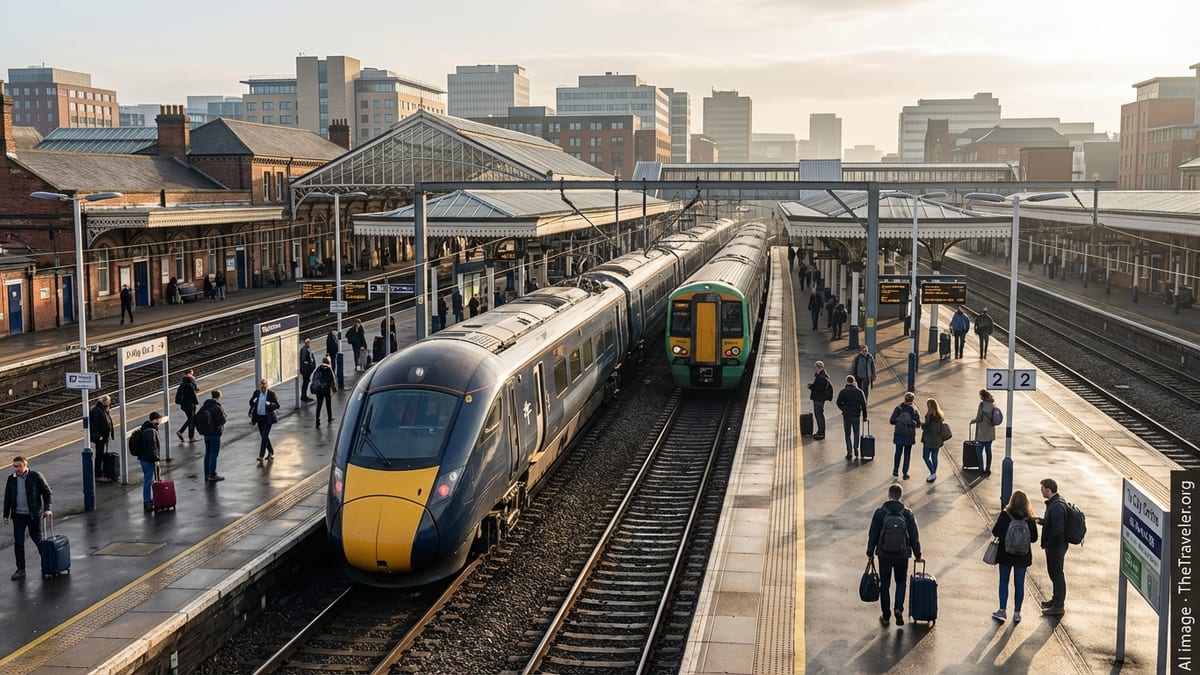
New branch connects city centre with Eastside district
The first phase of the Birmingham Eastside Metro extension introduces a 1.7 kilometre branch that diverges from the existing Birmingham to Wolverhampton main line near Bull Street and runs towards the Eastside regeneration area. Publicly available information shows that the route has been integrated into the existing Line 1 timetable, with trams now serving new intermediate stops on the edge of Birmingham’s core shopping and business districts.
Reports indicate that the new alignment provides a direct tram link towards key destinations around Birmingham City University’s City Centre Campus and the wider Eastside district, which has been earmarked for major residential, commercial and education-led development. The line is designed to plug a long-standing gap in fixed-rail public transport coverage to the east of the city’s traditional core.
The opening of the route follows several years of planning and construction overseen by regional transport bodies and delivery partners. Earlier testing and commissioning runs paved the way for the first passenger tram, which is now operating as part of regular, advertised services on the wider West Midlands Metro network.
Journey planners and timetable data show that trams on the extended route are running at frequencies designed to match existing Line 1 operations, allowing through journeys across the conurbation without the need to change vehicles in the city centre.
Improved access to rail hubs, campuses and regeneration sites
The Eastside branch is positioned to strengthen connections between tram stops, major rail stations and large trip generators in central Birmingham. According to published coverage and regional transport information, the new line sits close to Birmingham Moor Street and the planned HS2 Curzon Street station site, creating a dense cluster of rail and tram options within walking distance.
By threading modern trams through an area that has seen steady growth in student accommodation, university facilities and creative industries, the extension is expected to support a shift toward public transport for short urban trips. Planners have framed the project as a way to give residents, workers and visitors an alternative to car travel for cross-city journeys.
Local travel guidance highlights that all new tram stops along the route offer step-free access, consistent with the wider West Midlands Metro network. This design aims to ensure that passengers with mobility impairments, heavy luggage or pushchairs can use the new services with minimal barriers, reinforcing the system’s role as an accessible mode of transport.
The branch also ties into longer-term regeneration plans that include major leisure and sports developments, with regional investment strategies referencing new tram connections as an important factor in unlocking private and public investment around East Birmingham.
Passenger experience and service patterns on the new line
Tram users on the Birmingham Eastside extension are experiencing vehicles similar to the rest of the West Midlands Metro fleet, which has been expanded and upgraded in recent years in anticipation of multiple new routes. Industry reports on the rollout of additional trams describe modern interiors, real-time information systems and the capability to operate both under overhead wires and on battery power where required.
Timetable data published for the Metro network indicates that the Eastside branch has been woven into the core Line 1 pattern, with trams running at short headways during peak periods and regular intervals throughout the day. This integrated pattern allows journeys from the Eastside area to destinations such as Wolverhampton, West Bromwich and Edgbaston Village without complex transfers.
The first day of passenger operations brought visible changes to journey options across the city centre. Journey planners now routinely propose tram trips via the new stops when calculating the fastest or most convenient way to travel between Eastside, Birmingham’s main shopping streets and outlying suburbs connected to Metro and rail interchanges.
Publicly available information from regional transport bodies suggests that early monitoring will focus on dwell times at the new stops, punctuality on the shared core through the city centre and overall passenger volumes, helping planners to adjust services as demand patterns become clearer.
Part of a wider expansion of West Midlands light rail
The opening of the Eastside extension forms one element of a broader push to expand tram and rail infrastructure across the West Midlands. The Metro network has already grown from its original interurban route to include city centre on-street sections and a branch toward Edgbaston, and further projects are planned or under construction toward areas such as Dudley and Brierley Hill.
Regional strategy documents describe these schemes as central to efforts to support new housing, employment sites and cultural venues while reducing congestion and emissions. The Eastside branch is presented within this context as a key connector, linking dense inner-city neighbourhoods and future development plots to the wider rapid transit network.
The tram opening also follows the launch of new suburban rail stations and upgraded services elsewhere in the conurbation, underlining a combined approach that brings together trams, heavy rail and bus priority corridors. This multimodal strategy is intended to make public transport a viable default choice for everyday travel across the region.
With the first tram now running in service on the Birmingham Eastside extension, attention is turning to how quickly passenger numbers build and how effectively the route supports regeneration objectives. The performance of this latest addition to West Midlands Metro is likely to inform the design and phasing of future tram extensions being drawn up for other parts of the city and surrounding towns.
Early reactions and next steps for the network
Initial reactions shared in local and regional coverage highlight interest from commuters, students and city centre visitors keen to test out the new journey possibilities opened up by the Eastside branch. Observers have pointed to shorter travel times between key destinations and a more legible tram network map that adds a distinct spur to the established north west to south west corridor.
Transport planners are expected to review performance data from the first weeks of operation, looking at passenger flows, interchange patterns with rail and bus, and the impact on road traffic in parallel corridors. Findings from this monitoring period are likely to influence decisions on service frequency, stop facilities and wayfinding in and around the new tram stops.
Attention is also likely to focus on the extension’s interaction with future projects in the area, including major redevelopment schemes and potential new transport links. As construction work continues on other parts of the West Midlands Metro expansion programme, the successful start of passenger services on the Eastside route provides a tangible example of how new lines can be slotted into the existing network.
For visitors to Birmingham as well as local residents, the first tram running on this new route signals that the city’s tramway is entering a new phase, with a growing network that increasingly connects historic centres, emerging districts and regional hubs by modern light rail.