


More news on this day
At Rail Infra Forum 2023 in Europe, industry experts and policymakers focused on a single question with far-reaching implications for travelers: how must rail infrastructure change to make alternative drives like hydrogen and battery power a viable replacement for diesel trains?
Get the latest news straight to your inbox!
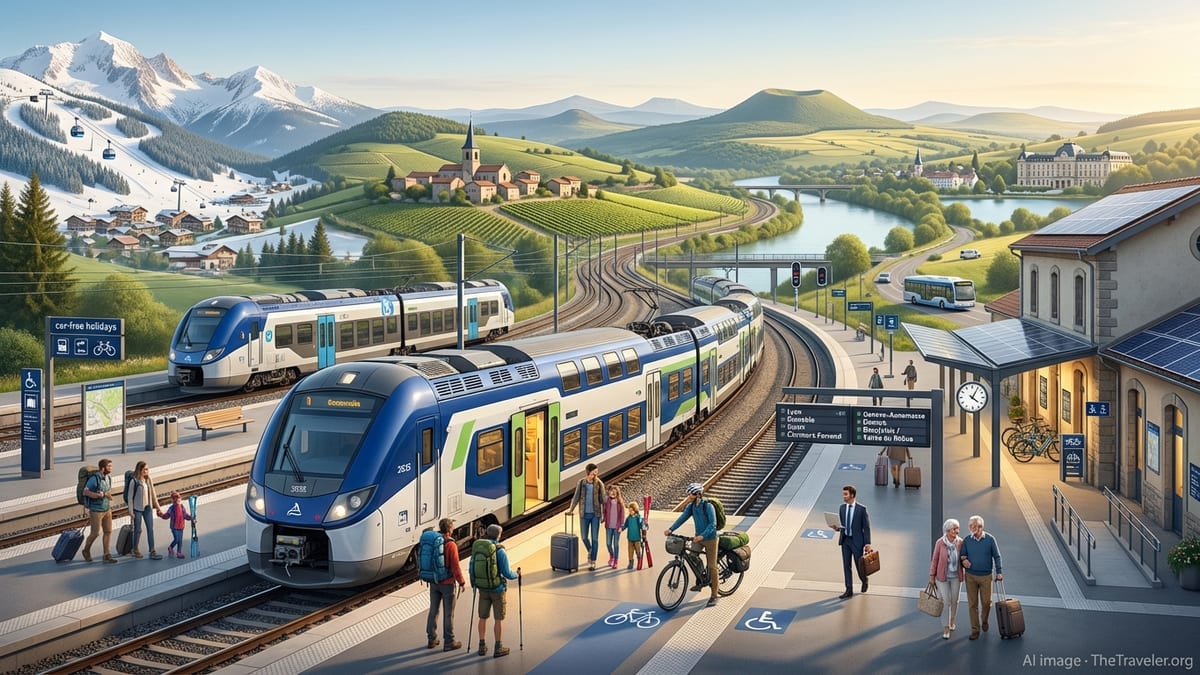
Forum puts infrastructure at the center of rail decarbonisation
Rail Infra Forum 2023, held in mid-March as a specialist event on infrastructure for sustainable rolling stock, brought together rail suppliers, network managers and mobility planners to examine the practical realities of moving away from diesel traction. Publicly available information shows that the agenda was built around the interaction between new train technologies and the fixed assets they depend on, from substations and grid connections to refueling depots and charging facilities.
Most major rolling stock manufacturers are now testing or delivering hydrogen and battery multiple units for non-electrified lines, reflecting a wider push in Europe and other regions to cut rail emissions in areas where overhead electrification is costly or complex. Reports from the forum indicate that participants repeatedly stressed that these trains cannot be viewed in isolation. Without parallel investment in the energy system, they risk remaining niche demonstrations rather than scalable solutions.
The conference program focused on themes such as the impact of alternative propulsion on the wider railway system, the role of retrofit solutions for existing diesel fleets and the policy frameworks needed to underwrite long-lived infrastructure. For travel markets that still rely heavily on diesel regional services, the discussions offered a glimpse of how future rail networks could blend conventional electrification with targeted nodes of hydrogen and battery support.
According to published coverage, the event was also positioned as a platform for sharing lessons from early pilot projects. Operators and technology firms used the forum to compare approaches to grid integration, capacity planning and safety certification, highlighting a rapidly evolving landscape in which infrastructure decisions taken today will shape passenger services well into the 2040s.
Hydrogen trains depend on new depots, pipelines and safety rules
A major strand of Rail Infra Forum 2023 examined the specific infrastructure needs of hydrogen-powered trains. These units typically use fuel cells fed by compressed hydrogen stored on board, with water as the main by-product. While they promise zero tailpipe emissions on non-electrified routes, they create new demands on depots, refueling points and local energy networks.
Reports on the forum’s program indicate that speakers evaluated several models for supplying hydrogen to rail sites, including on-site electrolysis using renewable electricity, deliveries by truck and potential pipeline connections in industrial regions. Each model carries different implications for capital costs, land use, safety zoning and long-term operating expenses, all of which must be aligned with train service patterns.
Safety and regulatory frameworks featured prominently in the hydrogen discussions. Compressed hydrogen requires dedicated handling, fire protection measures and staff training, which in turn influence depot layouts and station designs. Conference material suggests that stakeholders see rail as a potential anchor customer for regional hydrogen ecosystems, but only if projects can navigate approval procedures and prove reliable operation at scale.
The forum also touched on emerging debates about where hydrogen is most competitive compared with direct electrification or battery trains. Longer regional routes with sparse traffic and challenging topography were frequently cited as potential candidates, reinforcing the view that hydrogen infrastructure will likely be concentrated in selected corridors rather than deployed across entire national networks.
Battery-electric trains tie decarbonisation to grid capacity
Battery trains formed a second core theme of Rail Infra Forum 2023, reflecting their growing prominence in regional transport strategies. These trains typically charge from overhead wires on electrified sections and run on battery power over non-electrified stretches, or they use dedicated fast-charging stations at termini and key intermediate stops.
Forum documentation and related technical studies indicate that the success of battery trains is tightly linked to local grid capacity and the ability to deliver high-power charging without destabilising supply. Infrastructure planners must consider new substations, reinforcement of distribution networks and, in some cases, energy storage systems to smooth peak loads created when multiple trains charge in quick succession.
Participants also discussed how to integrate charging with existing station and depot layouts. Options range from modest extensions of electrified track at line ends to purpose-built charging gantries or platform-based systems. Each approach influences dwell times, timetable robustness and passenger experience, underlining why infrastructure design is as much an operational question as a technical one.
Several case studies referenced in reports suggest that battery trains may be especially attractive on medium-length routes where full electrification would be expensive but traffic is dense enough to justify investment in grid connections and charging hardware. For travelers, this could translate into quieter, cleaner trains on regional lines that currently rely on aging diesel fleets.
Retrofitting diesel fleets and adapting legacy assets
Beyond new train orders, Rail Infra Forum 2023 paid attention to the challenge of decarbonising existing rolling stock. Many operators face decades of remaining life in their diesel multiple units and locomotives, raising the question of whether these vehicles can be converted to alternative drives rather than scrapped early.
According to coverage of the event and related industry analysis, retrofit options include replacing diesel engines with battery systems, installing hybrid configurations that combine batteries with smaller combustion engines, or exploring hydrogen combustion or fuel cell modules. Each pathway requires careful assessment of axle loads, space constraints and compatibility with legacy braking and control systems.
Infrastructure implications are significant. Depots designed around diesel maintenance must adapt to handle high-voltage battery systems or hydrogen components, with new workshop procedures and emergency response plans. The forum’s discussions highlighted that infrastructure upgrades for retrofitted fleets often mirror those for new trains, but can be staged more gradually as vehicles rotate through major overhauls.
For network owners and public authorities, this raises strategic choices about where to prioritise limited budgets: expanding electrification, building new alternative-fuel hubs or upgrading depots and sidings for hybrid and battery retrofits. Reports from the forum suggest a growing interest in mixed portfolios, where targeted retrofits extend the life of core fleets while infrastructure for hydrogen and battery trains is rolled out in phases.
Policy, financing and cross-sector synergies
The final theme emerging from Rail Infra Forum 2023 concerns policy and financing, particularly the need to align infrastructure decisions for rail with broader energy and climate strategies. Publicly available information on the program indicates that sessions examined how national and regional plans for hydrogen valleys, renewable generation and smart grids could support rail projects, and in turn how rail demand could stabilise investment in clean energy assets.
Financing models were a recurring topic. Building hydrogen depots or high-capacity charging hubs requires significant upfront capital, often before passenger revenue gains are realised. Reports on the forum note growing interest in long-term concession models, public guarantees and cross-sector partnerships that involve energy utilities, infrastructure managers and train operators.
Another point of discussion was the opportunity to share infrastructure between transport modes. Some studies and policy papers referenced in connection with the forum highlight the potential for co-located hydrogen or charging facilities serving both rail and road fleets. While complex to organise, such hubs could improve utilisation of assets and enhance the business case for early projects.
As alternative drives move from pilot phase to wider deployment, the message from Rail Infra Forum 2023 is that infrastructure planning is no longer a background issue but a central lever of success. For travelers and communities, the choices made now about grids, depots and energy hubs will shape how quickly rail services can offer quieter, cleaner and more resilient mobility on routes that are unlikely to see overhead wires any time soon.