


More news on this day
Air travel across Europe faced fresh disruption on July 11 as a wave of air traffic control constraints and staffing pressures triggered 1,513 delayed flights and 73 cancellations, with low cost carriers such as Ryanair and easyJet particularly affected on routes linking Milan, Geneva, Paris and other key hubs.
Get the latest news straight to your inbox!
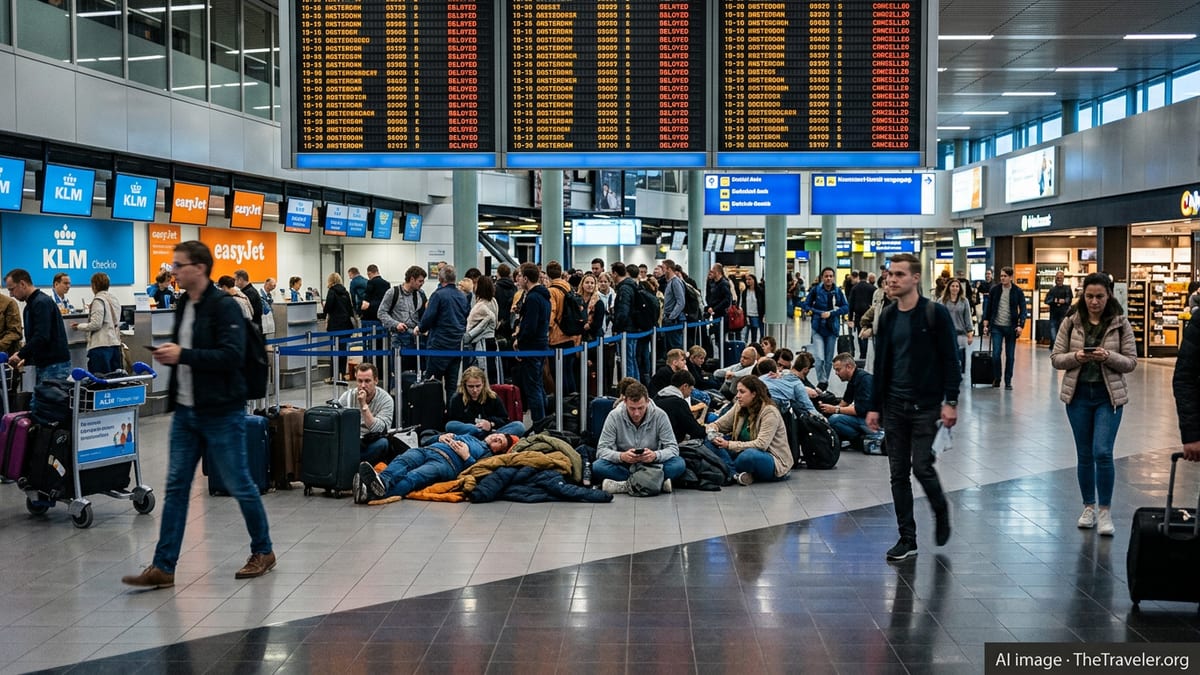
Major Hubs From Milan To Paris Bear The Brunt
Operational data compiled on July 11 indicate that flight disruption has been concentrated at some of Europe’s busiest airports, including Milan’s Malpensa and Linate, Geneva in Switzerland and the main Paris airports. Routes connecting Italy, France, Switzerland and Spain have seen a notable share of the 1,513 delays and 73 cancellations, affecting both intra‑European city pairs and leisure services to Mediterranean destinations.
Ryanair and easyJet, Europe’s largest budget carriers by passenger volume, feature prominently in the lists of delayed and cancelled services, reflecting the scale of their operations in the affected markets. Published flight trackers show cancellations on selected Ryanair services touching Milan and Rome, while easyJet schedules from France and Switzerland into northern Italy have registered extended delays and occasional cancellations as congested airspace and staffing gaps ripple through local timetables.
Austrian Airlines and several other network carriers have also reported disruption, particularly on feeder services connecting central European hubs with Italy, France and Spain. Although many flights have eventually departed, rolling delays have pushed back departure times by well over an hour in multiple cases, causing missed connections and last‑minute rebookings for passengers attempting to reach long haul flights.
Reports from airport monitoring platforms show knock‑on effects extending beyond the primary hubs. Secondary airports across France and Spain that rely heavily on low cost operations have recorded late‑running rotations as aircraft arrive behind schedule from Milan, Geneva or Paris, compressing turnaround times and straining ground handling capacity during the peak summer travel window.
Air Traffic Control And Strikes Add To Summer Strain
Publicly available information from aviation and labor portals highlights a combination of factors behind the latest wave of disruption, with air traffic control bottlenecks and industrial action both playing a role. In Italy, the official strike calendar lists actions involving segments of the air transport sector in July, including walkouts affecting staff at low cost carriers such as Ryanair and easyJet, which has added pressure to already tight schedules.
Across Europe, air navigation service providers have been under scrutiny over their ability to manage surging summer traffic. Industry analyses in recent years have already flagged France and Spain as recurrent hotspots for air traffic control delays, and new reporting from airline groups suggests that Spain in particular has seen a sharp rise in delay minutes so far this season. These constraints can quickly cascade across the network, forcing aircraft to hold, reroute or operate with extended separation, all of which feed into departure and arrival delays.
Even when no formal strike is in progress, staffing imbalances in control centers and at airports can reduce available capacity below scheduled demand. Carriers then face last‑minute slot restrictions or extended taxi and holding times, making it difficult to recover from earlier disruptions in the day. With aircraft and crews rostered for multiple sectors, a single airspace constraint in southern Europe can end up delaying flights hours later in Milan, Geneva or Paris.
The timing of the current problems, concentrated in the busy July holiday period, has further amplified the impact. High load factors mean fewer spare seats on alternative flights, so even a relatively modest absolute number of cancellations can leave thousands of travelers struggling to find same‑day alternatives on popular routes linking Italy, France, Switzerland and Spain.
Ryanair, easyJet And Austrian Among Worst‑Hit Carriers
The disruption has been particularly visible for Ryanair and easyJet, which together operate hundreds of daily flights across the affected countries. Their dense point‑to‑point networks mean that each delay can propagate rapidly as aircraft rotate between bases in Italy, France, Switzerland and Spain, compounding schedule instability as the day progresses.
Airline performance trackers list multiple Ryanair flights cancelled or heavily delayed on July 11, including services touching Milan and major leisure destinations. Similar tools show easyJet rotations from Geneva and Paris into Italian airports subjected to extended delays, while some departures to Spain have left well behind schedule. Austrian Airlines, whose network relies on punctual feeder links into Vienna, has also experienced schedule pressures where its flights intersect constrained airspace or congested hubs.
Publicly available statistics on recent summers underscore that low cost carriers are often more exposed to operational shocks because they run tight turnarounds with little slack in aircraft utilization. Any unexpected restriction, from a temporary airspace closure to a staffing shortfall at a destination airport, can force ground crews to handle multiple late‑arriving aircraft simultaneously, increasing the risk of further delay.
At the same time, full service airlines are not immune. Legacy carriers operating out of Paris Charles de Gaulle, Milan Malpensa and other major hubs rely heavily on precise timings to maintain complex connection banks. When arrivals miss their scheduled connection windows because of upstream delays in Spain or Italy, carriers may be compelled to rebook passengers, hold onward flights or consolidate services, further distorting the daily schedule.
Passengers Face Disruption, But EU Rules Offer Protection
For travelers caught up in the latest wave of delays and cancellations, the experience has ranged from missed hotel check‑ins to the loss of same‑day cruise and tour connections. With many flights operating at or near full capacity during July, rebooking options have sometimes involved significant detours or overnight stays, especially on popular leisure routes between northern Europe and Mediterranean destinations.
However, consumer protection regulations in the European Union provide important safeguards when flights are cancelled or subject to long delays. Public guidance summarizing EU air passenger rights explains that, in many circumstances, airlines must offer rebooking or refunds and, when passengers are stranded for extended periods, assistance such as meals and accommodation. Monetary compensation may also be payable in specific cases, depending on the length of delay, distance flown and the underlying cause of the disruption.
Airlines including Ryanair, easyJet and Austrian Airlines provide dedicated disruption sections on their websites where passengers can access rebooking tools, request refunds or seek information about potential compensation. These portals usually require a booking reference and may offer different options depending on whether the flight was cancelled outright or suffered a substantial delay.
Consumer organizations advise passengers to keep boarding passes, booking confirmations and receipts for additional expenses, as these documents can support later claims. Travelers are also encouraged to monitor airline apps and airport departure boards closely, since same‑day schedule changes are common when carriers attempt to recover from rolling delays and reposition aircraft.
Industry Calls For Structural Fixes As Peak Season Continues
The extent of the latest disruption has renewed scrutiny of how Europe’s aviation system manages peak summer traffic. Industry bodies and airline executives have repeatedly pointed to structural challenges in air traffic management, including fragmented control centers and varying staffing levels between states, as drivers of recurring waves of delays that hit passengers across multiple countries at once.
Analysts note that while airlines can adjust crew rosters, add spare aircraft and refine schedules, they have limited control over constraints generated by airspace management or national labor disputes. In periods of high demand, even small mismatches between planned and actual capacity can trigger widespread knock‑on effects, producing the kind of multi‑country disruption seen on July 11 across Italy, France, Switzerland, Spain and neighboring markets.
Looking ahead, published schedules show that carriers intend to maintain robust frequencies through the remainder of the summer, underscoring the importance of improving operational resilience. Measures such as better cross‑border coordination between air traffic control providers, earlier notification of industrial action and investments in staffing and technology are frequently cited by aviation specialists as potential ways to reduce delay volumes.
For now, travelers planning to fly in and out of hubs such as Milan, Geneva and Paris in the coming weeks are being urged by travel advisers and consumer groups to build extra time into itineraries, consider earlier departures where possible and ensure they understand their rights under European air travel regulations should disruption continue.