


More news on this day
Thousands of passengers across Japan faced sudden itinerary upheavals on July 11 as airlines scrapped 147 flights and delayed another 142, with disruption concentrated at Tokyo Narita, Miyako, Kagoshima, Kobe and other key airports as severe weather swept through the archipelago.
Get the latest news straight to your inbox!
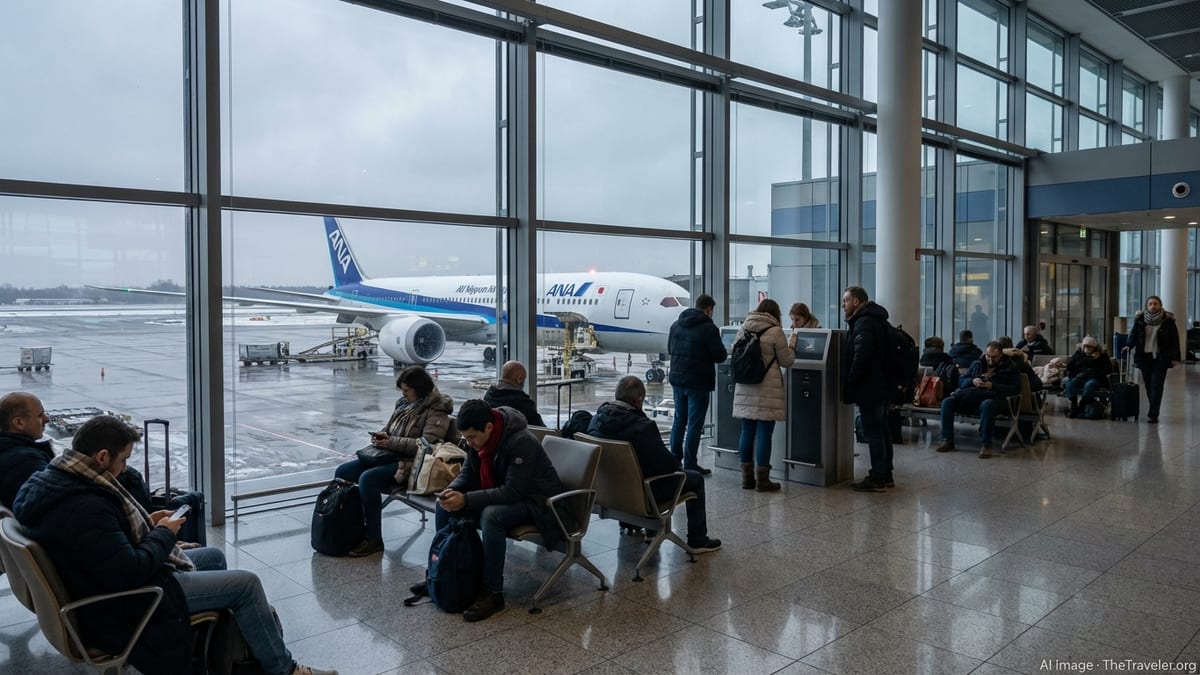
Typhoon System Triggers Widespread Flight Cancellations
Publicly available information from Japanese media and airline advisories indicates that the latest wave of cancellations is linked to a powerful typhoon system moving across southern and western Japan, bringing intense rain, strong winds and low visibility. The storm has particularly affected routes in and out of Okinawa and Kyushu, radiating knock-on delays through the country’s dense domestic network.
Operational data compiled from airline notices shows that at least 147 flights were cancelled and 142 delayed over the course of July 10 and 11. While precise tallies vary by outlet and update time, the pattern is consistent: routes touching Tokyo Narita, Miyako, Kagoshima and Kobe feature prominently among the disruptions, with further impact reported at regional hubs that connect to these larger airports.
The cancellations span both trunk and island routes, with some airports temporarily suspending all movements when wind speeds or crosswinds exceeded safe operating thresholds. In several locations, aircraft and crews were repositioned away from the storm’s projected path, resulting in aircraft and crew imbalances that continued to disrupt schedules even after local weather began to ease.
Japan’s aviation sector, accustomed to seasonal typhoons, typically resumes operations quickly once conditions improve. However, the scale and geographic spread of the current storm complex have made it more difficult for carriers to recover rotations, leaving many passengers facing overnight stays or lengthy rebookings.
Major Carriers Hit, From Japan Airlines to Low-Cost Operators
Japan Airlines group operations have been hit particularly hard, according to its domestic and international irregular operations bulletins, which list numerous cancellations and high probabilities of delay across affected routes. These notices highlight pressure points at airports serving Okinawa, Miyako and Kagoshima, as well as ripple effects at Tokyo Narita where connecting passengers have been stranded by inbound cancellations.
Regional JAL-affiliated carrier Japan Transocean Air, which operates many of the lifeline routes linking Okinawa and outlying islands, has also been forced to scrub multiple services. On days when island airports such as Miyako are effectively closed, these carriers can see entire rotations cancelled, severing links that residents and tourists rely on for both domestic and international connections.
Other Japanese airlines have not been spared. Skymark, a major domestic operator at Kobe and other regional airports, has reported cancellations and schedule reductions as the storm has approached western Japan. Low cost carrier Jetstar Japan, which runs busy leisure routes through Narita and southern destinations, has also been affected, with published coverage noting grounded flights and extended delays that have spilled into subsequent operating days.
Industry-focused outlets report that the cumulative impact of cancellations at these airlines, along with disruptions at All Nippon Airways and smaller regional carriers, translates into thousands of passengers stuck in terminals, rerouted through alternative airports or obliged to shift to rail and ferry services where possible.
Airports from Narita to Miyako Experience Stranded Crowds
At Tokyo Narita, one of the country’s main international gateways, arriving travelers have encountered mounting queues at airline service counters as domestic legs are cancelled or delayed, breaking carefully timed connections. Reports from travelers on social media describe long waits for rebooking as carriers work through backlogs with limited spare seats available during the busy summer period.
In Miyako and surrounding island airports, local news coverage describes more acute isolation. On days when all flights are cancelled due to typhoon conditions, residents and tourists alike are left with no immediate air options, and alternative sea routes may be similarly curtailed by high seas. Visitors with onward international itineraries via Naha, Haneda or Narita are among those most significantly affected.
Kagoshima, an important gateway for southern Kyushu and nearby islands, has also seen a significant number of cancellations and delays, according to domestic flight information pages. With both mainline and regional flights curtailed, passengers there have faced congested terminals and limited same-day alternatives, especially on popular routes north toward Osaka and east toward Tokyo.
At Kobe Airport, which serves a mix of business and leisure traffic in the Kansai region, carriers including Skymark have trimmed or cancelled flights, contributing to broader disruptions around Osaka and Kobe. Published summaries of the situation note that the convergence of weather-related issues at several airports simultaneously has made it more difficult to reroute travelers through nearby hubs.
Knock-On Effects for Domestic and International Connections
The disruption has highlighted the vulnerability of Japan’s tightly scheduled domestic network to storms that linger over the southwestern islands before curving toward the main Honshu coastline. When southern routes are cut, passengers heading for long-haul flights via Tokyo or Osaka can miss their connections, with limited spare capacity available on subsequent services during peak travel weeks.
Publicly available information from airline operation pages shows that carriers have responded by waiving certain change fees, encouraging travelers to move journeys outside the storm window where possible. Even with these measures, rebooking remains challenging when large numbers of passengers compete for the same limited pool of seats over a compressed period.
For inbound international tourists, the situation has been particularly confusing. Many travelers build itineraries involving one or more domestic flights within a few hours of arrival, leaving little margin when typhoon-related delays cascade through the system. Travel forums over recent months have repeatedly highlighted the risk of tight domestic connections during typhoon season, and the latest episode reinforces calls for greater buffer time.
Some passengers have opted to abandon disrupted domestic legs and turn to Japan’s shinkansen network instead, especially on routes between Tokyo, Osaka, Hiroshima and Fukuoka where high speed rail offers a reliable alternative. However, for island destinations such as Okinawa and Miyako, aviation remains the only practical mode, reinforcing the sense of being stranded when airports close.
What Travelers Should Expect in the Coming Days
Meteorological forecasts indicate that weather conditions should gradually improve as the typhoon moves away from the most heavily affected regions, but residual delays are likely as airlines reposition aircraft and crews. Travel industry analysts note that even after the immediate storm threat passes, schedules can take one or two days to fully normalize, especially at busy summer gateways like Narita and major regional hubs.
Airline advisories and travel alerts consistently urge passengers to check real time flight status via official apps or airport information boards before heading to the airport. With same day standby options limited, travelers are also encouraged to prepare for potential overnight stays by securing hotel rooms early or working with their travel providers to adjust itineraries.
Tourism bodies and local governments in affected regions are closely tracking the situation, conscious that repeated weather disruptions can weigh on visitor confidence. Nevertheless, Japan’s track record of relatively rapid operational recovery after typhoons, combined with robust ground transport in most mainland regions, suggests that the current episode is likely to be a significant but temporary setback rather than a prolonged shutdown of air travel.
For now, thousands of passengers remain in limbo as airlines, airports and transport operators work to clear the backlog created by 147 cancellations and 142 delays. As typhoon season progresses, the latest disruption serves as a reminder for travelers across Japan to build flexibility into their plans and to monitor weather developments closely during the peak summer months.