


More news on this day
The United Kingdom has moved into alignment with the United States by tightening travel guidance for Bahrain and Kuwait, as a renewed cycle of hostilities involving Iran, missile and drone strikes on Gulf states, and threats to shipping in the Strait of Hormuz create a fast-moving security picture for tourists and business travelers.
Get the latest news straight to your inbox!
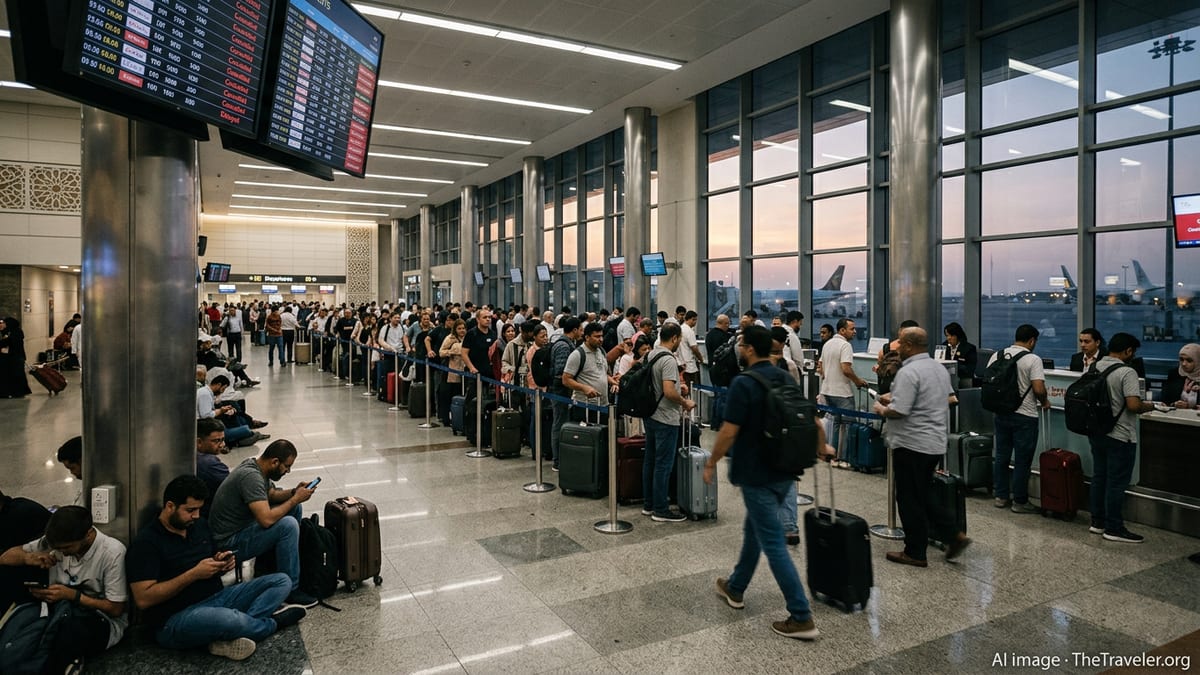
Coordinated Warnings As Iran Resumes Regional Strikes
Publicly available United States travel advisories now list both Bahrain and Kuwait at Level 3, advising travelers to reconsider non-essential trips in light of the risk of missile and drone attacks linked to the conflict with Iran. Recent advisories highlight the possibility of short-notice disruptions to flights, restrictions on the movement of diplomatic staff, and the potential for further escalation affecting civilians in both countries.
According to recent reporting on the conflict, the United States has carried out multiple rounds of airstrikes inside Iran following attacks on commercial shipping and regional military facilities, with Iran responding by firing missiles and drones at targets in Bahrain and Kuwait. Regional monitoring groups and security consultancies describe these exchanges as the most serious deterioration since a brief ceasefire period earlier in the year, with attacks again reaching populated areas and strategic infrastructure.
In parallel, updates to the United Kingdom’s Foreign, Commonwealth & Development Office travel advice for Gulf states in recent weeks have emphasized the regional nature of the threat, citing Iranian attacks on neighboring countries and warning that further strikes could occur with little or no warning. While wording varies by country, the UK advice has increasingly highlighted the risk of spillover from the confrontation with Iran for travelers in Bahrain and Kuwait.
Security analysts note that these moves are part of a broader trend among Western governments to synchronize their messaging on travel safety in the Gulf, reflecting shared intelligence on missile and drone activity, cyber risks and maritime incidents. For travelers, the result is a more consistent, but also more restrictive, picture of what is considered acceptable risk in Bahrain and Kuwait at the current time.
Impact On Flights, Airspace And Transit Through The Gulf
The latest travel guidance from the United States and United Kingdom points to aviation and transit disruption as a key concern. Civil aviation authorities and international safety notices have warned airlines about the risks of operating over or near areas where long-range missiles and drones have been used, particularly around the northern Gulf and near the Strait of Hormuz.
Specialist security bulletins note that Iran’s recent attacks have repeatedly focused on countries such as Bahrain and Kuwait, prompting intermittent adjustments to commercial flight paths and temporary holds or diversions of services. While most major carriers continue to fly to both countries, routings have been altered to avoid sensitive airspace, and airlines are retaining the option to suspend services at short notice if the security situation worsens.
Travelers transiting the wider region are also affected. Industry-focused assessments describe cycles of escalation that have led to delays, longer flight times and occasional airport shelter-in-place procedures across several Gulf hubs. Given that Bahrain and Kuwait serve as gateways or transit points for routes connecting Europe, Asia and Africa, disruptions there can have knock-on effects across airline networks and cruise itineraries.
For passengers planning immediate trips, the main practical implication is the need for flexibility. Tickets that allow date changes, comprehensive travel insurance that covers security-related disruption, and careful monitoring of airline and airport updates are increasingly recommended by travel risk specialists as Iran’s exchanges with the United States continue to affect nearby air corridors.
On-The-Ground Risks In Bahrain And Kuwait
Although Bahrain and Kuwait remain functioning states with active tourism and business sectors, the new wave of hostilities has altered the on-the-ground risk profile. Publicly available information from government advisories and security providers points to three main concerns: indirect exposure to missile and drone attacks, the possibility of civil unrest, and the strain on emergency services during periods of heightened alert.
Recent Iranian strikes and intercepted projectiles have primarily targeted military or strategic sites, but debris has occasionally fallen in civilian areas, and local authorities have activated air defense systems over or near major cities. Such incidents heighten the chance that travelers could be caught up in an attack or its aftermath even if they are not directly targeted.
Travel risk assessments also mention the possibility of demonstrations, especially near diplomatic compounds and symbolic locations, in response to developments in the US-Iran confrontation. While protests in Bahrain and Kuwait are often tightly managed, they can still disrupt traffic, lead to road closures and trigger a heavy security presence that may be unsettling for visitors.
Healthcare and emergency infrastructure in both countries are relatively robust by regional standards, but they can come under pressure during periods of repeated strikes or high alert. Tourists are being encouraged by many organizations to maintain a low profile, avoid military installations and critical infrastructure, and familiarize themselves with the shelter locations and emergency instructions provided by hotels and local authorities.
What Travelers Should Do Before Booking Or Departing
The alignment between UK and US advisories means travelers are now receiving a broadly consistent set of recommendations, particularly around postponing non-essential trips. Prospective visitors to Bahrain and Kuwait are being urged by travel risk experts to conduct a thorough review of official advisories from their home governments and to check for any new alerts or evacuation planning updates issued in recent days.
Insurance has become a critical consideration. Many standard travel insurance policies contain exclusions for war, civil unrest and acts of terrorism, which may limit coverage if a trip is disrupted by missile strikes or related security incidents. Travelers are therefore advised to read policy wording carefully, confirm what is covered, and consider specialist policies that explicitly address travel to higher-risk destinations.
Those who decide to proceed with travel are also encouraged to take practical steps such as registering their presence with consular services where possible, sharing itineraries and contact details with trusted friends or family, and keeping both physical and digital copies of key documents accessible. Security professionals further recommend establishing simple communication plans in case of network disruptions, and identifying fallback accommodation or exit routes if circumstances deteriorate quickly.
Booking through reputable tour operators or agents who actively monitor security developments in the Gulf can provide an additional layer of support. These intermediaries are often able to adjust itineraries, reroute flights or arrange early departures if conditions on the ground shift, which may be particularly valuable in a fluid environment shaped by the evolving confrontation between Iran and Western powers.
Today’s Outlook For Tourists Considering The Region
As of mid-July 2026, publicly available information shows that both Bahrain and Kuwait remain open to international visitors, but under a cloud of elevated risk from the renewed hostilities involving Iran. The coordinated warnings from the United Kingdom and United States underscore that the threat is not limited to military personnel or specific facilities, and that wider travel plans can be affected with very little notice.
Travel analysts describe the current phase as highly volatile, with alternating periods of apparent calm and sudden flurries of strikes or maritime incidents. This uncertainty complicates trip planning for leisure travelers who may have previously viewed Bahrain as a stopover destination or Kuwait as an emerging cultural and business hub.
For many tourists, the key question is whether a trip can be postponed until the security situation stabilizes. Government advisories and independent risk assessments increasingly favor a cautious approach, especially for those who do not have essential reasons to be in the region. Even travelers with higher risk tolerance are being encouraged to treat official warnings as dynamic documents that require frequent re-checking rather than a one-time formality.
Against this backdrop, visitors who choose to travel to Bahrain or Kuwait are stepping into an environment shaped by a broader regional confrontation. The decision now demands not only attention to flight deals and hotel availability, but also a close reading of evolving advisories, an understanding of potential worst-case scenarios, and a willingness to adjust plans rapidly if the delicate balance in the Gulf tips further toward open conflict.