


More news on this day
Air travel across Europe faced another day of heavy disruption as a wave of operational problems and knock-on delays led to 189 flight cancellations and 2,207 delays, affecting major hubs in the United Kingdom, Spain, Germany, Ireland, the Netherlands and beyond.
Get the latest news straight to your inbox!
Widespread Disruption From London To Barcelona
Published data from flight-tracking and travel-industry reports indicates that the latest wave of disruption has hit some of Europe’s busiest airports, including London, Barcelona, Munich, Dublin and major hubs in the Netherlands. The combined impact amounts to 189 cancelled flights and more than 2,200 delays in a single operating period, adding fresh strain at the height of the early-summer travel season.
London’s airports, particularly Heathrow, Gatwick and Stansted, have reported a high volume of late-running services and a smaller but significant number of outright cancellations, affecting British Airways, Ryanair and other carriers. In Spain, Barcelona and Madrid have seen growing numbers of late departures and missed connections, mirroring trends highlighted in recent statistics that show roughly one in three flights in Spain experiencing disruption in the first quarter of 2026.
In Germany, schedules at hubs such as Munich and Frankfurt have been under sustained pressure following a series of timetable adjustments and earlier strike actions at Lufthansa and other aviation workers. While the current disruption is not limited to any single airline, German airports continue to experience extended turnarounds and rolling delays that ripple through European networks.
Airports in Ireland, Scotland and the Netherlands are also recording elevated delay levels. Dublin and Edinburgh have both featured prominently in recent disruption tallies, while Amsterdam’s Schiphol Airport remains one of the most delay-prone hubs in northern Europe when weather, congestion and staffing issues coincide.
Major Airlines Struggle To Keep Schedules On Track
Among the airlines most affected are British Airways, Lufthansa, Vueling and Ryanair, alongside a host of smaller European and long-haul carriers. Publicly available airport and schedule-monitoring data shows these brands repeatedly appearing in daily cancellation and delay tables as they navigate congested airspace, crew-availability challenges and previous rounds of industrial action.
British Airways has been contending with frequent schedule changes at London’s hub airports, where a single inbound delay can cascade into missed connection windows and additional late departures. Ryanair, which operates an extensive point-to-point network across secondary and primary airports, has seen a series of interruptions in recent weeks linked to air traffic control constraints and localized strikes, particularly in Belgium and France.
Lufthansa’s European network remains sensitive to disruption after earlier strike actions by flight crew and cabin staff and ongoing capacity adjustments. Timetable changes introduced for June have helped to stabilize some routes, but they also mean fewer spare aircraft and tighter rotations, increasing the risk that technical issues or slot restrictions will result in last-minute cancellations.
In Spain, Vueling continues to face high demand on core routes from Barcelona and other Mediterranean gateways, where tight turnarounds can quickly unravel during peak hours. When combined with busy airspace over France and the western Mediterranean, even minor holdups can lead to accumulative delays across multiple airlines sharing the same corridors.
Strikes, Congestion And Summer Demand Create A Perfect Storm
The current numbers follow a broader pattern of disruption that has built through late spring and into June. Recent air traffic control strikes in France and Belgium led to large numbers of cancellations and reroutings, forcing airlines to thin schedules, extend block times and divert aircraft. In one recent instance, the closure of Belgian airspace for several hours resulted in more than 200 cancellations concentrated around Brussels, with Ryanair among those heavily affected.
At the same time, Eurocontrol performance summaries point to persistent air traffic flow management delays, particularly in Spain and France, where capacity constraints in key control sectors and at major airports have reduced the system’s ability to absorb surges in traffic. This has left carriers more exposed when thunderstorms, staffing shortages or technical problems arise.
The start of the main holiday period has amplified the impact. Passenger volumes are climbing toward or above pre-pandemic levels on many European routes, while airlines have been fine-tuning capacity and frequencies. Any unplanned event, such as localized industrial action by ground handlers or security staff, can force last-minute changes that filter through the entire day’s operation.
Industry analyses note that these disruptions carry significant financial implications for carriers. Each minute of delay is estimated to cost airlines substantial sums in fuel burn, crew time and missed slots, while a cancelled flight can mean tens of thousands of euros in direct and indirect losses once customer care and rebooking are factored in.
Passengers Face Missed Connections And Crowded Terminals
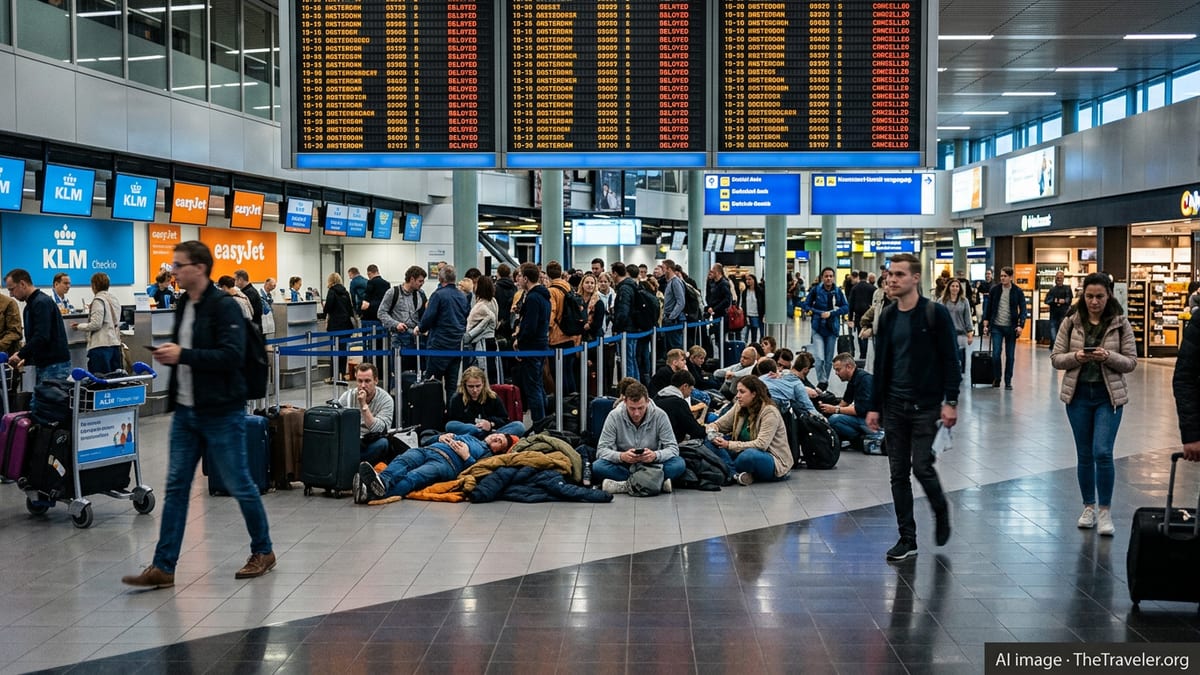
For travelers passing through affected hubs in the UK, Spain, Germany, Ireland and the Netherlands, the operational pressures are being felt in long queues, missed connections and overnight stays. Reports from recent days describe departure boards dominated by late departures and a steady trickle of cancellations at London, Amsterdam, Dublin, Barcelona and Munich.
Families heading to Mediterranean resorts and city-break travelers alike have been urged in public advisories and media coverage to verify flight status repeatedly on the day of travel and to allow extra time at airports. In some cases, carriers have been proactively consolidating lightly booked flights, re-accommodating passengers on later services in order to free up aircraft and crew for the busiest routes.
Travel insurers and passenger-rights organizations are drawing renewed attention to compensation frameworks such as EU261 and the UK’s equivalent regulations. Under these rules, travelers departing from or arriving in the European Union or United Kingdom with eligible carriers may be entitled to compensation for long delays or cancellations that are not caused by extraordinary circumstances, as well as reimbursement for meals and accommodation when stranded.
However, the growing role of air traffic control restrictions, strikes beyond an airline’s direct control and adverse weather patterns means that eligibility can vary widely from case to case. Passengers are being advised in consumer coverage to keep boarding passes, request written explanations for disruptions where possible and submit formal claims through airline customer-service channels.
Outlook For Summer Travel Across Europe
Forecasts for the coming weeks suggest that pressure on Europe’s air network is likely to continue. Announced industrial actions by airport staff and ground handlers in Italy and Spain in July, combined with ongoing staffing challenges in some air traffic control centers, raise the prospect of further days with large-scale cancellations and delays.
Airlines are attempting to mitigate the risk by trimming schedules in advance, reassigning larger aircraft to high-demand routes and building longer turnaround times into rosters. Some carriers have also been adjusting long-haul operations to reduce the risk of inbound delays triggering missed connections for onward European services.
For travelers planning to pass through hubs such as London, Barcelona, Munich, Dublin or Amsterdam, the latest figures on 189 cancellations and more than 2,200 delays provide a timely snapshot of how quickly conditions can deteriorate when congestion, strikes and peak-season demand intersect. The situation underlines the importance of flexible itineraries, robust travel insurance and up-to-date information for anyone flying in or around Europe in the coming months.