


More news on this day
Passengers traveling through Dubai International Airport are facing renewed disruption as publicly available data shows four flight cancellations and around 90 delays affecting services operated by Flydubai, Emirates and SpiceJet on major long haul and regional tourism routes.
Get the latest news straight to your inbox!
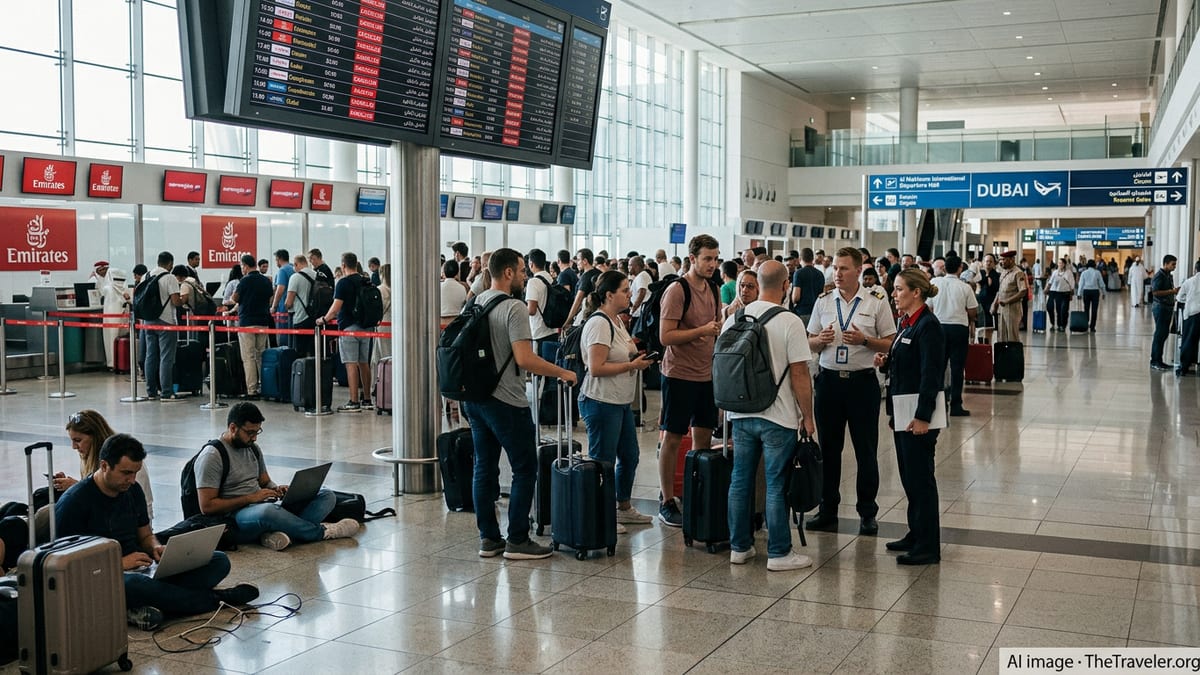
Fresh Wave of Operational Disruption at Dubai International
Dubai International Airport, one of the world’s busiest hubs for international travel, has again seen its tightly calibrated schedules strained by a cluster of cancellations and delays involving key carriers Flydubai, Emirates and SpiceJet. Recent operational data compiled by aviation tracking services and regional travel outlets indicates that four flights were cancelled and roughly 90 delayed within a short operating window, creating knock-on effects across connecting banks of departures and arrivals.
The disruption follows a period in which the wider United Arab Emirates aviation network has already been under pressure from airspace constraints, weather-related challenges and residual congestion from earlier interruptions. Industry-focused reports on the June travel period describe a series of days where delays at Dubai and nearby hubs accumulated rapidly, with services pushed back by hours and aircraft rotations thrown off schedule.
Dubai’s role as a super-connector means that even a limited number of cancellations can generate outsized consequences for passengers. Affected flights can cascade into missed onward journeys, rebookings on later departures and, in some cases, overnight stays, particularly for those traveling on complex itineraries linking Asia, Europe and North America through the city.
Publicly available scheduling analysis shows that Emirates and Flydubai together account for a substantial majority of seat capacity at Dubai International, so any operational strain involving both carriers is immediately felt across the airport. When additional disruption from other regional airlines such as SpiceJet is layered on top, the margin for recovery within a single operating day narrows considerably.
Key Tourism Markets From Los Angeles to Delhi Affected
The latest round of disruption is being felt most acutely on routes central to Dubai’s position as a global tourism and transit hub. Long haul links to cities such as Los Angeles, London, Frankfurt and Paris, as well as high-demand regional destinations including Cairo, Istanbul, Riyadh and Delhi, rely heavily on tight connections through Dubai’s wave-based departure structure.
According to publicly accessible flight-monitoring dashboards, several of the delayed services were timed to feed or distribute passengers across these marquee routes. A late-arriving aircraft from South Asia, for instance, can delay an onward departure to Europe, while schedule changes on Middle East and North Africa services can disrupt connections to North American gateways like Los Angeles.
Tourism analysts note that June is a particularly sensitive period for these corridors, with summer holidaymakers from Europe and North America, religious travelers heading to and from Saudi Arabia, and expatriate workers returning to the Indian subcontinent all transiting through Dubai. When flights to cities such as Delhi or Riyadh are delayed or cancelled, the impact is felt not only by point-to-point passengers but also by those booked on through-tickets that depend on narrow connection windows.
Regional travel coverage has highlighted that delays on short and medium haul spokes can reverberate across entire daily rotations. A SpiceJet service operating into Dubai that is held on the ground for several hours may reduce aircraft availability for subsequent sectors, while an Emirates widebody delayed on a European sector can cause downstream schedule changes across its network.
Tourism and Hospitality Sector Faces Short Term Strain
The tourism economies tied into these high-volume routes are already feeling the effects. Hospitality and travel trade reports indicate that hotels, tour operators and ground transportation providers in cities such as London, Paris and Frankfurt have had to respond to late arrivals, missed tours and last-minute itinerary changes over recent weeks as flights via Dubai landed hours behind schedule.
In gateway cities like Los Angeles, tourism boards and destination management companies closely monitor on-time performance from major connecting hubs. When flights repeatedly arrive late at night rather than in the late afternoon, it can affect everything from same-day car rentals and rail links to scheduled group activities. Travel professionals note that even a modest number of cancellations, if concentrated on busy travel days, can translate into noticeable dips in tour participation and spend.
On the regional side, destinations such as Cairo, Istanbul and Riyadh rely heavily on steady passenger flows from the Gulf to support city breaks, medical travel and business visits. Delays and short-notice cancellations can lead to no-shows for hotel bookings, postponed meetings and compressed stays, outcomes that directly reduce average visitor spending.
In the Indian market, Delhi’s extensive ties with the Gulf amplify the effect of operational challenges in Dubai. Publicly available industry commentary suggests that disrupted flights can push some travelers to reroute via alternative hubs in Doha, Abu Dhabi or Istanbul if reliability concerns persist, prompting competitive pressures across regional carriers.
Airlines Manage Recovery as Passengers Seek Alternatives
Operational updates issued by carriers and airport information channels show that airlines have been working to absorb the latest wave of disruption through aircraft swaps, crew reassignments and schedule adjustments. Emirates and Flydubai, which share some infrastructure at Dubai International, have historically relied on their large fleets and high frequency on trunk routes to consolidate passengers when individual flights are cancelled, a pattern that observers suggest has been visible again during the current disruptions.
Low cost and regional operators such as SpiceJet typically have less flexibility, as smaller fleets and tighter utilization leave limited options for rapid recovery. Travel trade reporting points out that in such cases, passengers may face longer waits for the next available departure, particularly on less frequent routes, prompting some to seek rebooking via other Gulf or Indian hubs.
Travel advisors recommend that passengers with imminent itineraries through Dubai build in extra buffer time for connections, monitor their flight status closely and remain prepared for potential gate or timing changes on the day of departure. Some carriers have offered more flexible rebooking policies during periods of sustained disruption, though conditions vary by fare type and route.
Public guidance from airport and airline information sites also emphasizes the importance of keeping contact details updated within bookings so that travelers receive real time notifications of any schedule changes. For those already in transit when delays occur, airline transfer desks and service counters at Dubai International remain the primary point of assistance for rerouting and accommodation where applicable.
Outlook for the Summer Travel Period
Industry data providers tracking scheduled capacity across the United Arab Emirates highlight that overall seat volumes for June remain high, underlining the continued demand for travel through Dubai despite recent operational headwinds. Reports citing official timetables show that Emirates and Flydubai together are maintaining millions of seats this month, reinforcing the strategic importance of the hub for long haul tourism flows.
Aviation analysts caution, however, that sustained pressure from regional security issues, airspace restrictions and seasonal weather patterns could pose further challenges as the peak summer period unfolds. Any renewed disruption at Dubai International would again be quickly transmitted along major tourism corridors linking Europe, North America, the Middle East and South Asia.
For now, publicly available information suggests that operations at Dubai are stabilizing after the specific cluster of four cancellations and around 90 delays, but the episode serves as a reminder of the fragility of tightly interconnected flight networks. Even a relatively small number of affected services at a mega hub can have global implications, particularly when they involve carriers that dominate key long haul and regional markets.
Travel organizations and consumer advocates continue to encourage passengers to review their rights related to delays and cancellations under the applicable jurisdiction, to retain documentation of disrupted journeys and to consider travel insurance that explicitly covers schedule disruption on complex itineraries routed through major hubs such as Dubai.