


More news on this day
Record-breaking temperatures sweeping across Europe are triggering cascading transport failures, with flights delayed, rail lines slowed or cancelled, highways deforming and tram networks partially shut as a prolonged heatwave turns peak travel season into an escalating emergency.
Get the latest news straight to your inbox!
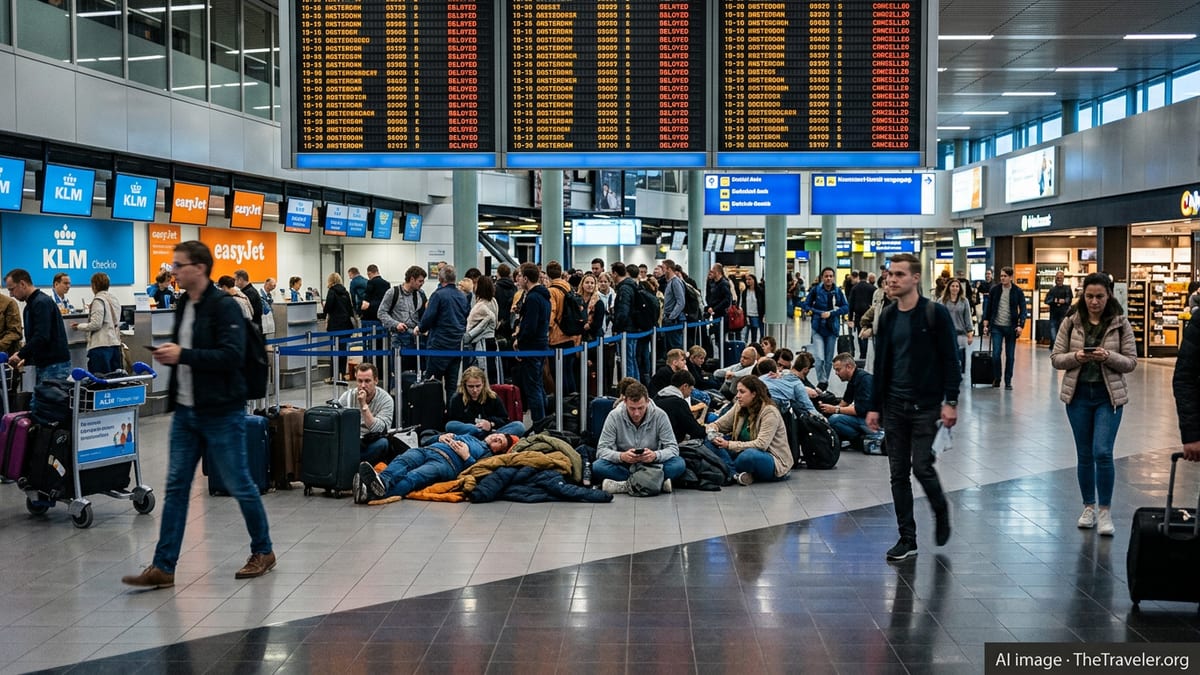
Flights across major hubs grind through mounting delays
Air travellers are facing mounting disruption as the heatwave interacts with intense summer storms and air traffic restrictions at some of Europe’s busiest hubs. Published coverage from the United Kingdom indicates that hundreds of flights were delayed and dozens cancelled at London’s Heathrow and Gatwick airports over the weekend, after thunderstorms linked to the hot, unstable air mass forced temporary limits on take offs and landings.
Reports from aviation trackers and local media describe passengers held on aircraft or in terminal queues for hours as airlines attempt to rework schedules that are already stretched by peak-season demand. With aircraft and crew out of position, knock on delays have been reported on services not only within Europe but also on long haul routes connecting to North America and the Middle East.
Airlines are advising customers to monitor their bookings closely, arrive early at airports and prepare for last minute gate or schedule changes. Publicly available guidance suggests that while safety thresholds for heat on runways and aircraft systems are rarely exceeded, the combination of reduced air traffic capacity, storm-related rerouting and congestion is severely testing the resilience of Europe’s aviation network.
Rail networks slow, buckle and cancel as tracks overheat
Across the continent, rail operators are moving into what one industry analysis describes as “heat response mode,” cutting speeds, thinning timetables and cancelling services outright as temperatures on exposed tracks climb well above 40 degrees Celsius. National Rail guidance in Britain has urged passengers to travel only if essential on some corridors, as steel rails expand and are at increased risk of buckling in the heat.
In France, domestic coverage indicates that SNCF has pre emptively cancelled dozens of Intercités services as temperatures near 40 to 41 degrees Celsius in several regions, including around Paris. Operators are deploying maintenance teams along vulnerable sections of track, while allowing passengers to change tickets without penalties to avoid travelling during the most intense heat.
International high speed links are under pressure as well. Eurostar has warned of slower journeys and cancellations on routes between London, Paris and Brussels, after Belgian infrastructure managers ordered daytime speed reductions on sections of the network. The operator’s latest travel updates show trains cancelled on parts of its network as the heatwave persists, contributing to heavy crowds on remaining services and extended journey times through the Channel Tunnel.
According to a recent report from the EU Agency for Railways on climate resilience, thousands of extreme weather incidents have affected European rail infrastructure over the past two decades, with heat now emerging as a leading driver of disruption. The current conditions are being closely watched as an early test of measures that operators have started to introduce, from remote track temperature monitoring to adapted maintenance schedules.
Highways soften and buckle as road surfaces reach critical thresholds
Road transport is facing its own crisis as asphalt and concrete surfaces struggle under prolonged, intense heat. Regional news outlets in France and Germany report instances of “melting” or deforming highways, where road surfaces have softened, rutted or broken up under heavy traffic as temperatures climbed past 40 degrees Celsius.
Engineering guidance explains that common road materials can begin to lose structural integrity once surface temperatures pass their design thresholds, particularly on older stretches built to cooler historical norms. Under the current heatwave, this has led to temporary closures, lane restrictions and emergency repairs, worsening congestion on diversion routes already busy with summer holiday traffic.
In tourist regions along the Mediterranean and major cross border transit corridors, drivers have encountered rolling traffic jams as authorities reduce speed limits to prevent further damage and lower accident risks on compromised surfaces. Motorists are being advised through public information channels to carry extra water, check vehicles for overheating risks and allow significantly more time for long distance journeys.
Logistics operators are also reporting delays, with freight vehicles forced to reroute away from damaged stretches of highway or travel at reduced speeds. The resulting slowdowns threaten to ripple through supply chains that rely heavily on just in time deliveries to urban supermarkets, tourist resorts and industrial zones.
Tram and urban transit systems buckle under city heat
The heatwave is hitting city level public transport particularly hard, as dense urban environments trap heat and place extra strain on overhead power lines, substations and steel tracks. In Germany, national and regional coverage describes trams suspended in the eastern city of Leipzig after track damage made operations unsafe under extreme temperatures.
Transport authorities and local media across multiple countries have warned that rails embedded in streets are especially vulnerable to thermal expansion, with constrained space for movement increasing the risk of kinks or misalignment. Overhead power cables can also sag in the heat, potentially causing pantograph failures or power interruptions on tram and light rail systems.
In the Paris region and several other metropolitan areas, regional transport agencies have cautioned that high temperatures can disrupt tram, commuter rail and metro services, prompting calls for residents to postpone non essential journeys. Cooling measures such as distributing water at key stations, adjusting signalling to slower speeds and selectively withdrawing older rolling stock from the hottest periods are being reported as short term responses.
For tourists relying on urban transit to reach historic centres, museums and waterfronts, the result is a patchwork of partial closures, diversions and packed substitute bus services. Traveller reports shared through social platforms describe longer walks, crowded platforms and journeys that take twice as long as scheduled in some cities affected by the heat.
Tourism faces a stress test as climate risks reshape summer travel
The timing of the heatwave in late June, just as school holidays begin across much of Europe, is compounding its impact on tourism. Industry commentary notes that destinations in France, Spain, Italy, Germany and central Europe are juggling both health risks from extreme heat and the logistical challenge of moving millions of visitors through strained transport networks.
Some cultural and sporting events have been brought forward to cooler hours or postponed entirely, while outdoor attractions have reduced opening times to protect staff and visitors. Local authorities in several cities are reinforcing guidance on hydration, shade and reduced physical exertion during the hottest parts of the day, even as hotels and tour operators attempt to keep itineraries running.
Researchers studying the June 2026 heatwave argue that human induced climate change has significantly increased the likelihood and severity of such extremes, and that Europe is warming faster than the global average. Publicly available analyses highlight that heatwaves already cause more deaths in Europe than any other natural hazard, and warn that transport and tourism systems must adapt quickly to avoid repeated large scale disruption.
For now, travellers are being urged by airlines, rail operators and road agencies to check real time information before departure, build flexibility into itineraries and prepare for conditions far hotter than those associated with Europe’s traditional summer image. As this latest heatwave grinds on, the continent’s transport networks are providing a stark preview of how rising temperatures could reshape the practical realities of travel in the years ahead.