


More news on this day
Summer air travel in Europe is again under strain as fresh disruption ripples across the continent, with 2,577 flights reported delayed and 101 cancelled in a single day, affecting major carriers such as Lufthansa, Ryanair and Eurowings and causing widespread knock-on problems at airports including Zurich and Oslo.
Get the latest news straight to your inbox!
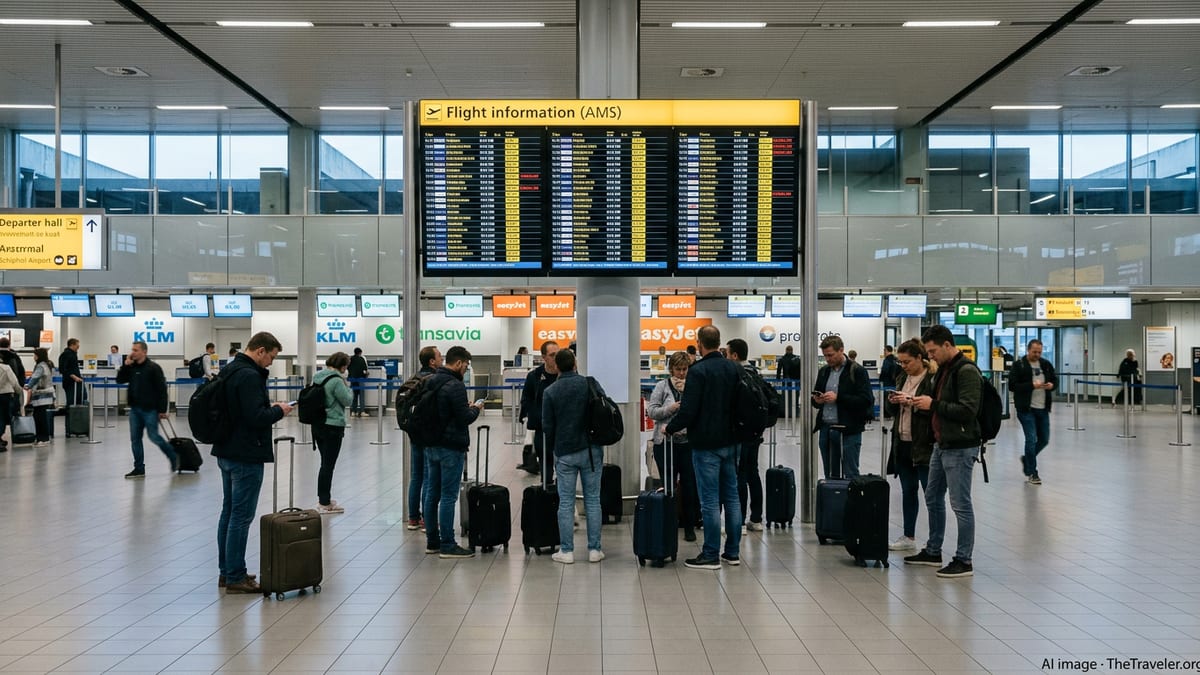
Delays and Cancellations Spread Across Key European Hubs
Recent operational data from flight tracking and aviation industry reports indicate that European airports have collectively registered 2,577 delays and 101 cancellations in one day of trading, underscoring how fragile the peak summer schedule has become for both airlines and passengers.
The disruption is concentrated around major hubs that knit together intra-European and long haul networks. Zurich and Oslo are among the airports reporting clusters of delayed and cancelled departures, with additional pressure visible at large connecting gateways in Germany, France and the Netherlands. The pattern reflects how a relatively small number of cancelled rotations can quickly cascade into hundreds of late departures as aircraft and crews struggle to return to position.
Publicly available coverage shows that knock on effects are being felt across routes linking Switzerland and Scandinavia with Spain, Italy and other Mediterranean destinations, popular with leisure travelers heading into late June. The combination of packed aircraft, tight turnaround times and limited spare capacity is leaving little margin for recovery when problems emerge.
Industry analysts note that such mid season spikes in irregular operations are becoming more visible because of the higher volume of point to point low cost services, which give airlines fewer opportunities to re accommodate passengers via alternative connections once a flight is cancelled.
Impact on Lufthansa, Ryanair, Eurowings and Other Carriers
The wave of disruption is hitting a broad mix of traditional network airlines and low cost carriers. Lufthansa and its partners have already entered the summer with a trimmed schedule after adjusting capacity through the end of June, including selective reductions on short haul routes from Frankfurt and Munich. Those structural cuts, intended to improve reliability, are now being tested by fresh same day delays and cancellations.
Ryanair, one of the largest operators of short haul flights across Europe, continues to feature prominently in daily delay and cancellation tallies simply because of the scale of its operation. Aviation data referenced in consumer rights and compensation guidance in Italy and other markets shows multiple Ryanair flights among those cancelled on recent days, adding to queues at customer service desks and stretching rebooking options on busy leisure routes.
Eurowings, which supplements Lufthansa Group capacity in markets such as Germany, Switzerland and Italy, has also been drawn into the latest disruption rounds. Earlier schedule information for the summer shows Eurowings already operating a dense pattern of intra European services from cities including Stuttgart and Düsseldorf, which leaves limited flexibility when an aircraft is held up at an outstation or a rotation is scrubbed entirely.
Other carriers, from Scandinavian operators at Oslo to international airlines using Zurich as a connecting point, are likewise experiencing schedule strain. When one airline cancels or heavily delays departures on shared routes, competing carriers can see their remaining seats sold out quickly, complicating efforts to rebook disrupted passengers the same day.
Norway, Spain and Italy Face Compounded Summer Pressure
The geographic spread of recent delays and cancellations is particularly evident in Norway, Spain and Italy, three countries that combine strong domestic flows with heavy inbound tourism demand. Travel industry outlets tracking daily performance figures for Oslo Gardermoen highlight repeated cancellations involving Scandinavian carriers and Norwegian low cost operators, with additional flights running significantly behind schedule.
In Spain, recent reporting on performance at major airports such as Madrid, Barcelona and key island gateways suggests that more than 1,200 delays and several dozen cancellations on a single day have already served as an early warning for the peak holiday period. Disruption at northern European hubs is quickly transmitted southward, affecting arrivals into popular Spanish destinations and forcing late night arrivals or missed onward connections.
Italy is facing a similar pattern, with earlier waves of disruption in April and May leaving thousands of travelers stranded across Rome, Milan, Bologna, Naples and Venice. Updated accounts from the same travel industry sources now show that sporadic cancellations and a high volume of delays continue into June as carriers work to balance staffing, aircraft availability and strong seasonal demand.
For travelers, this means that itineraries touching more than one of these regions are particularly exposed. A delay on a feeder service into Zurich or Oslo can easily lead to a missed onward flight to southern Europe, with limited alternatives available on the same day when aircraft are already flying close to full.
Zurich and Oslo Highlight Network Vulnerabilities
Zurich and Oslo have emerged as focal points in the latest disruption because of their role within broader European airline networks. Zurich, a key hub connecting Switzerland with the rest of Europe as well as North America, Africa and Asia, has recently experienced what some travel commentators describe as a partial operational meltdown, with large clusters of delayed departures and a sharp uptick in cancellations within a short time frame.
Detailed breakdowns drawn from flight tracking platforms show that problems at Zurich can quickly reverberate across dozens of destinations, from major European capitals to secondary holiday airports in Spain, Portugal, Italy and Greece. When aircraft scheduled to operate multi sector rotations become stuck on the ground, later services are either heavily delayed or dropped from the schedule altogether.
At Oslo, a similar dynamic plays out in a more regionally focused pattern. Cancellations and delays affecting services within Scandinavia and northern Europe disrupt both point to point passengers and those using Oslo as a stepping stone to reach other European hubs. Travel news coverage lists a mix of Scandinavian, Norwegian and other European airlines among those cancelling flights at short notice, creating congestion at departure gates and baggage reclaim areas.
The challenges at these hubs illustrate the vulnerability of tightly wound schedules that aim to maximize aircraft utilization. Once an airport experiences a cluster of delays within a short window, available slots, gates and ground staff become constrained, making operational recovery slower and increasing the likelihood that later flights will be cancelled outright.
What Disrupted Passengers Should Expect Under EU Rules
Consumer and legal information platforms continue to highlight that passengers on affected flights may have protections under European air passenger rights legislation. Under prevailing EU rules, travelers whose flights are significantly delayed or cancelled within the control of the airline may be entitled to assistance at the airport, rerouting to their final destination and, in many cases, financial compensation.
Guidance based on recent cases in Spain, Italy and Scandinavia notes that the exact entitlement depends on the distance of the flight, the length of the delay on arrival and the cause listed by the airline. Weather related issues, air traffic control restrictions and certain security related events can limit compensation, but they do not remove the carrier’s duty of care for meals, refreshments and, where necessary, accommodation.
Specialist organizations advising passengers recommend keeping boarding passes, booking confirmations and any written notice of delay or cancellation, as these documents are often required when submitting claims. They also point out that travelers booked on itineraries involving both EU and non EU carriers may have different rights on different legs of the same journey.
With daily figures now showing thousands of delayed flights and more than 100 cancellations across Europe on some days, observers expect a further increase in compensation claims and customer service backlogs. Travelers heading through Zurich, Oslo and other busy hubs in the coming days are being encouraged by public information campaigns to monitor their flight status closely, allow extra time for connections and familiarize themselves in advance with the options available if their plans are disrupted.