


More news on this day
Across Europe, governments and rail operators are turning climate policy into concrete perks for visitors in 2026, with Denmark, France, Germany and several neighbors rolling out new incentives that reward tourists who travel by train, bus and other low carbon options instead of taking short flights or driving.
Get the latest news straight to your inbox!
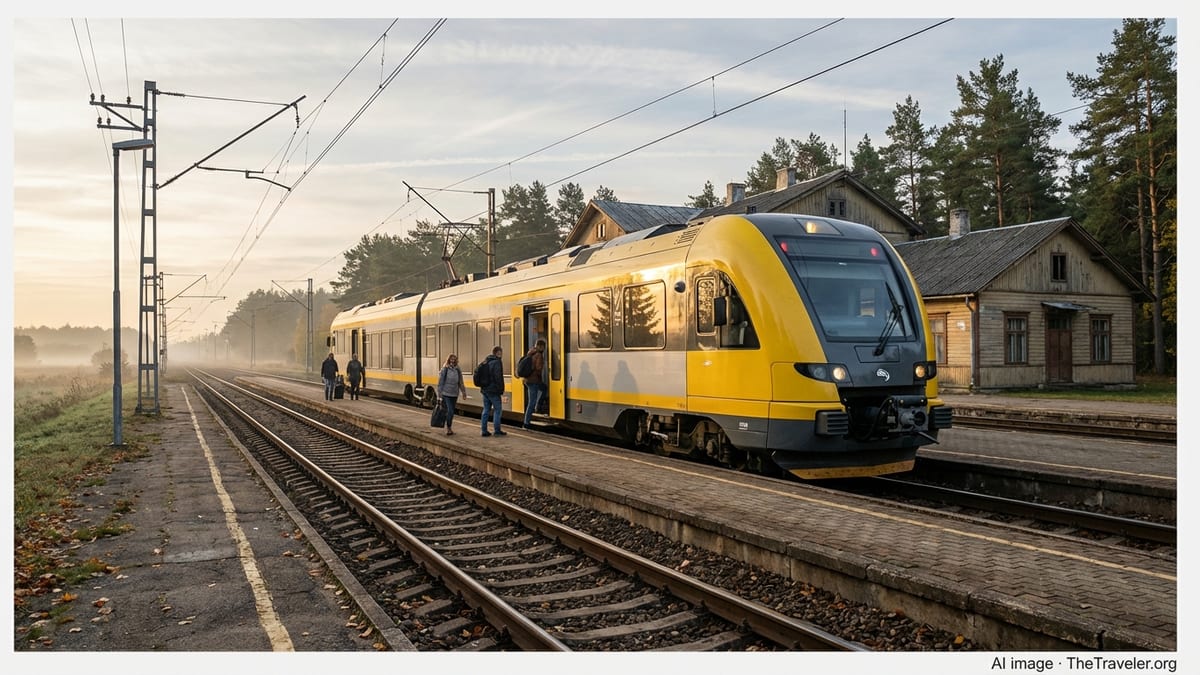
Denmark Links Green Travel To Extra Benefits For Visitors
Denmark has largely framed its latest push through the broader European agenda on sustainable tourism, but practical rewards are beginning to filter down to travelers. Publicly available information from Danish universities and mobility schemes shows that by the 2026/27 academic year, participants in cross border programs who complete at least half of their journey by train, coach, car sharing or bike can qualify for higher “green travel” grant rates, a model that is increasingly being mirrored in consumer facing offers for longer stays and multi country itineraries.
Domestic policy is also nudging travelers toward lower carbon options. Updated guidance on tax free travel allowances for 2026 confirms higher per kilometer reimbursement rates for overland travel, reinforcing the financial case for rail and bus journeys over short flights for Danish residents planning holidays around Europe. While these measures are not tourist discounts in the narrow sense, they raise the relative attractiveness of surface travel and are feeding into emerging partnerships between Danish tour operators and rail companies on package deals built around trains.
Tourism bodies in Scandinavia are meanwhile positioning Denmark as a hub for rail based itineraries that loop through Germany, Sweden and beyond, capitalizing on the country’s strong overnight and regional train connections. Marketing material highlights the possibility of combining city breaks in Copenhagen with onward rail journeys to Hamburg, Berlin and Paris using climate oriented passes, and suggests that travelers who bundle services in this way can increasingly tap into loyalty points, off peak fare reductions and occasional free travel days tied to green campaigns.
Germany Expands Climate Tickets And Discounts For 2026
Germany remains at the forefront of Europe’s experiment with nationwide public transport passes, and 2026 marks a new phase that is highly relevant for visitors. Federal information on the Deutschlandticket confirms that the flat fare monthly pass, valid on local and regional rail, tram, metro and bus networks across the country, now costs 63 euros per month as of January 2026. For tourists staying longer than a few days, this turns virtually all urban and regional mobility into a single predictable line in the travel budget.
Rail operators have layered additional rewards onto this basic climate ticket. Deutsche Bahn’s BahnBonus program, promoted as part of its sustainability drive, lets passengers collect points on most journeys and redeem them for discounted tickets or upgrades. Separate promotions allow holders of the Deutschlandticket to buy special multi trip tickets on selected intercity and high speed routes at sharply reduced prices through the end of 2026, effectively turning low carbon rail travel into a tiered reward system where extensive use can unlock long distance bargains.
Germany is also experimenting with targeted green mobility passes that have a strong tourism dimension. In 2026, a special friendship pass allows tens of thousands of young adults to travel by rail between Germany and Poland on climate friendly trains using a dedicated Interrail style ticket. The initiative is framed as both a cultural exchange and a sustainable travel project, signaling how cross border youth passes may evolve into a more regular feature of the European tourism landscape.
France Builds On Rail Pass Trials And Regional Tourist Offers
France is taking a more fragmented but still significant route toward rewarding lower impact travel. Reports from transport authorities show that the national experiment with a flat fare rail pass for young people in 2024 delivered positive social and environmental outcomes, including a measurable shift from private car to train for long distance trips. Those findings are now informing new discussions about rail based products that could be extended or adapted for visitors during peak holiday periods.
Alongside any future nationwide pass for residents, tourists already benefit from a suite of regional and metropolitan tickets that implicitly reward staying on the rails. The long standing Paris area visitor ticket, for instance, continues to offer unlimited travel on the capital’s metro, bus, tram and suburban rail services for a fixed period, and regional councils in eastern and southern France have introduced their own low cost passes for young travelers that bundle cross border rail into a single product.
French rail’s annual leave ticket remains another example of how public policy encourages train use for leisure. According to administrative guidance, workers can still access a once a year discount on round trip train journeys when traveling on holiday within France, a measure that indirectly shapes pricing and capacity on routes popular with international tourists. Combined with national restrictions on certain short haul flights where fast rail alternatives exist, the system is pushing more leisure traffic onto trains, which in turn creates a richer menu of rail focused products for visitors.
Austria And Neighbors Showcase The Power Of National Climate Passes
Beyond Denmark, France and Germany, other European countries are demonstrating how generous rail passes can anchor a reward based approach to sustainable tourism. Austria’s national climate ticket, which offers unlimited access to almost all public transport in the country for a fixed yearly fee, has become a reference point. Research analyzing its early years indicates that public transport demand grew faster than it would have without the pass, reinforcing the idea that simple, comprehensive tickets can permanently shift behavior toward trains and buses.
As of 2026, published information shows that the Austrian climate ticket has risen in price but continues to be positioned as a core climate measure. Rail operators market special add on fares into neighboring countries for climate ticket holders, effectively treating international leisure trips as an extra reward layered onto domestic green mobility. Similar thinking is visible in Hungary’s national pass, Poland’s youth oriented rail schemes and various regional passes in Switzerland and Italy that combine free local public transport with museum discounts or cable car reductions for overnight guests.
These passes, while primarily aimed at residents, significantly shape the experience of international tourists who choose to structure their trips around them. Visitors who anchor a multi week holiday in Vienna, for instance, can combine the national climate ticket with discounted cross border routes to Germany or Italy, while those staying in certain Alpine regions may find that hotel bookings come with free local transit for the duration of their stay. The pattern is clear: stick to trains and buses and the system increasingly gives something back.
EU Strategy Pushes Tourism Toward Reward Based Sustainability
Behind these national moves sits a wider European effort to tie tourism competitiveness to green and digital transitions. In its 2026 work program, the European Commission announced plans for a dedicated strategy on sustainable tourism, while the Council of the European Union adopted guidelines that call for concrete incentives to help destinations reduce emissions without undermining visitor numbers. Official documents highlight transport as a central pillar, encouraging member states to develop multimodal offers and reward schemes that make low carbon options the default for holidaymakers.
Funding streams are being aligned with this agenda. New calls under EU small business and innovation programs for 2026 urge tourism companies to redesign products so they are both climate friendly and attractive to international markets, while future research projects under the Horizon Europe framework are expected to test community driven business models for coastal and freshwater tourism that prioritize public transport, cycling and walking. For travelers, this is likely to translate into more bundled products where rail or bus tickets unlock discounted activities, local food experiences or extra nights in eco certified accommodation.
Industry data and booking trends suggest that demand is already moving in this direction. Rail based tour operators report significant year on year growth, and large holiday companies are increasingly partnering with specialist agencies to offer flight free packages that thread together trains, ferries and coaches across several countries. As Denmark, France, Germany and their neighbors refine their green mobility passes and loyalty programs, visitors who plan their 2026 European trips around tracks rather than tarmac can expect not only lower emissions, but also a growing array of financial and experiential rewards.