


More news on this day
Air travel across the United States faced major disruption as 875 flights were cancelled and approximately 8,644 delayed in a single day, with Atlanta and several other major airports reporting some of the heaviest impacts to passengers and airline operations.
Get the latest news straight to your inbox!
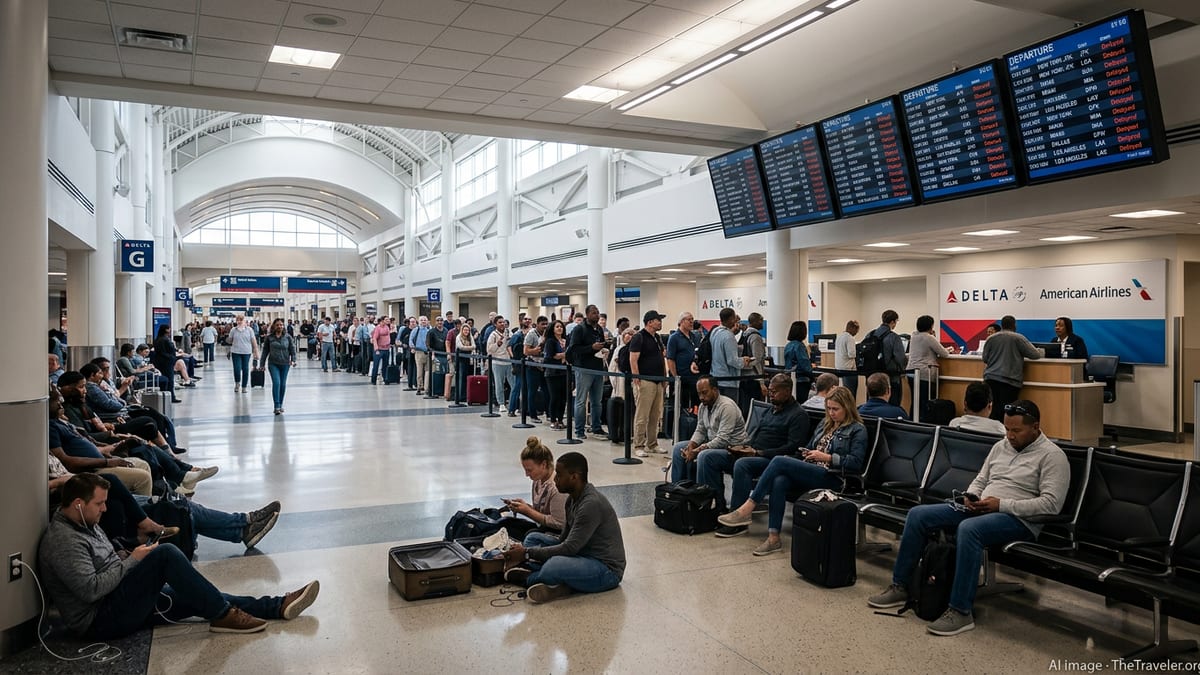
Atlanta at the Center of Nationwide Turmoil
Hartsfield Jackson Atlanta International Airport, the country’s busiest hub by passenger traffic, once again emerged as a focal point for cascading disruptions across the national air network. Publicly available data from live tracking services and industry dashboards indicated several hundred cancellations and extensive departure and arrival delays at Atlanta alone, contributing significantly to the nationwide total of 875 cancelled flights.
Operational pressures at Atlanta have been building over multiple days, according to traveler accounts and aviation discussion forums. Passengers have reported repeated rolling delays that ultimately ended in cancellations, overnight rebookings, and missed connections through the airport, underscoring how quickly bottlenecks at a single hub can reverberate across airline networks.
The impact was not confined to Atlanta. Other high volume airports including New York area hubs, Chicago, Charlotte, Boston, and Washington area fields also reported clusters of cancellations and multi hour delays. Together, these hubs form critical connection points for domestic and transatlantic traffic, so even modest local disruptions can multiply into system wide schedule chaos.
Weather, Congested Skies and Crew Rules Combine
Reports from aviation trackers and industry analyses point to a familiar set of causes behind the latest wave of cancellations. Convective summer weather across large sections of the eastern United States limited available airspace and prompted traffic management programs that slowed departures and arrivals into major hubs. Thunderstorms near Atlanta and along heavily traveled East Coast corridors, including the New York region, were repeatedly cited as triggers for long ground holds and diversion cascades.
Weather related slowdowns are only part of the picture. When flights are pushed late into the evening, tight crew scheduling can reach regulatory duty time limits, forcing airlines to cancel or further delay services even after storms move on. Accounts from recent disruptions describe aircraft arriving hours behind schedule with only part of a required crew available, making it difficult to quickly restore normal operations the following morning.
Air traffic control capacity constraints and already busy summer schedules then compound the strain. When multiple hubs are affected on the same day, airlines struggle to reposition aircraft and crews to where they are needed. Industry research on delay propagation has long shown that a cluster of problems at a handful of large hubs can propagate throughout the network for days, a pattern that appears to be repeating in this latest disruption.
Major Airlines Feel the Strain
Large U.S. carriers with significant operations in Atlanta and other affected hubs absorbed the bulk of the cancellations and delays. Publicly available airline disruption summaries and consumer facing advisories indicate that Delta Air Lines, which operates its largest hub in Atlanta, has been managing wide ranging schedule changes, including multiple hour delays on domestic and transatlantic routes that touch the city.
American Airlines and United Airlines, each heavily exposed at other key hubs such as Charlotte, Chicago, and New York area airports, also faced knock on disruption as weather and congestion rippled across their networks. Industry trackers that monitor cancellations by carrier showed the three largest U.S. network airlines at or near the top of the daily cancellation rankings, with low cost and regional operators also reporting scattered impacts where they rely on shared infrastructure and airspace.
Travelers posting on public forums referenced missed connections, rebookings through secondary airports, and extended waits in terminal queues as customer service teams worked through backlogs. In some cases, passengers reported that downstream legs on separate tickets or international itineraries had to be abandoned entirely when key domestic feeder flights from Atlanta or other hubs were cancelled or delayed beyond connection windows.
Ripple Effects for Travelers Across the Country
The immediate effect of 875 cancellations and more than 8,600 delays is counted in missed family events, disrupted business trips, and unexpected overnight stays. But the knock on effects can linger well beyond the headline day of disruption. Once aircraft and crews fall out of position, schedules across the following 24 to 48 hours often require repeated adjustment, meaning travelers on later days may still experience residual delays even when weather appears benign.
Data from previous large scale disruption events show that recovery can be uneven, with some hubs returning to closer to normal operations faster than others. Passengers whose journeys depend on tight connections through Atlanta or congested East Coast fields remain particularly vulnerable when the system is working to reset itself. Reports from recent days describe travelers deliberately choosing longer but more reliable routings, or shifting to early morning departures in hopes of avoiding the worst of afternoon and evening storms.
Consumer advocates note that such high volumes of delays and cancellations test the limits of rebooking systems, hotel availability near major hubs, and the capacity of airline call centers and airport service desks. Even when carriers offer waivers that allow voluntary itinerary changes, heavily booked summer flights leave limited options for prompt re accommodation, leading many travelers to accept next day or multi stop reroutes.
What Passengers Can Expect in the Coming Days
With summer travel demand still elevated and weather outlooks suggesting the potential for additional storm systems across parts of the country, aviation analysts expect the air travel environment to remain fragile in the short term. While the specific tally of 875 cancellations and 8,644 delays represents a snapshot in time, similar spikes have occurred repeatedly during the season when storms intersect with peak schedules.
Travel planning resources emphasize that passengers flying through Atlanta, New York, Chicago, Charlotte, or other major hubs in the coming days should monitor flight status frequently, use airline apps for real time notifications, and be prepared for gate changes and rolling departure times. Flexible travelers are increasingly encouraged to build in longer connection times or to select early day departures that are less exposed to cascading afternoon and evening disruptions.
Industry observers also highlight the importance of understanding each airline’s policies on rebooking, meal vouchers, and hotel accommodations during irregular operations. While rules vary by carrier and by cause of disruption, being familiar with available options can help travelers make faster decisions when flights are cancelled or substantially delayed. As the current wave of problems illustrates, even a single day’s disruption centered on Atlanta and other key airports can reverberate far across the national air travel network.