


More news on this day
A rush-hour collision between two London-bound passenger trains near Bedford, around 60 miles north of London, has killed one person and left dozens injured, according to early reports from British transport and emergency agencies.
Get the latest news straight to your inbox!
Rush-hour crash on key London commuter route
Publicly available information indicates that the collision occurred on Friday, June 19, on a busy stretch of the Midland Main Line near the town of Bedford. Both trains were traveling south toward London St Pancras International when one service struck the rear of another on the same line during the evening peak period.
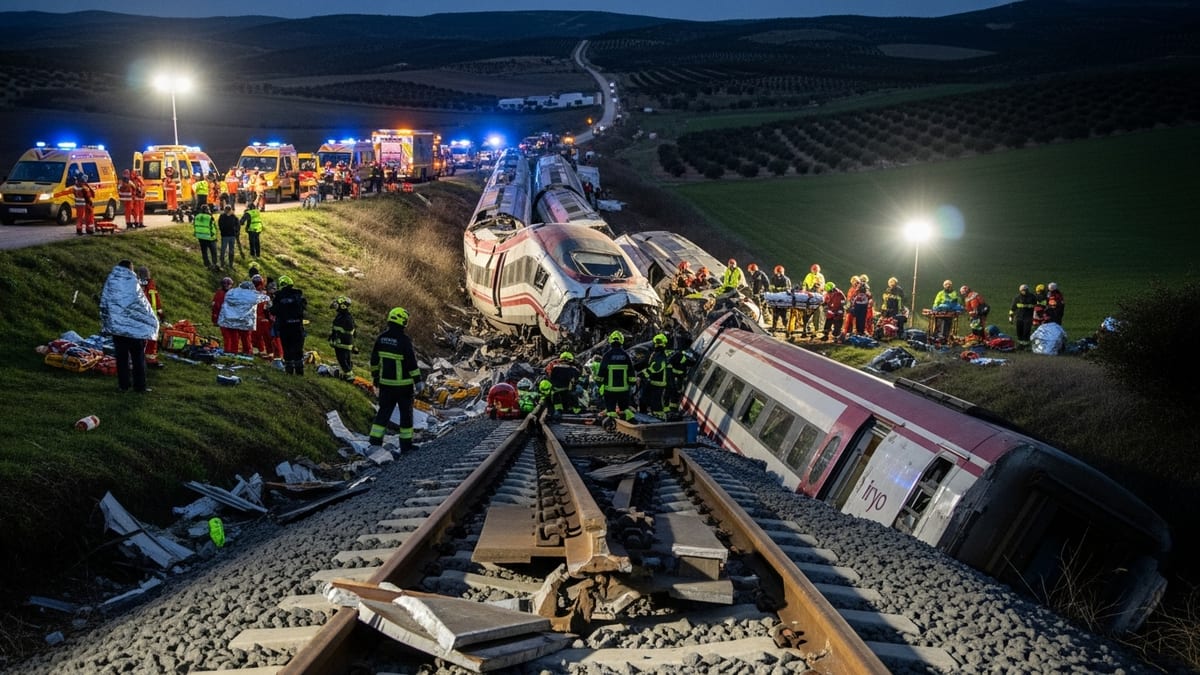
Regional and international news coverage describes scenes of significant damage to carriages and a large-scale emergency response around the tracks just south of Bedford. Photos and video shared on social media and carried by broadcasters show emergency vehicles lining a road parallel to the railway, with passengers being guided away from the trains.
Rail tracking data cited in multiple reports places the time of the impact at around 5:15 p.m. local time, a period when many commuters travel between London and towns across the East Midlands. The section of line involved is one of the main rail corridors linking the capital with cities such as Nottingham and Leicester.
The collision led rail operators to suspend or severely curtail services on the affected route for the rest of the day, with National Rail information platforms warning of major disruption for passengers attempting to travel between London, Bedford and stations further north.
Casualties and hospitalizations reported across the region
Figures from the East of England Ambulance Service and other health authorities, as relayed in news reports, indicate that one person died at the scene, believed to be the driver of one of the trains. The same accounts state that close to 90 people in total sustained injuries of varying severity.
Among those hurt, publicly released tallies suggest that at least 11 people suffered very serious injuries and more than 20 others were seriously injured, with the remainder treated for minor wounds such as cuts, bruises and possible fractures. Hospitals across the region received patients from the crash, with some in critical condition on Saturday, June 20.
Images from the site show passengers with bandages and emergency blankets being assessed beside the tracks and near the roadside. Some people appear able to walk unaided, while others are shown on stretchers being transferred to ambulances and air ambulances.
Health services activated what reports describe as a major incident protocol, allowing additional staff, vehicles and specialist teams to be deployed to the crash site and surrounding hospitals. This included hazardous area response teams and critical care units accustomed to responding to large-scale transport accidents.
Investigation focuses on cause and sequence of events
British Transport Police and the Rail Accident Investigation Branch have begun inquiries into how a rear-end collision occurred on one of the country’s most intensively monitored rail corridors. Published coverage indicates that investigators are expected to examine signalling records, on-board data recorders, track conditions and any reports of technical issues before the crash.
Early descriptions suggest that a southbound passenger service from Corby collided with another London-bound train originating from Nottingham. Both trains were operated by East Midlands Railway and were scheduled to terminate at London St Pancras, raising questions about how separation between the two services was lost.
Safety specialists are also likely to look at communication between drivers and control centers, the performance of automatic protection systems, and whether any speed restrictions or temporary operating instructions were in place. Weather conditions at the time were reported as typical for early summer and are not currently highlighted as a factor.
Rail analysts quoted across multiple outlets note that rear-end collisions on modern, signalled mainlines in Britain are rare events. Until recent years, the country’s rail network had one of the strongest safety records in Europe, with only a handful of multi-train crashes resulting in fatalities over several decades.
Disruption for passengers and renewed scrutiny of rail safety
The crash has caused heavy disruption for thousands of passengers traveling between London and the East Midlands. Rail operators suspended services through the affected section while engineers and investigators worked among the damaged carriages, overhead lines and track infrastructure.
Replacement road transport and diversionary routes have been used where possible, but publicly available journey-planning information points to extended travel times, overcrowding on alternative services and advice against nonessential trips on parts of the network north of London.
Trade unions representing rail staff, including driver and crew organizations, have issued statements expressing concern about the impact on workers aboard the trains and calling for a thorough, transparent investigation. Passenger advocacy groups are also drawing attention to the experience of those caught up in the crash and the importance of clear, timely communication in the aftermath.
The incident comes at a time of continuing debate about investment in Britain’s railways, including the balance between upgrading existing lines, improving signalling systems and managing increasing passenger demand on busy commuter corridors into the capital.
Context within Britain’s modern rail safety record
Despite the severity of the collision near Bedford, experts cited across news reports emphasize that serious rail accidents in the United Kingdom remain relatively uncommon. For many years, the network has operated with a very low rate of passenger fatalities compared with overall journey numbers.
However, the crash adds to a small number of high-profile incidents in recent times that have drawn renewed attention to infrastructure resilience and operational safeguards. Previous investigations into other serious collisions and derailments in Britain have highlighted factors such as equipment failures, driver workload, speed management and the challenges of running dense timetables on constrained routes.
The findings of the formal investigation into the Bedford collision are expected to shape future recommendations on train protection technology, trackside signalling and procedures for managing closely spaced services heading into major London terminals. Until those findings are available, publicly available information suggests that operators and regulators are focusing on supporting those affected and restoring services safely.
For travelers, the crash serves as a stark reminder of the importance of safety systems that typically function without incident on thousands of daily journeys. While rail remains one of the safest modes of transport within the United Kingdom, this event north of London is likely to influence public discussion about investment priorities and risk management on the country’s busiest routes.