


More news on this day
European air travel faced another difficult day on June 30 as operational data showed 95 flights cancelled and 1,523 delayed across multiple countries, disrupting schedules for carriers including British Airways, Iberia, KLM and SAS at key hubs such as Amsterdam, London and Madrid.
Get the latest news straight to your inbox!
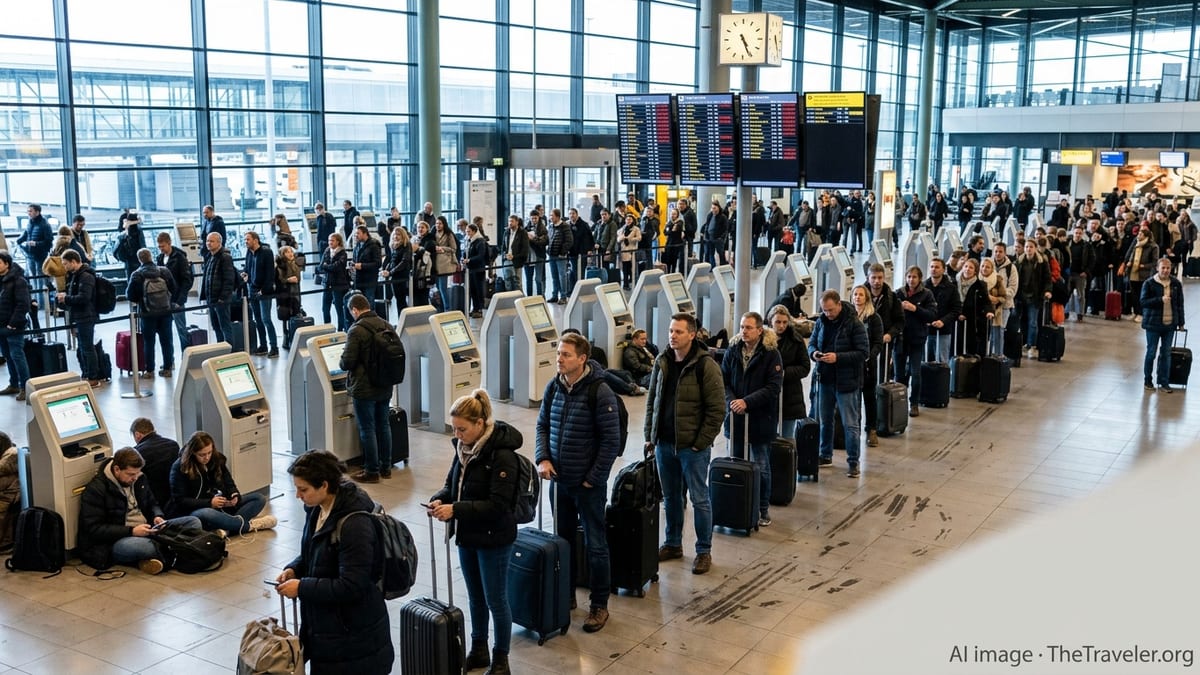
Fresh Wave Of Disruption Across Key European Gateways
Publicly available tracking figures for June 30 indicate that the latest wave of disruption stretched across England, Scotland, Spain, Portugal, Norway, Hungary and several other European states, affecting both domestic and international services. Airports in the Netherlands, Switzerland, Germany, Denmark, Sweden and Croatia also recorded clusters of cancellations and late departures as delays in one part of the network quickly rippled across the region.
Amsterdam Schiphol, London Heathrow, London Gatwick, Madrid Barajas, Zurich, Munich, Oslo Gardermoen, Copenhagen, Stockholm Arlanda, Düsseldorf, Budapest, Glasgow, Dubrovnik and Madeira were among the airports reporting either cancellations or extensive delays. Monitoring platforms show that many of the affected flights were short haul European sectors, but the knock-on effect extended to long haul departures as aircraft and crews missed scheduled rotations.
Reports indicate that the pattern on June 30 followed a now familiar trend for the 2026 summer season, with bursts of congestion, weather issues and capacity constraints combining to push the system beyond its available buffers. Even relatively modest disturbances at a few large hubs translated into significant schedule disruption as the day progressed.
The figures for June 30 add to a series of difficult days for European aviation through June, with previous spikes including mid-month weekends where more than 2,000 flights were delayed or cancelled within 24 hours, according to summary data compiled by passenger rights and travel tracking services.
Flag Carriers And Network Airlines Under Pressure
Among the airlines most visibly affected on June 30 were British Airways, Iberia, KLM and Scandinavian carrier SAS, whose networks rely heavily on tightly timed banks of flights through major hubs. Disruption at Amsterdam, London and Madrid created bottlenecks for these and other operators, complicating connections for passengers traveling beyond Europe.
Earlier in June, similar pressure points were recorded for a range of European airlines as daily cancellations and delays mounted at hubs including Amsterdam, Frankfurt, London Heathrow and Barcelona. Industry data for several days in mid and late June highlight KLM, Lufthansa, Ryanair and other large carriers among those with elevated numbers of delayed or cancelled services as they navigated peak summer demand.
According to published operational summaries, KLM was repeatedly among the airlines with the highest number of disrupted flights on some June dates, reflecting its dependence on Amsterdam Schiphol as a single large transfer hub. British Airways and Iberia, anchored at London and Madrid respectively, have faced comparable challenges when local congestion or adverse weather has coincided with already busy schedules.
Scandinavian carrier SAS has also been affected when disruptions at Copenhagen or Oslo spilled into its wider Nordic and continental European network. For passengers, this has meant missed connections, overnight stays and rebookings, even when their original flights were operating within the same general region.
Summer Demand, Capacity Limits And Knock On Effects
Operational analyses from European aviation bodies for the spring and early summer period point to a network already running close to capacity as leisure travel demand continues to recover and grow. Major hubs such as Amsterdam Schiphol, London Heathrow and Madrid Barajas are once again among the busiest airports in the region measured by daily movements, leaving limited room to absorb unexpected constraints.
Recent overviews of air traffic flow management delays across Europe note that average minutes of delay per flight have edged up compared with some earlier periods, even as total traffic volumes increase. Capacity and staffing issues at certain air traffic control centers, together with scheduled infrastructure works at selected airports, have contributed to recurring bottlenecks.
Weather has remained a persistent variable, with thunderstorms, low visibility and strong winds periodically disrupting operations and triggering spacing restrictions. When such events coincide with peak departure waves on busy travel days, airports can see rapid build ups of delayed aircraft, which in turn strain ground handling and gate availability.
Because many European airlines operate complex networks with aircraft flying multiple legs per day, a delay early in the schedule can cascade through later flights. The result is that a technical issue, weather cell or congestion episode at a single hub in the morning can still be causing missed connections and late arrivals thousands of kilometers away by evening.
Passenger Experience And Rights Under European Rules
The sequence of disruptions in June has left many travelers facing long waits in terminals, last minute gate changes and rebooked itineraries. Messages shared on public travel forums and social platforms in recent weeks describe passengers waiting for updates on departures from London, Amsterdam, Oslo, Budapest and other cities as airlines sought to rearrange operations during particularly congested periods.
Consumer advocates continue to point passengers toward European Union Regulation 261/2004, under which travelers on many flights departing from or arriving in the EU, the United Kingdom and associated states may be entitled to compensation or assistance when flights are cancelled or significantly delayed. The level of support and any financial compensation depend on factors such as the length of the delay, the distance flown and whether the disruption was within the carrier’s control.
Guidance from passenger rights organizations stresses that, regardless of cause, airlines are generally expected to provide care and assistance during major disruptions. This can include meals and refreshments during prolonged waits, hotel accommodation and local transport when overnight stays are required, and the option of rerouting or a refund when flights are cancelled.
However, recent case studies highlighted by rights groups and travelers illustrate that accessing these protections can be complex in practice, particularly during large scale events when airline customer service channels are overwhelmed. Passengers are frequently advised to retain boarding passes, booking confirmations and written notices of delays or cancellations to support any later claims.
Outlook For Peak Summer Travel
With July and August still ahead, aviation analysts expect further pressure on Europe’s air traffic network, particularly on weekends and popular holiday travel days. Demand patterns suggest that Mediterranean destinations in Spain and Portugal, as well as northern routes through Norway and Scotland, will remain busy, maintaining the potential for new disruption when operational issues arise.
Network performance briefings from regional air traffic management bodies indicate that some structural constraints, such as limited airspace capacity over certain countries, are likely to persist in the short term. Combined with ongoing infrastructure projects and periodic weather related disruptions, these factors point to a continued risk of irregular operations at major hubs.
For travelers planning to pass through Amsterdam, London, Madrid and other large airports, publicly available advice from airlines and travel organizations emphasizes allowing extra connection time where possible, monitoring flight status frequently on the day of departure and considering earlier departures when itineraries involve time critical onward travel.
While the scale of cancellations and delays recorded on June 30 underscores the vulnerability of the European air travel network during peak periods, industry observers note that many flights are still operating broadly on time. The challenge for passengers and airlines alike will be navigating the days when multiple pressures converge and the system again reaches its limits.