


More news on this day
European governments have tightened security guidance for trips to France following recent episodes of urban unrest, with updated advisories urging travelers to avoid riot hotspots, monitor local media and be prepared for short-notice disruption across major cities.
Get the latest news straight to your inbox!
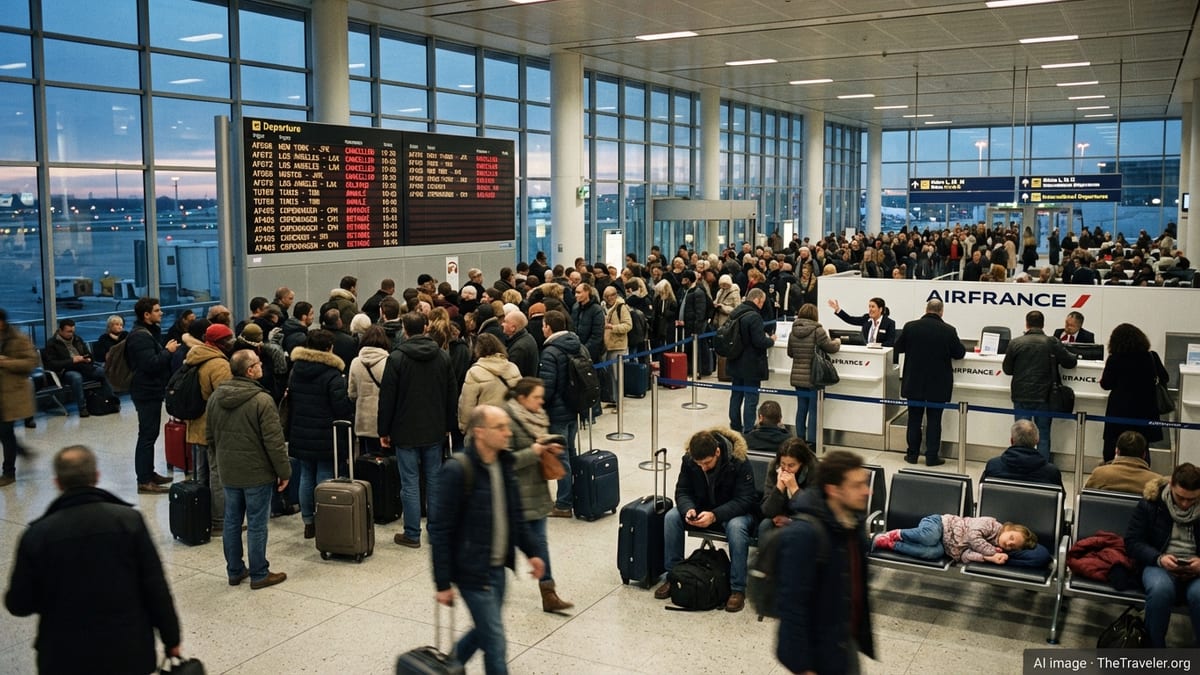
Heightened concern after riots linked to police shooting
Recent European travel advisories refer back to the wave of riots that swept France after the June 2023 police shooting of 17-year-old Nahel Merzouk in Nanterre, a suburb of Paris. Published coverage documents how protests over the incident quickly escalated into days of violence, arson and clashes with police in Paris, Marseille, Lyon, Lille and other cities.
According to open-source reporting on the unrest, several governments, including the United Kingdom, Norway and other European states, publicly recommended that their citizens exercise caution in France at the height of the riots. Some advisories urged tourists to stay away from specific neighborhoods where demonstrations and overnight disturbances were concentrated, while stressing that most visits to the country continued without serious incident.
The 2023 riots have since become a reference point in many countries’ assessments of social unrest in France. Security bulletins now frequently note that large protests over policing, economic pressure or political reforms can develop rapidly and, in some cases, turn violent. This context underpins current advice that travelers should remain alert in urban areas where marches or gatherings are taking place.
Although France is not currently the subject of blanket “do not travel” warnings from major European governments, recent advisories form part of a broader pattern of caution built on those earlier disturbances and on France’s long-running exposure to terrorism and protest-related unrest.
National advisories across Europe emphasize vigilance
Several European foreign ministries have adjusted their France pages in recent months to reflect ongoing security concerns. Publicly available guidance from Germany’s Auswärtiges Amt, for example, highlights France’s elevated risk environment and notes that protest movements can disrupt public life, particularly in Paris and other major cities. Travelers are urged to follow local announcements, take heed of police cordons and respect instructions at roadblocks or around sensitive sites.
The Netherlands’ official travel-advice portal similarly draws attention to the heightened terrorism alert in France and urges Dutch visitors to remain aware of their surroundings, especially in crowded public spaces and on public transport. While the general recommendation still allows leisure travel, the language makes clear that the Dutch government expects travelers to actively monitor French news and be ready to adjust plans if the security situation changes.
Other European governments, including the United Kingdom, have framed their France guidance around “safety and security” updates. The UK’s online advisory notes that demonstrations and industrial action can lead to localized clashes and transport disruptions. While it does not broadly advise against travel, it encourages visitors to check operator updates, avoid demonstrations and be ready for sudden changes to itineraries.
These advisories do not carry the same weight as formal travel bans or “do not travel” notices, but they signal a shared European concern that periods of unrest in France can flare quickly, particularly when tensions around policing, social inequality or high-profile court cases come to the surface.
What travelers are being told to do on the ground
Across multiple European advisories, the practical guidance for travelers in France has converged on similar themes. Visitors are encouraged to stay away from areas where protests are underway, especially after dark, and to avoid filming or photographing confrontations between demonstrators and security forces. Public information also recommends that travelers leave any area where they notice a sudden buildup of police vehicles, tear gas or crowds moving at speed.
Rail services, metro lines and bus routes are identified as potential pressure points when unrest occurs. Past coverage of the 2023 riots describes overnight curbs on local transport and short-notice closures of stations in affected neighborhoods. Governments now advise passengers to confirm schedules with rail operators on days when demonstrations are planned, and to allow extra time for checks or diversions.
European citizens heading to France are further advised to ensure that their travel insurance is valid for civil unrest and to keep digital and paper copies of identification documents accessible. French regulations require individuals to be able to prove their identity when requested, and foreign travelers are routinely reminded of this in official safety notices. Staying reachable by mobile phone, with roaming enabled and emergency contact numbers stored, is also widely recommended.
Publicly available information from French and foreign authorities highlights the FR-Alert mobile warning system, which can broadcast messages to phones in a defined geographic area during emergencies, including major security incidents. European travel advisories now frequently mention such tools as part of a layered approach to staying informed while in France.
Implications for trips during busy travel seasons
The tightening of language around security in France comes as the country continues to host major international events and attract high numbers of visitors to Paris, the Riviera and key cultural regions. European governments have signaled that periods around national holidays, large demonstrations or high-profile sports fixtures may carry a higher likelihood of protests and heavier policing in city centers.
Travelers planning city breaks or multi-country rail itineraries through France are being encouraged to build flexibility into their schedules. This may include booking refundable accommodation, considering earlier arrival times in cities where evening protests are expected, and identifying alternative routes in case a particular station or district becomes inaccessible for several hours.
At the same time, the overall tone of most European advisories remains that France is still a functioning tourism destination where millions of journeys take place safely every year. The emphasis is shifting toward informed travel rather than avoidance. Governments present their warnings as tools to help citizens understand potential risks and adopt practical precautions, rather than as instructions to cancel holidays outright.
For travelers, the result is a more nuanced picture. The renewed focus on security following the riots means that urban visitors in particular are expected to stay engaged with local news, observe police cordons and adapt plans quickly if tensions rise. Those willing to follow this guidance can still access France’s cities, coasts and countryside, but now under a clearer understanding of how swiftly the security landscape can change.