


More news on this day
With images of burning cars and riot police back in the headlines, many would-be visitors are again asking whether it is safe to travel to Paris right now, even as airlines, hotels and tour operators continue to report strong demand for autumn and winter trips to the French capital.
Get the latest news straight to your inbox!
Current Security Picture In Paris
Recent weeks have seen a new wave of student-led demonstrations and nighttime unrest in parts of France, including Paris. Published coverage from international outlets describes clashes between small groups of rioters and security forces, along with incidents of arson and looting in certain neighborhoods and suburban areas. Some reports from mid-October 2026 mention localized curfews being discussed or introduced in cities judged most affected by the violence.
The unrest has largely been concentrated around specific protest routes, squares and thoroughfares, often announced in advance, rather than across the entire city. Daytime life in many central districts, including major visitor areas along the Seine and around flagship museums, has continued with shops and attractions open. However, when protests flare in or near central zones, visitors can encounter sudden station closures, tram or bus diversions and a heavy visible security presence.
Publicly available information from travel-advice services and local observers continues to characterize the underlying security environment in France as serious but managed. France has kept a high level of vigilance in place for several years because of the risk of terrorism, and that framework remains in effect alongside the current focus on handling protests and maintaining order in busy urban areas.
Travel forums and on-the-ground reports in mid-October 2026 describe a city where most tourists are still moving around freely but are advised to watch for live updates on protest times and locations, especially near hubs such as Place de la République, Bastille, Nation and major boulevards on the Left Bank.
What Official Advisories Are Saying
Governments in North America, Europe and Asia continue to treat France as a major tourist destination, but recent updates to official advisories underline the need for situational awareness. The United States, Canada and several European countries currently advise travelers to exercise increased caution in France because of risks related to terrorism and civil unrest, while stopping short of telling citizens to avoid Paris or the country altogether.
These advisories typically highlight the possibility of demonstrations turning confrontational, note that even peaceful gatherings can prompt transport disruption, and remind visitors that attacks in crowded public places in France over the past decade have shaped a sustained security posture. Similar guidance from other European states emphasizes that protests are a recurring feature of French political life and are often announced ahead of time, giving travelers an opportunity to adapt their plans.
None of the major national advisories reviewed this week recommend canceling leisure travel to Paris outright. Instead, they focus on staying informed about the locations and timing of gatherings, following instructions from local staff at stations or tourist sites, and remaining attentive in areas that attract large crowds such as shopping streets, transport hubs and major landmarks.
Because wording and alert levels can change quickly, travelers are encouraged to check their own government’s latest bulletin shortly before departure and again during their trip, paying attention to sections on security, demonstrations and transport.
Legacy Of Olympic-Era Security
The security backdrop in Paris in late 2026 cannot be separated from the extensive measures put in place for the 2024 Olympic and Paralympic Games. French government reports and parliamentary reviews released in 2025 describe the Olympic security operation as a success, noting that competition venues were not significantly disrupted by security incidents and that several planned violent acts were intercepted in advance.
Planning for the Games involved substantial investment in surveillance technology, crowd management systems, and coordination between police, transport operators and private security. During the event period, tens of thousands of police and gendarmes were deployed on a daily basis, with detailed screening and credential systems in place around key zones. Official assessments indicate that these measures helped reduce violent theft on public transport during the Olympic months compared with the previous year.
Some of the hardware and procedures introduced for the Olympics, such as enhanced camera networks in and around stations and more structured crowd-control routes, have remained or informed how Paris now manages large events and busy visitor flows. Policy documents discussing the Olympic legacy highlight the intention to integrate “security by design” into urban planning, meaning that certain safeguards are increasingly built into streetscapes, transport hubs and public spaces.
For travelers, the main effect is that an elevated security presence, bag checks at major attractions and visible patrols in stations and around high-profile sites are now a routine feature of a trip to Paris. These measures can feel intrusive to some visitors but are framed by French authorities as part of a broader long-term strategy to keep the city functioning under high visitor numbers and complex risk conditions.
How Protests And Strikes Affect Visitors
Beyond the headline images of clashes at the margins of demonstrations, the most immediate impact for many visitors comes from disruptions to transport and city logistics. Marches and rallies in Paris often take place on weekday afternoons or Saturdays and follow announced routes linking major squares, which can lead to rolling street closures, diverted bus lines and temporary shutdowns of nearby Metro and RER stations.
Travelers in recent days have reported largely normal sightseeing conditions punctuated by isolated pockets of tension when they inadvertently approached protest areas, especially near key gathering points. Some stayed in their hotels or adjusted dinner or theater plans on evenings flagged for larger demonstrations. Others described re-routing their journeys when real-time transport apps showed closures or delays linked to marches or clean-up operations.
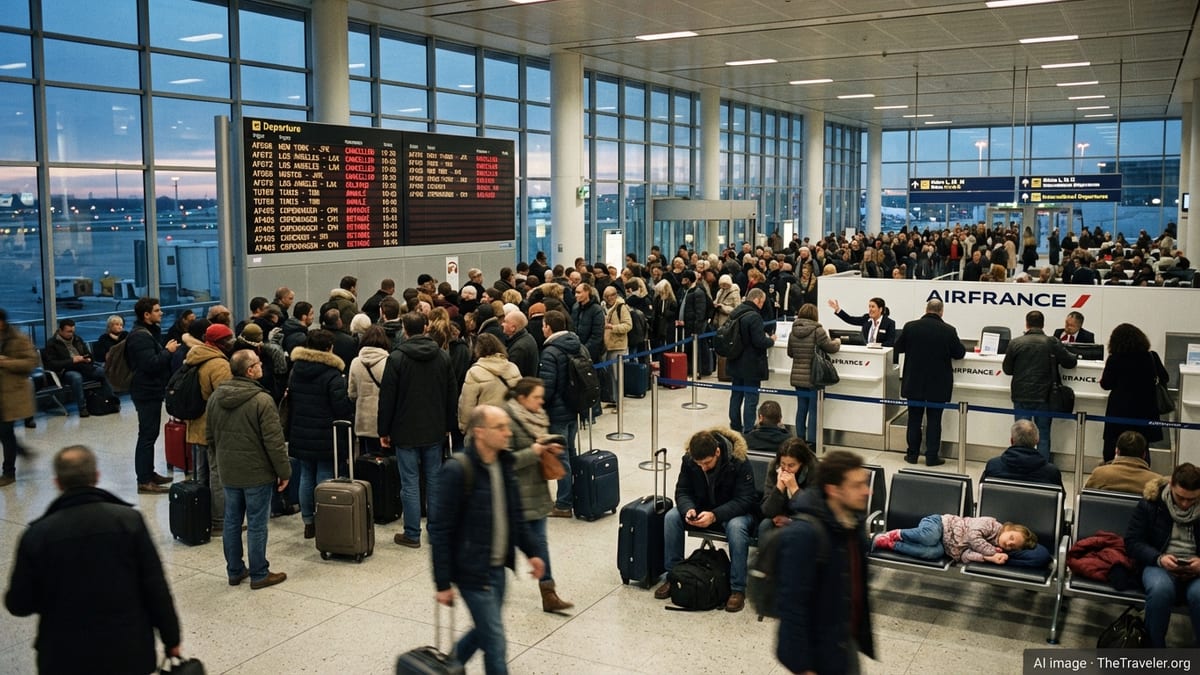
Strikes are a separate but related factor. French unions regularly call sector-wide actions, including in transport, and although no long-term nationwide shutdown is in place at the time of writing, short-notice walkouts can affect rail, suburban lines or airports. When this happens, airlines and rail operators typically publish modified timetables and encourage passengers to rebook, while local services run reduced but still functional schedules on key corridors.
Visitors booking trips for late 2026 are therefore advised to leave extra time for transfers, especially when traveling to and from airports or major rail stations, and to keep flexible plans on days when large protests or strikes are announced. Central neighborhoods that are not on major demonstration routes may remain comparatively quiet even during headline events elsewhere in the city.
Practical Safety Advice For Travelers Now
For most tourists, Paris in October 2026 remains a working world city with crowded museums, busy restaurants and a full calendar of cultural events. The prevailing message from official advice and local observers is not to abandon travel plans outright, but to approach the trip with informed awareness and a willingness to adapt in real time.
Current guidance stresses avoiding protest gatherings, particularly after dark, and steering clear of any confrontations between small groups and security forces. Travelers are encouraged to monitor trusted news outlets and transport operators for updates, especially on days when large marches are expected, and to follow on-the-spot instructions from station staff and event organizers if routes are changed or access points moved.
Simple precautions remain relevant: keeping valuables discreet in crowded places, using official taxi ranks or licensed ride-hailing services, and favoring well-lit streets when walking at night. Many central districts popular with visitors, from the historic core around the Île de la Cité to neighborhoods in the 4th, 5th, 6th and 7th arrondissements, continue to see heavy foot traffic into the evening, supported by regular public transport and a strong hospitality infrastructure.
Ultimately, whether it feels comfortable to travel to Paris right now will depend on each traveler’s personal risk tolerance and flexibility. Those prepared for possible demonstrations, visible security checks and occasional delays are still finding the city’s main sights, food scene and cultural institutions open and welcoming, even as France navigates another period of domestic tension.