


More news on this day
Germany has updated its travel advice for France in response to a wave of protests and overnight rioting across French cities, urging travelers to exercise heightened caution but not explicitly advising against trips, according to new guidance published in Berlin on October 18 and 19.
Get the latest news straight to your inbox!
Federal Foreign Office Tightens Guidance for France Trips
Germany’s Federal Foreign Office has refreshed its detailed travel and security advice for France, highlighting the risk of further demonstrations and localized violence after one of the most turbulent weekends the country has seen in years. The updated advisory, dated October 18 and listed as unchanged on October 19, underlines the potential for sudden protests, clashes with police, property damage and looting in major urban centers.
Publicly available information shows that the advisory does not introduce a formal travel warning or an instruction to cancel journeys. Instead, it frames the situation as one that requires “particular caution” and close monitoring of local media and city-level announcements. Travelers are encouraged to keep itineraries flexible, stay away from protest hotspots and follow instructions from local security services on the ground.
The revision comes amid wider security messaging from European governments around France. European Union documentation on temporary border controls records that France already has reinforced checks in place through October 31 because of terrorism concerns, antisemitic incidents and criminal networks linked to irregular migration. Those measures remain separate from the new German alert but form part of the broader security backdrop for anyone entering or exiting French territory.
Germany’s central travel advice portal now groups France among destinations where unrest and terrorism risks coexist, pointing to the need for robust contingency planning by tour operators, school groups and independent visitors. Insurers and large travel companies are using the advisory as a reference point when assessing whether trips should proceed or be modified.
Unrest Follows Nationwide Protests and Riots
The German move follows a dramatic escalation of unrest in France since mid-September, when student and high school demonstrations over education funding and conditions began spreading to other regions. By October 17, those mobilizations had converged with anger over rising fuel prices and the broader cost of living, prompting large marches in Paris, Marseille and a string of provincial cities.
Published coverage from French and international outlets describes how largely peaceful daytime rallies gave way to night-time rioting over the weekend of October 17 and 18. In Paris, small but highly mobile groups were reported setting fires, smashing shopfronts and targeting symbols of state authority. In Marseille, masked individuals forced their way into City Hall and caused significant damage to public property, including the toppling of a statue of Marianne.
According to compiled reporting cited in European media roundups, several thousand arrests have been made across France since the latest wave of demonstrations intensified, with hundreds linked directly to the October 17 and 18 violence. While the epicenter has been the Paris region, serious incidents have also been recorded in cities such as Lyon, Toulouse, Rennes and Nantes, often in or near districts that are familiar to visitors.
The unrest is part of a broader pattern of European protests fueled by energy costs, inflation and frustration over public services. Chronologies of the 2026 European unrest point to France as the focal point of this wider trend, with the October 17 riots becoming a reference date for policymakers assessing spillover risks to neighboring countries, including Germany.
What the Alert Means for German and International Travelers
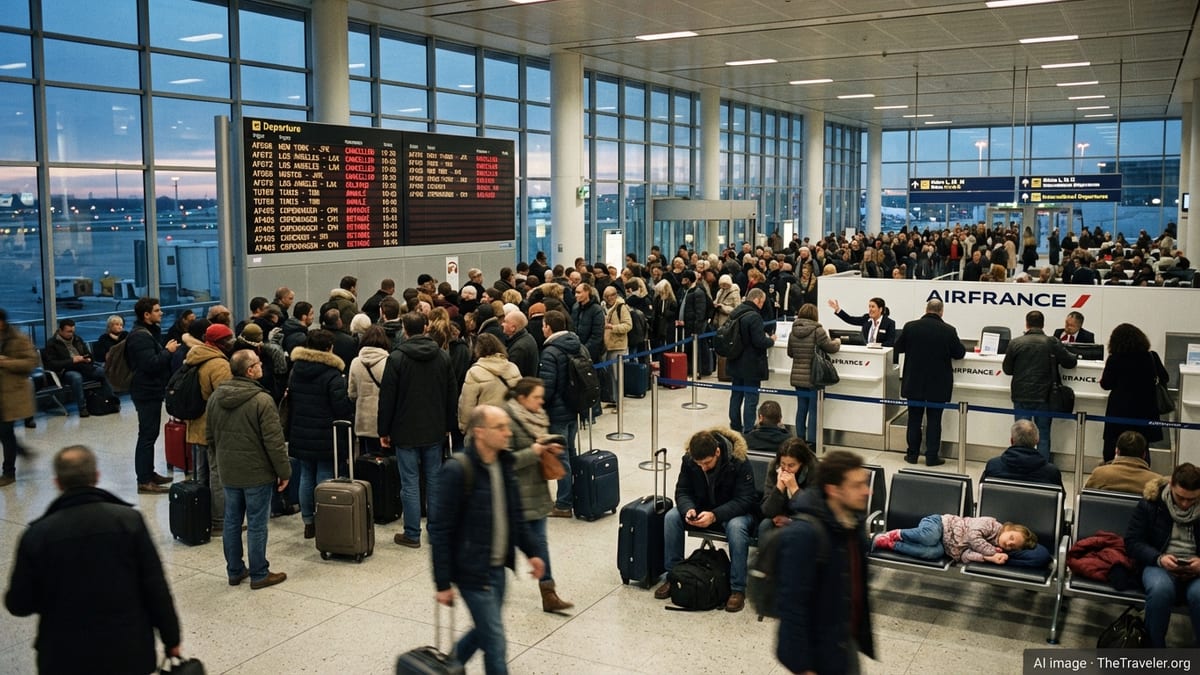
For travelers, the practical impact of Germany’s alert is nuanced. Flights, long distance trains and cross-border services between Germany and France are largely operating on published schedules as of October 19, according to timetables and operator statements. However, both German and French advisories stress that localized disruption is possible when demonstrations are announced, particularly on certain avenues in central Paris and around major squares in big cities.
Publicly available guidance recommends avoiding large crowds, not only at protests but also at locations that might be seen as symbolic targets, such as government buildings, major shopping streets and police prefectures. Visitors are advised to leave areas immediately if they notice a heavy buildup of riot police, tear gas or fireworks, which have been widely documented in recent confrontations.
Insurance specialists and travel risk consultancies note that Germany’s alert is likely to be interpreted as a significant security development in policy terms, but not as an automatic trigger for trip cancellations. Many package holiday contracts refer to the stricter category of a formal “travel warning” for that, which Berlin has not issued for France. Travelers are therefore encouraged to check the fine print of their policies and speak with providers if they are considering changing dates.
For independent travelers, online advisories highlight a few concrete steps: registering contact details with consular services if staying for a prolonged period, keeping digital copies of travel documents, and ensuring that mobile phones can receive roaming alerts and emergency notifications. These measures are framed as general good practice, but they take on added relevance in periods of unrest.
Impact on Popular French Destinations
Despite the images of smashed shopfronts and burning vehicles that have circulated globally, reporting from travel community forums and study abroad providers indicates that daily life continues relatively normally in many tourist-focused neighborhoods. Museums such as the Louvre and Musée d’Orsay, as well as attractions like the Eiffel Tower, were open around their usual hours in the days preceding the German alert, although some visitors reported heavy crowds, sporadic delays and short-notice security checks.
In Paris, the main disruption risk relates to public transport at times and locations where protests are announced. Metro stations along demonstration routes can close temporarily, and tram or bus lines may be diverted. User reports from recent days describe packed trains on certain lines but also stress that most journeys were completed without incident when trips avoided peak protest hours.
Other French regions popular with German visitors, such as the Alsace wine route, the Côte d’Azur and Brittany, have so far seen less intense unrest than major metropolitan areas. Local media and municipal notices still advise residents and tourists to keep track of any planned demonstrations, especially in larger hubs like Strasbourg, Nice and Nantes, where protest calendars are being shared in advance.
Travel specialists observing booking patterns report that some group organizers are postponing school exchanges and youth trips scheduled for late October, often citing parental concern about the images of violence. At the same time, individual bookings for autumn city breaks in Paris and Lyon remain available across major platforms, reflecting that airlines and hotels are continuing operations while monitoring the security situation.
Border Controls and Planning Ahead
Germany’s alert lands against a backdrop of heightened internal border management in Europe. European Commission records on temporary Schengen border controls show that France has extended checks on several external and maritime borders through at least October 31, citing persistent terrorist threats and rising criminal activity around migration routes. These controls are not blanket closures but can lead to spot checks, queues and more formal document verification for travelers.
The German advisory therefore urges anyone heading to France by car, coach or rail to factor additional time into border crossings and to carry valid passports or identity cards even on routes that previously felt routine. Travelers are also reminded that domestic French security operations can involve bag searches at train stations and visible patrols by police and military units near landmarks and in busy transport hubs.
Forward-looking analyses from European think tanks suggest that unrest, cost of living pressures and protest movements in France are unlikely to disappear immediately, meaning the German alert could stay in place or be updated again in the coming weeks. For now, Germany is signaling that trips to France can continue, but with a clear expectation that visitors take responsibility for staying informed and adapting plans as conditions evolve on the ground.
For readers planning imminent travel, the main message from official advisories and on-the-ground accounts is to stay flexible: keep alternative routes in mind, monitor local news each day, and be prepared for last minute schedule changes, particularly around weekends when large demonstrations are more likely to be announced.