


More news on this day
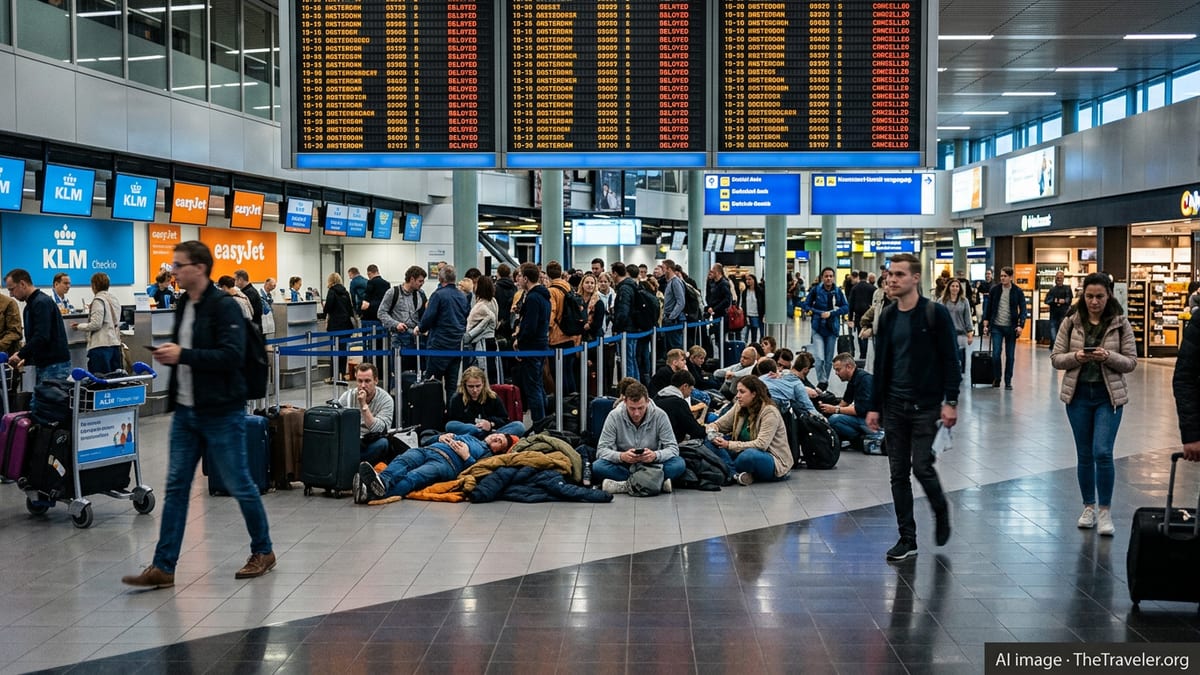
Europe’s peak travel season is colliding with a perfect storm of airport strikes, border control queues and volcanic disruption, leaving many passengers stranded and discovering the limits of what airlines are required to pay.
Get the latest news straight to your inbox!
Strikes, Border Queues and a Volcanic Wild Card
Across Europe, a dense calendar of industrial action, new biometric border checks and weather-related disruption is putting sustained pressure on airports just as summer demand peaks. Live strike trackers show rolling walkouts by ground handlers, security staff and air traffic controllers in countries including Italy, France and the Nordic region, frequently forcing airlines to thin out schedules at short notice to comply with capacity restrictions. In many cases, passengers are learning only hours before departure that their flights have been cancelled or heavily delayed.
At the same time, the European Union’s new Entry/Exit System for non-EU nationals is being phased in at major hubs, with reports of hours-long queues at border control where fingerprint and facial recognition kiosks struggle to process volumes of first-time travelers. Aviation industry groups have warned that wait times of four to six hours are possible at the busiest airports during peak weekends, increasing the risk of missed connections and missed flights even when aircraft depart on time.
Adding to the uncertainty, European regulators continue to list volcanic ash clouds among the “extraordinary circumstances” that can force widespread rerouting and airspace closures. Past eruptions in Iceland and Italy have shown how quickly ash plumes can ground flights across multiple countries. Forecasts for 2026 highlight ongoing seismic activity in known volcanic zones, a reminder that weather and geology can abruptly disrupt even well-planned schedules.
For travelers, this mix of labour disputes, new border technology and natural hazards creates a landscape in which disruption is likely, compensation rules are complex and the burden of covering out-of-pocket expenses often falls on personal finances rather than on the airline.
What EU Passenger Rights Really Cover
European rules commonly known as EU261 and their UK equivalent set out when airlines must provide care, rerouting and cash compensation. Under these regulations, carriers are required to offer meals, refreshments and hotel accommodation when significant delays or cancellations leave passengers waiting, regardless of the cause. They must also refund the ticket or arrange alternative transport if a flight is cancelled or arrives much later than scheduled.
However, the circumstances that trigger cash compensation are narrower. Updated guidance and new legislation agreed in 2026 aim to clarify that airlines owe fixed-sum payments, often up to several hundred euros, when disruption is within their control, such as technical faults or strikes by their own staff. When the walkout involves airport employees, ground handlers or air traffic control, or when delays stem from severe weather, volcanic ash or security incidents, carriers usually do not have to pay cash, even if travelers face overnight stays and missed holidays.
New agreements between the Council of the European Union and the European Parliament seek to strengthen these protections by standardising deadlines for airlines to respond to claims and by improving information at airports about how to file a complaint. Proposals discussed in 2025 and 2026 include clearer timelines for processing compensation and refund requests and more detailed rules on assistance for people with reduced mobility. Consumer groups have welcomed the reforms but note that many passengers still struggle to navigate the distinction between care obligations and compensation.
This legal framework means that a family delayed by an airline crew strike on a short-haul route may be entitled to a cash payout, while another group delayed by an air traffic control strike or a volcanic ash cloud might only receive hotel and meal vouchers. In practice, airlines often emphasise the “extraordinary circumstances” exemption, which is why travelers are increasingly advised to look beyond statutory rights and consider what their payment methods and insurance can add.
When Airlines Will Not Pay: The Gaps Travelers Face
The gap between what airlines must provide and what disruptions actually cost passengers is becoming more visible as this summer’s problems unfold. Even when carriers organise hotels and basic refreshments, additional expenses such as transport to alternative airports, extra nights at destination hotels, missed pre-paid tours and replacement clothing often fall outside airline responsibilities. In cases where extraordinary circumstances apply, there may be no legal route to claim back those costs from the carrier.
Long biometric border queues create a further grey area. If a traveler misses a flight because they were still waiting to clear passport control in time, airlines in many cases treat this as the passenger’s responsibility, even where border infrastructure or staffing issues were the root cause. Similarly, cascading delays can leave travelers stranded when a tight connection is missed, particularly on itineraries booked across separate tickets. Standard conditions of carriage typically give airlines significant discretion over what they will cover in such scenarios.
Published consumer guidance from regulators in Europe and the United Kingdom increasingly points passengers toward alternative sources of protection, noting that statutory rights are a safety net rather than a full reimbursement scheme. Advisory notices for summer 2026 explicitly recommend checking travel insurance and the terms of the payment card used for the booking, underlining that these may cover costs that EU261 and UK261 do not address.
The practical result is that two passengers caught in similar disruption can end up with very different financial outcomes depending on how they paid for their trip and what supplementary cover they arranged. That has pushed credit cards with built-in travel protections from a niche perk into a central tool for managing risk.
How Credit Cards and Travel Insurance Step In
Many premium and mid-tier travel credit cards now include trip delay, cancellation and lost baggage benefits that activate when a traveler pays for flights with the card. Publicly available card guides indicate that trip delay coverage typically applies after a delay of between three and twelve hours, depending on the product, and may reimburse reasonable expenses such as hotel stays, meals and local transport up to a per-incident cap. These protections usually sit alongside separate lost baggage and baggage delay benefits that can cover clothing and essentials when checked bags go missing.
For longer disruptions caused by strikes, volcanic ash or weather that shuts down airspace, trip cancellation and trip interruption coverage linked to either a card or a standalone insurance policy can be critical. These benefits can refund non-refundable hotel nights, tours and other pre-paid elements if a journey has to be abandoned or significantly cut short. Policies often list covered reasons that include severe weather, strikes and natural disasters, even where airlines themselves are exempt from cash compensation.
Cards that advertise strong travel insurance features, including those with annual fees, often bundle multiple protections that can operate together. A traveler delayed overnight by an airport security strike might claim hotel and meals under trip delay coverage, then use lost baggage benefits if bags are misrouted during subsequent rebooking, all without relying on airline goodwill. Some issuers also offer emergency assistance services to help cardholders find last-minute accommodation when thousands of passengers are competing for limited rooms near a hub airport.
Experts in consumer finance encourage travelers to study the small print before departure, paying special attention to eligibility thresholds, per-trip and per-claim limits, and whether taxes and fees must be charged to the card for coverage to apply. In some cases, using a card with modest rewards but robust protections can be more valuable for a risky peak-season itinerary than chasing maximum points on a product with limited insurance.
Preparing for a Chaotic Summer in Europe
For those heading to Europe in the coming weeks, preparation begins well before arriving at the airport. Travel advisories suggest checking strike calendars and live disruption trackers for planned labour actions at departure, arrival and hub airports, then building extra margin into itineraries where possible. Booking longer connections, avoiding tight last-flight-of-the-day options and keeping all legs on a single ticket can reduce the risk that one delay strands a traveler without onward options.
Equally important is aligning payment methods and insurance with that risk. Using a credit card that offers meaningful trip delay, cancellation and baggage coverage, and confirming that the full fare is charged to that card, can turn an overnight disruption from a personal financial shock into a reimbursable inconvenience. Travelers are also advised to retain boarding passes, delay notifications and receipts for all expenses, since card issuers and insurers typically require documentation showing both the cause and length of the disruption.
As summer 2026 unfolds, the combination of strikes, border technology rollouts and the ever-present risk of volcanic ash clouds suggests that Europe’s airport system will remain under strain. Airlines are legally bound to provide certain forms of care and, in some circumstances, compensation, but those obligations have clear limits. For passengers determined to protect their trips and their budgets, choosing the right card and understanding its protections has become as important as choosing the right route.