


More news on this day
As regional tensions and extreme summer heat converge in the Gulf, would-be visitors are asking whether Dubai remains a safe destination or a trip to delay. Recent government advisories, airline updates and local reporting portray a city where tourism continues, but where travelers are urged to pay closer attention than usual to security developments, health risks and insurance cover.
Get the latest news straight to your inbox!
Travel advisories highlight conflict and terrorism risks
Several governments continue to flag security concerns for the United Arab Emirates, largely tied to the broader Iran conflict and the risk of missile or drone activity in the Gulf. The United States currently advises its citizens to reconsider travel to the UAE because of the threat of armed conflict and terrorism, and in early March ordered non-emergency government staff and families to depart, reflecting heightened caution at that time.
Other countries have recently adjusted their stance in a more positive direction. Updated guidance from the United Kingdom on 9 July 2026 states that it no longer advises against all but essential travel to the UAE, while still warning that any future missile or drone interceptions could pose risks from falling debris. Australia’s Smartraveller service has also lowered its overall advisory level for the UAE in late June, though it continues to cite a persistent terrorism threat and the possibility of regional military action.
Canada’s official advice is broadly similar, encouraging travelers to exercise a high degree of caution, monitor local media and stay informed about regional developments. Collectively, these advisories stop short of telling tourists to stay away entirely, but they underline that the regional security environment remains more volatile than in previous years.
For most visitors, the practical impact has so far been limited to heightened awareness, occasional airspace adjustments and airline contingency planning, rather than day-to-day disruptions on the ground in Dubai. However, travelers are being urged to register with their embassy where possible and to remain flexible with itineraries in case the situation changes.
Security on the ground: a low-crime city in a tense region
Publicly available assessments continue to describe Dubai and the wider UAE as having relatively low rates of street crime compared with many global cities. Petty theft can occur in crowded places, but major violent crime against tourists is considered uncommon. This reputation for safety has been one of Dubai’s main selling points over the past decade of rapid tourism growth.
At the same time, regional dynamics have become more complicated since the escalation of the Iran war earlier in 2026. Analytical reports tracking missile and drone incidents note that the most intense phase of direct strikes and interceptions in the UAE occurred in March, followed by a shift to lower-intensity tensions and diplomatic efforts. Recent briefings suggest that while the risk of further incidents has not disappeared, it has eased from its peak.
Within Dubai, daily life and business activity appear to be continuing largely as normal, with malls, hotels and attractions open and operating. Tourism analysts point out that hotel occupancy and visitor numbers dipped during the height of the regional crisis, but more recent data and industry commentary indicate a gradual stabilization rather than a prolonged collapse in demand.
Visitors should still factor in the possibility of sudden changes, such as temporary airspace rerouting, increased security presence or short-notice travel advice revisions. Flexible booking policies and comprehensive insurance that explicitly cover conflict-related disruptions have become more relevant for anyone planning to travel to Dubai in the coming months.
Extreme summer heat is now a primary risk
Beyond geopolitics, the most immediate and predictable hazard for anyone arriving in Dubai in mid-2026 is the weather. Late spring and summer have brought exceptional heat to the UAE, with local media reporting record or near-record temperatures and health agencies issuing warnings about heat-related illness. Minimum overnight temperatures in urban areas can remain above 30 degrees Celsius, while daytime highs regularly exceed 40 degrees.
Health authorities and international bodies such as the Centers for Disease Control and Prevention emphasize that heat exhaustion and heat stroke can develop quickly in these conditions, particularly among older travelers, young children, people with underlying cardiovascular or respiratory conditions, and those not acclimatized to desert climates. Guidance stresses hydration, limiting outdoor activity during peak midday hours and seeking air-conditioned environments whenever possible.
Reflecting these conditions, the UAE has reintroduced its annual midday work ban for outdoor labor from mid-June to mid-September 2026, prohibiting work under direct sun in the early afternoon. While targeted at workers, the policy illustrates how seriously local authorities treat heat stress during the hottest months.
For tourists, the practical takeaway is to plan outdoor sightseeing for early morning and late evening, use sun protection and consider whether high-heat months are appropriate for very young, elderly or medically vulnerable travelers. Those seeking beach or desert experiences may find the November to March period significantly more comfortable and lower risk from a health perspective.
Health, entry and airline considerations
From a broader health standpoint, there are no widespread reports of unusual infectious disease outbreaks in Dubai as of early July 2026. Standard travel health resources advise up-to-date routine vaccinations, careful food and water hygiene and attention to sun and heat exposure. International agencies continue to highlight that extreme heat is an emerging global health challenge, and Dubai’s rapid urbanization and coastal humidity can amplify perceived temperatures.
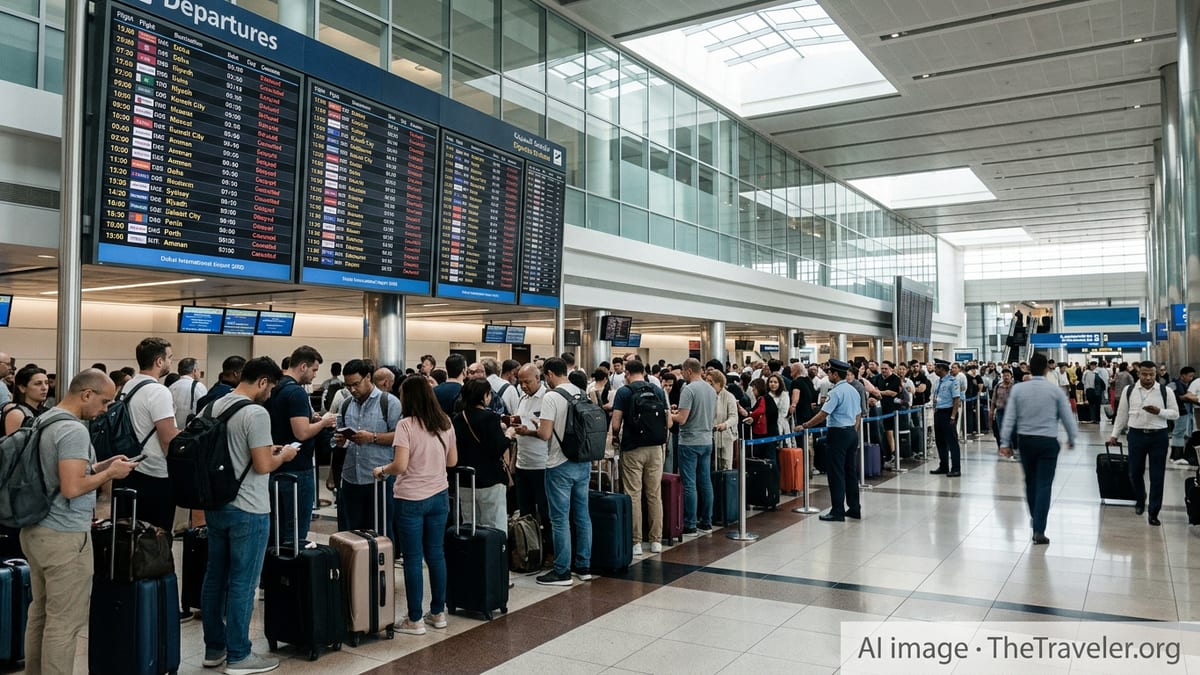
On the entry side, travelers should check the latest immigration and transit information with airlines before departure, as some Gulf and regional routes remain adjusted or suspended due to the Iran conflict and associated airspace closures. Travel updates from major carriers based in Dubai describe rerouting around affected areas and occasional schedule changes, but core intercontinental services to and from Dubai International Airport remain in operation.
In parallel, Dubai’s tourism authorities and local insurers have promoted enhanced travel insurance products that include coverage for conflict-related disruptions, medical care and unexpected trip extensions. Industry statements emphasize customer support in the event of airspace closures or diversions, including hotel arrangements and rebooking assistance where policies allow.
Given the fluid situation in the wider region, experts recommend that travelers scrutinize policy wording to confirm coverage for war or conflict scenarios, not just standard medical emergencies or trip cancellations. This has become a key part of risk management for visitors who still wish to take advantage of Dubai’s extensive flight connections and hotel capacity.
Balancing benefits and risks for would-be visitors
Independent analysts of the Gulf tourism market note that Dubai continues to position itself as a relative safe haven in a turbulent region, supported by modern infrastructure, a diversified economy and strong state investment in hospitality. Despite short-term shocks from regional conflict, forecasts for UAE tourism in 2026 suggest a pattern of resilience rather than sharp long-term decline.
For individual travelers, however, the decision to visit now depends on personal risk tolerance, health profile and flexibility. Those planning leisure trips should weigh the combination of high summer heat, the residual though reduced risk of conflict-related incidents and the possibility of sudden air travel adjustments, against the benefits of potentially lower prices and quieter attractions in the off-peak season.
Families with small children, older travelers and people with chronic health conditions may prefer to postpone non-essential trips until the cooler months or until regional tensions have further stabilized. Business travelers who must go are generally advised to register with their consular services, keep a close eye on official travel advisories and local news, and ensure robust insurance and contingency plans are in place.
Overall, publicly available information portrays Dubai in July 2026 as open and functioning, but no longer the entirely low-risk destination it was often perceived to be a few years ago. For many visitors, travel will remain feasible with added preparation and caution; for others, waiting for cooler weather and a clearer regional picture may feel like the safer choice.