


More news on this day
Japan’s iconic Tokyo to Osaka Shinkansen corridor is entering a new phase, with luxury cabins, overnight services and tourism-focused campaigns reshaping how travelers experience the country’s busiest high-speed rail link.
Get the latest news straight to your inbox!
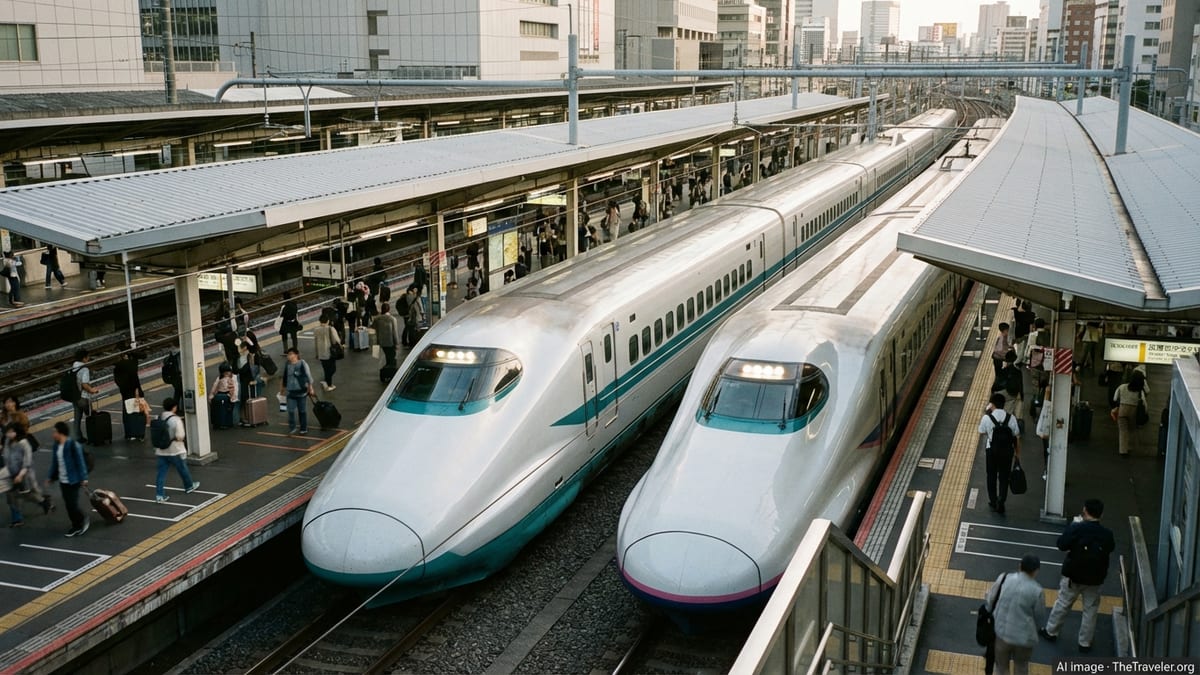
Flagship Tokaido Line Undergoes a Premium Makeover
The Tokaido Shinkansen, which connects Tokyo and Shin-Osaka, has long been viewed as the backbone of Japan’s rail network. Recent developments indicate that operators are increasingly targeting higher-yield leisure and business travelers on this already crowded route.
Publicly available information shows that JR Central and partner operators are introducing new premium seating concepts, including fully private compartments on select services between Tokyo and Osaka. Reports indicate that these so-called cabin products are being positioned at the very top of the price spectrum, with fares for solo and two-person spaces aimed squarely at travelers willing to pay for privacy and comfort on the two-and-a-half-hour journey.
Industry-focused coverage notes that these offerings build on a broader trend toward tiered comfort on Japanese high-speed rail, complementing existing Green Car and premium reserved seating. Analysts suggest that higher-spend visitors drawn by major events, such as Expo 2025 in Osaka and milestone anniversaries at theme parks in the Tokyo region, are helping to underpin demand for upscale options on the Tokyo–Osaka corridor.
Overnight Bullet Train Service Targets Time-Pressed Travelers
While the Tokaido Shinkansen is globally known for its daytime frequency, early summer 2026 is set to bring an unusual addition: an overnight bullet train linking Tokyo and Osaka. According to recent travel media coverage, the special service is scheduled to depart Tokyo Station late in the evening on August 8 and arrive at Shin-Osaka just before 7 a.m., turning the high-speed line into an overnight transport and accommodation option.
The overnight run is being promoted as a way for visitors to maximize daylight hours at both ends of their journey, while also appealing to rail enthusiasts eager to experience an unconventional Shinkansen schedule. With hotel prices in Tokyo, Kyoto and Osaka showing strong seasonal fluctuations, observers note that a sleeper-style service could also function as a moving hotel on particularly busy nights.
Commentary in the Japanese and international travel press suggests that, at least initially, the overnight train is being treated as a special or limited-time service rather than a permanent addition to the timetable. However, its launch underscores how operators are experimenting with new formats on the Tokyo–Osaka axis to capture niche markets and respond to changing tourism patterns.
New Campaigns Promote the “Golden Route” for Inbound Tourism
The Tokyo–Osaka Shinkansen is more than a transportation link; it is the spine of what tourism officials commonly refer to as Japan’s “Golden Route,” spanning Tokyo, Mount Fuji areas, Nagoya, Kyoto and Osaka. A campaign unveiled in spring 2026 under the banner “Golden Route with the Shinkansen” highlights how central this rail line has become to Japan’s inbound tourism strategy.
According to corporate materials from JR Central, the initiative packages Shinkansen travel with local experiences in key destinations along the line, encouraging visitors not only to move rapidly between the two megacities but also to stop in regional hubs. The campaign leans heavily on the ease of online reservations, with services such as Smart EX promoted to international travelers seeking to book seats before arrival.
Travel trade information indicates that tailored products, including discounted one-way packages and seasonal itineraries tied to events like cherry blossom season in Kyoto, are being used to channel tourists along the route. By coupling high-speed access with curated tours and luggage delivery services, rail operators and tourism partners are attempting to spread visitor spending more evenly across the corridor.
Capacity Management and Seat Reservation Policies Tighten
Even as premium and tourism-oriented products expand, the core challenge along the Tokyo–Osaka Shinkansen remains capacity. The Tokaido line continues to rank among the busiest high-speed corridors in the world, and operators are increasingly relying on stricter reservation policies to manage demand during Japan’s peak travel seasons.
Notices published by the Japan National Tourism Organization and JR Central in recent years have detailed periods when Nozomi services, the fastest category on the Tokaido Shinkansen, operate with all-reserved seating. These windows have included busy stretches such as Golden Week, summer holidays and year-end, and more recent updates for 2026 show that similar all-reserved periods are being scheduled again.
Travel advisories and user reports emphasize that while Hikari and Kodama services may remain available with a mix of reservation types, travelers relying on flexible, non-reserved seating are facing fewer options during crunch times. For international visitors, this has heightened the importance of advance planning, with many travel guides now recommending that long-distance Shinkansen journeys between Tokyo and Osaka be booked as early as possible for major holiday periods.
Experiential Trains and Branded Services Add New Dimensions
Beyond the core timetable, JR Central and its partners are also turning to experiential and branded Shinkansen services to capture attention on the Tokyo–Osaka run. Recent announcements describe special trains themed around major entertainment properties, including limited-period collaborations with Tokyo DisneySea that feature custom exterior livery and interior designs running between Tokyo and Shin-Osaka.
Corporate releases indicate that these special services are scheduled to operate alongside regular Nozomi, Hikari and Kodama trains, targeting families and fans who see the journey itself as part of the vacation experience. Rail-themed promotions often spotlight photo opportunities at stations and on board, encouraging social media sharing and reinforcing the Shinkansen’s status as an attraction in its own right.
Analysts note that such initiatives reflect a broader move within Japan’s rail industry to position high-speed trains not only as fast, reliable links between cities but also as branded experiences that can compete with low-cost airlines and highway buses. On the Tokyo–Osaka corridor, where frequencies are already high and basic connectivity is well established, these new services suggest that the next phase of competition will be fought over comfort, exclusivity and memorable travel moments rather than speed alone.