


More news on this day
Africa’s aviation industry is accelerating into 2026, with travel data indicating a record 89 million inbound seats scheduled across the continent even as global fuel shocks, conflict-linked airspace closures and rerouted trade flows buffet airlines worldwide.
Get the latest news straight to your inbox!
Record Capacity Builds on Post‑Pandemic Recovery
Recent aviation and tourism outlooks for 2026 point to Africa entering its busiest year on record, with inbound seat capacity forecast at around 89 million across international routes into the continent. Sector analyses built on schedules data show international capacity to African destinations tracking close to 20 percent higher than the previous year, underscoring the depth of the recovery that began in 2023.
According to published forecasts from aviation and tourism bodies, overall passenger growth for African carriers in 2026 is projected at roughly 6 percent, outpacing the global average even as other regions grapple with slowing demand. Financial outlooks compiled by industry associations indicate that African airlines are expected to collectively remain in modest profit, with margins still thin but positive despite a far tougher cost environment than during the immediate post‑pandemic rebound.
Tourism-focused research highlights how this extra airlift is translating into more international arrivals. Capacity growth is concentrated on long‑haul links from Europe and the Middle East, as well as on intra‑African routes feeding key leisure and business destinations such as Nairobi, Addis Ababa, Johannesburg, Zanzibar and the Red Sea and Indian Ocean resort belts. Analysts point out that improved schedules and frequencies are helping tour operators, meetings and events planners, and online travel platforms to package the continent more competitively.
Behind the headline numbers, Africa’s share of global air travel remains relatively small, but the direction of travel is notable. While some large markets in Europe and North America still hover around or below 2019 capacity, Africa’s international seats are now tracking significantly above their pre‑crisis levels, a reversal of the pattern seen after previous global shocks.
Fuel Price Surge Tests Airline Resilience
The expansion in scheduled capacity is unfolding against one of the most severe jet fuel shocks in recent aviation history. Industry fuel monitors show benchmark jet fuel prices climbing beyond 150 dollars per barrel in early 2026, reflecting a mix of supply disruptions, refinery outages and heightened geopolitical risk around key oil‑producing regions.
Analysts focused on African aviation note that fuel typically accounts for 30 to 40 percent of operating costs for carriers on the continent, a higher share than in many developed markets where larger fleets and more extensive hedging programs can dilute volatility. Research published by African security and aviation think‑tanks describes the current squeeze as a structural vulnerability, warning that prolonged disruptions to Gulf export routes could push weaker regional airlines toward consolidation or exit.
Despite that pressure, network data shows that African carriers have so far opted to preserve or even expand core routes rather than aggressively cut capacity. Publicly available information indicates that operators are instead leaning on fare adjustments, dynamic pricing and aircraft upgauging to defend yields. In markets where competition from Gulf and European network airlines has temporarily slackened, African carriers appear to be capturing additional traffic, helping to offset fuel‑driven cost spikes.
Industry economists caution that the balance remains fragile. With many African airlines carrying legacy debt from the pandemic period and limited access to capital markets, sustained fuel prices at current levels could erode profitability. However, the decision to keep seats in the market is seen as strategically important for tourism‑dependent economies and for maintaining market share on newly contested corridors.
Geopolitical Turbulence Reroutes Global Traffic via Africa
The continent’s aviation upswing is closely tied to broader realignments in global trade and airspace usage triggered by conflict. Disruptions around the Strait of Hormuz and renewed security risks in the Red Sea and Eastern Mediterranean have squeezed some of the world’s busiest corridors between Europe, the Gulf and Asia, prompting airlines and shipping lines to divert traffic around Africa.
Maritime and freight analyses describe how container shipping lines have shifted vessels away from the Suez Canal, routing them around the Cape of Good Hope and into African ports that previously handled far lower volumes. This diversion adds thousands of nautical miles and up to two weeks of transit time on certain rotations, sharply increasing fuel burn and insurance costs, but also elevating the strategic importance of coastal hubs from Djibouti and Mombasa to Durban and Cape Town.
In parallel, airspace advisories and airline schedule changes show wide‑body aircraft detouring to avoid conflict zones in parts of the Middle East and Eurasia. Some Asian and European carriers have introduced additional technical stops at African airports to manage these longer routings, bringing fresh transit traffic and cargo volumes to cities such as Addis Ababa, Nairobi and Johannesburg. Commentary in African business media notes that major hubs on the continent have effectively become safety valves for disrupted intercontinental flows.
Industry presentations on operational risk outline how detours around conflict zones can push up fuel consumption per sector and lengthen block times, but they also underline that strategically located African airports are well placed to absorb a share of this displaced activity. For host countries, this is feeding demand for airport expansion, aviation services, and hospitality infrastructure around key gateways.
Infrastructure and Policy Shape the Next Phase of Growth
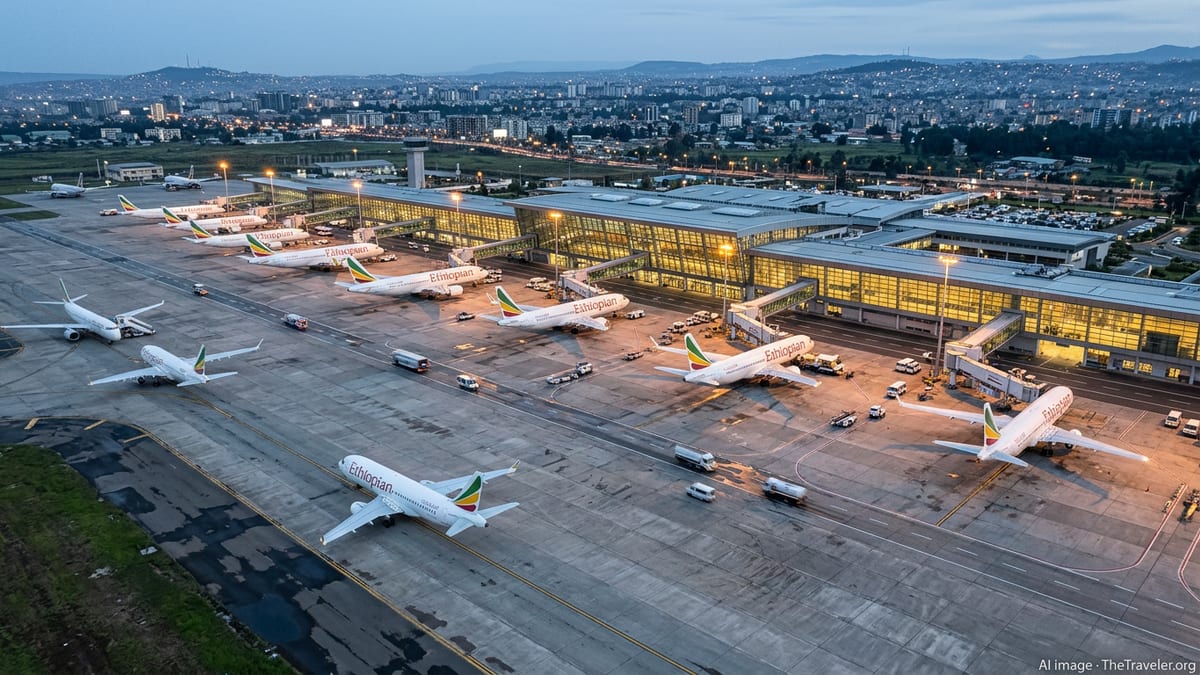
Underpinning the surge in inbound seats is a decade‑long pipeline of airport and airspace investments across Africa. White papers on the continent’s aviation outlook catalog a wave of new terminals, runway upgrades and planned greenfield hubs, from West Africa’s coastal gateways to Ethiopia’s ambitious new airport project near Addis Ababa designed to handle tens of millions of passengers annually in the next decade.
At the policy level, regional initiatives such as the Single African Air Transport market are cited in economic reports as critical to unlocking further connectivity. While implementation has been uneven, bilateral liberalisation and incremental open‑skies agreements have already allowed some carriers to add frequencies and open new city pairs that were previously constrained by capacity or traffic rights.
Tourism authorities and investment agencies are increasingly positioning aviation as a foundation for broader economic diversification, linking expanded air access to strategies for attracting conferences, film production, technology investment and high‑end leisure spending. Analysts stress that sustained gains will depend on tackling chronic challenges, including high airport charges, limited maintenance capacity, and regulatory fragmentation that still hampers seamless intra‑African travel.
Nevertheless, current schedules data highlights that airlines and investors are willing to bet on long‑term demand. With 89 million inbound seats programmed for 2026, Africa is emerging not only as a destination market, but also as a structural component of global aviation networks adapting to a more volatile world.
Opportunities and Risks for Travelers and Tourism
For travelers, the increase in inbound capacity is beginning to translate into more choice and, in some markets, more competitive fares. Additional services from Europe and the Middle East into secondary African cities are reducing the need for multiple connections, while stronger regional networks are improving access to safari circuits, island destinations and lesser‑known cultural hubs.
Travel industry reports suggest that tour operators are rapidly recalibrating programs for 2026 and 2027 to take advantage of the added lift. New or restored routes into destinations such as Tanzania, Rwanda, Namibia and coastal Mozambique are expected to feature prominently in long‑haul leisure catalogs, especially for markets seeking alternatives to more politically exposed regions.
At the same time, the volatility that is helping to redirect traffic via Africa also injects uncertainty. Jet fuel prices remain elevated, and analysts warn that sudden spikes could prompt seasonal capacity trims or surcharges. Continued instability along major sea and air corridors could also reshape demand patterns abruptly, as travelers and corporate buyers react to perceived risk.
For now, the balance of evidence suggests that Africa’s aviation sector is managing to turn global disruption to its advantage. The 89 million inbound seats scheduled for 2026 signal a continent in the midst of a structural connectivity shift, even as the industry navigates high costs and fast‑moving geopolitical headwinds.