


More news on this day
Reports of explosions and thick black smoke near Riyadh’s King Khalid International Airport over the weekend triggered emergency alerts across the Saudi capital and disrupted air travel, sending ripple effects through schedules at one of the kingdom’s busiest hubs.
Get the latest news straight to your inbox!
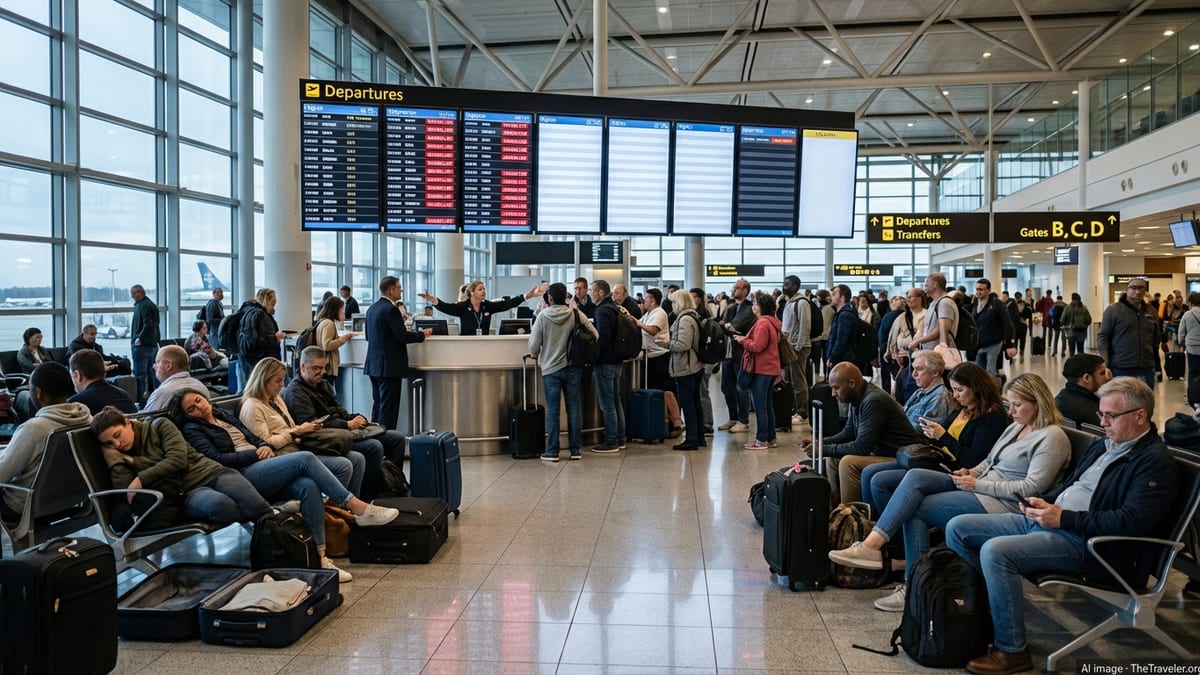
What travelers saw near King Khalid International Airport
Published coverage dated Saturday, September 19, 2026 described loud booms heard across Riyadh overnight and into the early hours, followed by a visible plume of dark smoke in the vicinity of King Khalid International Airport, also known by its RUH airport code. Images carried by multiple outlets showed smoke rising near airport-side facilities rather than from passenger terminals.
Saudi media reporting and international coverage described mobile alerts issued to residents in Riyadh and the neighboring area of Al-Kharj, with guidance focused on staying indoors and away from windows during the active warning period. Reports also indicated that an “all clear” notification circulated afterward, though the public explanation for the underlying incident remained limited in early reporting.
Separately, coverage linked the smoke to a fire at or near fuel-related infrastructure in the airport area, including references to a fuel storage site. Some reporting connected the event to the broader regional security situation, while also noting uncertainty in the immediate aftermath about precise causation and the full extent of damage.
Flight disruptions: cancellations, delays, and reroutes
The most immediate traveler impact was operational: flight-tracking data and published reporting pointed to major disruptions at RUH on September 19. Flightradar24, which publishes an airport “disruption index” based on delays and cancellations, flagged Riyadh at its highest level during the incident window, indicating severe congestion and stoppages.
By the following day, some reports drawing on Flightradar24 data described a gradual return of arrivals and departures after a temporary pause of roughly two hours. One widely circulated data summary indicated several cancellations alongside heavy delays for both inbound and outbound flights, underscoring how backlogs can persist even after runway and terminal operations resume.
For passengers, that translated into rapidly changing departure boards, missed connections, and rebooking cascades. Disruption at a hub like Riyadh can also propagate into later rotations, affecting aircraft and crews scheduled to continue onward to other cities in the Gulf, Europe, South Asia, and domestic Saudi routes.
Citywide alerts and the wider security context
Riyadh’s mobile alerting drew attention because it was not limited to the airport zone. Saudi Civil Defense messaging referenced a broader potential hazard area, and publicly available guidance circulated in published coverage emphasized taking shelter and minimizing exposure to glass and open spaces during the warning period.
At the same time, the timing intersected with heightened regional tensions and renewed concern over threats to civilian infrastructure. Associated Press coverage dated September 19, 2026 reported Saudi Arabia stating that Yemen’s Houthi movement attempted to target the capital with a ballistic missile, part of a wider pattern of escalation described in the same coverage.
For travelers, the practical takeaway is that aviation disruptions in the region can be driven by a mix of operational and security factors, including airspace management, temporary pauses to flight handling, and knock-on effects from precautionary measures taken by airlines and airports.
What to do if you are flying to or from RUH now
Travelers with near-term plans through King Khalid International Airport should rely on airline flight-status tools and airport information channels before leaving for the terminal, since conditions can change quickly when operations are recovering from an unexpected disruption. Even when flights restart, airlines may still be repositioning aircraft and crews, which can lead to rolling delays.
Passengers already rebooked after cancellations should double-check the new itinerary for connection times, terminal details, and any changes in operating carrier on codeshare routes. Where re-accommodation involves overnight changes, travelers may want to confirm baggage handling, particularly for itineraries involving multiple airlines.
Separately, U.S. government travel guidance for Saudi Arabia continues to highlight the possibility of attacks occurring with little or no warning and notes ongoing FAA advisories related to civil aviation risk in the broader region. Travelers concerned about trip timing may consider flexible booking options where available and keep a close watch on airline notifications over the next several days.