


More news on this day
Flights at Leipzig/Halle Airport in eastern Germany were temporarily suspended this week after security teams discovered a drone carrying an explosive device close to cargo operations, an incident that is being described in published coverage as a new level of threat for European aviation hubs.
Get the latest news straight to your inbox!
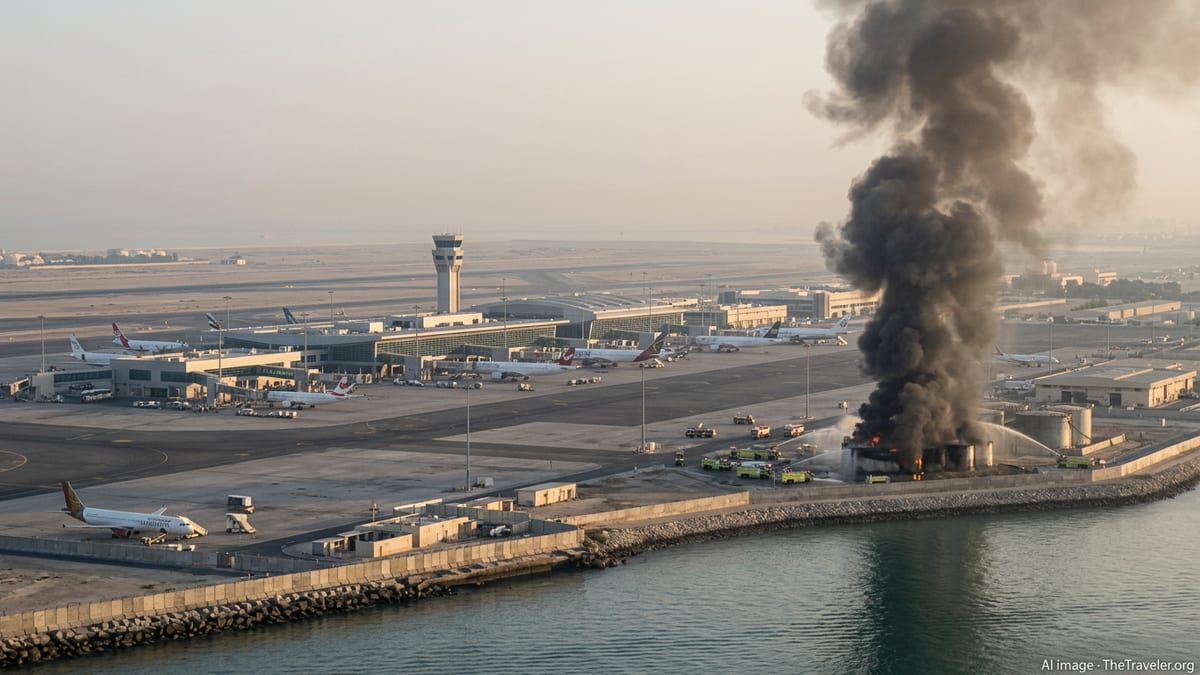
Runway Closures and Disrupted Schedules
According to publicly available reports, the alarm at Leipzig/Halle Airport was raised shortly before midnight on 4 August 2026, when an airport worker spotted a small unmanned aircraft in a secure area near one of the cargo aprons. Subsequent reporting indicates that the drone was located close to a parked Ukrainian Antonov cargo aircraft, prompting an immediate halt to departures and arrivals on the affected runway.
Bomb disposal specialists were called to the scene and the device attached to the drone was neutralised in a controlled action, enabling operations to resume after several hours. During the suspension, aircraft were diverted to other German airports and a number of flights experienced overnight delays, particularly in the busy freight sector that relies on Leipzig/Halle as a major logistics hub.
Online tracking data and passenger accounts suggest that some long-haul cargo movements, including services operated for global express carriers, were held on the ground or rerouted while the security sweep continued. For travellers and freight customers, the immediate impact was seen in missed connections, rescheduled departures and backlogs that rippled into the following day.
Local and national media coverage describe the incident as one of the most serious disruptions at Leipzig/Halle in recent years linked to unmanned aircraft activity, contrasting with earlier drone sightings that generally led only to brief traffic pauses or precautionary checks.
Explosive Payload Raises Security Stakes
What distinguishes this incident from previous drone-related interruptions at European airports is the presence of an explosive device. Reports from international and German outlets state that investigators identified an improvised charge and triggering mechanism mounted on the airframe, confirming that the aircraft was not simply a stray hobby drone but a system capable of causing physical damage.
Publicly available information indicates that the device was discovered on the ground rather than intercepted in flight, but the proximity to parked aircraft and fuel infrastructure has fed concern that the drone was intended to test vulnerabilities or attempt a limited attack. Commentators in German and international media have framed the case as an escalation from nuisance overflights to an overt attempt to breach aviation security.
Leipzig/Halle’s specific role intensifies scrutiny. The airport is widely reported to serve both as a major European cargo gateway and as a logistics node for military and humanitarian transports linked to Ukraine. Analysts quoted across European coverage have speculated that the choice of target could be connected to that dual-use profile, although investigators have not publicly presented evidence tying the drone to any particular actor.
The incident also arrives against the backdrop of broader concerns about hybrid operations in Europe, ranging from sabotage attempts against infrastructure to cyber intrusions. Security commentators note that a small, commercially available drone carrying a modest payload can pose a disproportionate risk inside a sensitive airport environment, where even limited damage or panic can trigger cascading disruption.
Growing Pattern of Drone Incursions at Airports
The discovery at Leipzig/Halle is the latest in a string of drone-related incidents affecting European air traffic in recent years. International aviation incident summaries and government reports show that airports in Germany, Belgium, Sweden and other countries have periodically halted takeoffs and landings after sightings of unidentified unmanned aircraft near runways and approach paths.
Germany has already experienced several high-profile airport closures due to drone sightings, including temporary suspensions at Berlin Brandenburg and Bremen in 2025. Those episodes, like the well-known Gatwick disruption in the United Kingdom, highlighted how a single drone can effectively ground hundreds of flights when safety margins around commercial aircraft are breached.
Regional press in Saxony and local aviation observers have noted that drone detections around Leipzig/Halle have risen steadily, with multiple incidents logged in the first half of 2026 alone. Until now, these were largely classified as airspace violations without confirmed weaponisation. The presence of explosives in the latest case significantly alters how risk is assessed, turning what was often treated as an air traffic nuisance into a potential security attack scenario.
Industry analysts caution that data on drone incursions is fragmented, as many events involve short sightings or unconfirmed radar returns. Nonetheless, trends compiled by European safety bodies point to a consistent increase in reports near airports and other critical infrastructure, suggesting that the Leipzig/Halle case is part of a broader challenge rather than an isolated anomaly.
Legal and Technical Countermeasures Under Pressure
The Leipzig/Halle incident comes as German lawmakers and federal agencies are already working on expanded powers and tools to counter dangerous drones. Government communications in early 2026 detailed amendments to the country’s Aviation Security Act aimed at clarifying responsibilities and enabling faster intervention against unmanned aircraft posing a threat to critical sites, including airports.
These changes are designed to give security forces clearer authority to detect, track and, when necessary, disable drones that enter restricted airspace. Federal briefings have cited Russia’s full-scale invasion of Ukraine and the growth of commercially available drone technology as key drivers behind the legal overhaul, noting a marked uptick in illegal flights over sensitive locations.
Despite new legislation and the creation of national coordination structures for drone defence, investigative reporting within Germany has highlighted ongoing gaps in coverage, including uneven deployment of detection systems and limited capacity to respond simultaneously at multiple sites. Experts interviewed in these reports stress that comprehensive protection requires integrated radar, radio-frequency sensors, and jamming or interception tools tailored to the complex electromagnetic environment of major airports.
In that context, the events at Leipzig/Halle are likely to intensify debates over how quickly advanced counter-drone systems can be rolled out at all large airports and whether current funding is sufficient. Aviation safety specialists argue that simple geofencing features on consumer drones are not enough to deter motivated actors prepared to modify hardware or build their own platforms.
Implications for Passengers, Cargo Operators and Travel Plans
While the immediate security risk at Leipzig/Halle has been contained, the episode underlines how vulnerable modern air travel is to relatively low-cost technology. For leisure passengers, the practical consequence is the possibility of sudden delays, diversions or overnight stays when airspace around an airport must be cleared for safety checks following a drone alert.
Cargo operators using Leipzig/Halle, including global express logistics companies, face additional complexity. Industry-focused outlets and online forums suggest that the night of the incident saw backlogs in time-sensitive shipments, and some customers reported tracking updates referring to a “security event” or “operational disruption” at the hub. Clearing that backlog can take several flight rotations, meaning minor schedule irregularities may persist for days.
Travel planners and tour operators monitoring the situation note that such incidents rarely lead to long-term closures, but they do highlight the value of flexible itineraries and real-time updates. For travellers connecting through major European cargo hubs that also host passenger services, it is increasingly advisable to allow generous transfer times and to watch for airport or airline advisories when security alerts make headlines.
More broadly, the Leipzig/Halle case reinforces a trend in which aviation disruptions are not solely driven by weather, strikes or technical issues but also by security events linked to drones and other emerging technologies. As investigations continue, observers will be watching for any public findings about the origins of the device and for signs that additional measures at German and European airports can reduce the likelihood that a single small drone will again bring operations to a standstill.