


More news on this day
The Federal Aviation Administration is moving toward an AI-assisted approach to managing congestion and weather disruptions, with a new system designed to flag likely delays and traffic conflicts before aircraft push back from the gate and line up for departure.
Get the latest news straight to your inbox!
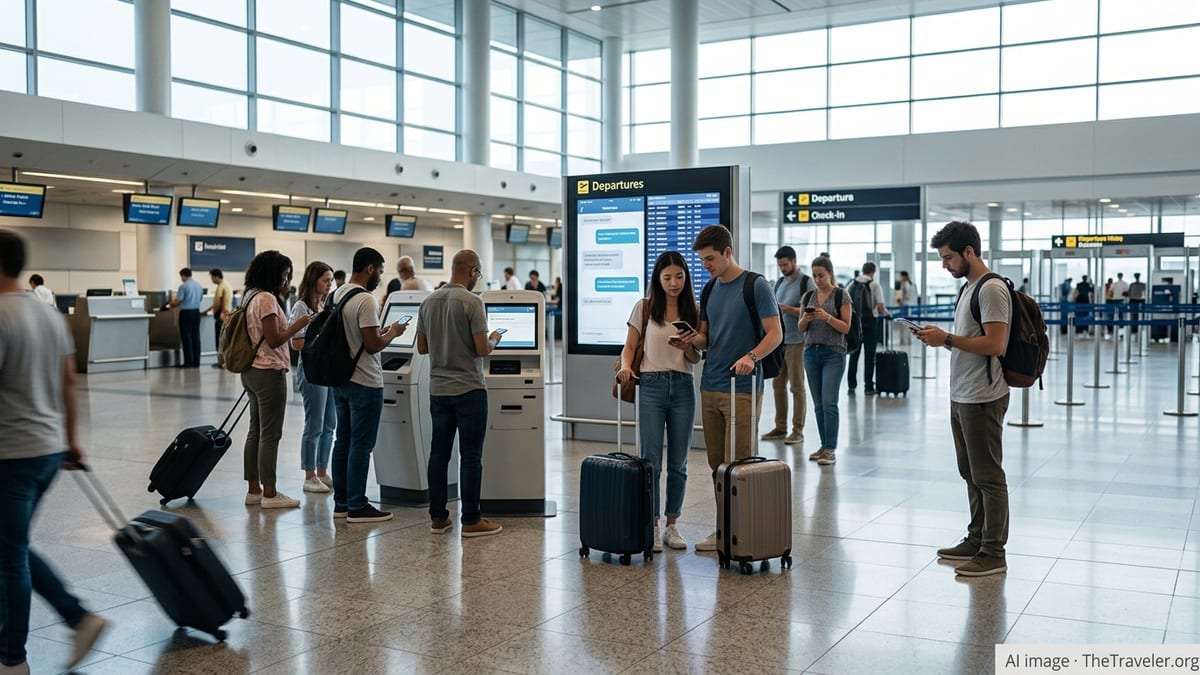
What the FAA says the new AI tool will do
Published coverage and FAA materials describe the initiative as an effort to anticipate problems earlier in the day-of-operation, when small disruptions can cascade into larger delays. The concept is straightforward: if air traffic managers can identify emerging congestion, weather constraints, and schedule conflicts before they harden into gridlock, they can intervene sooner with reroutes, revised demand plans, or other traffic-management actions.
Recent reporting noted the FAA began testing a new computer system that uses AI to help predict schedule conflicts and weather issues, enabling earlier rerouting decisions. The testing has been discussed in the context of broader reliability challenges in parts of the air traffic system, where severe weather, high demand periods, and equipment issues can quickly compress capacity.
Separately, the FAA has publicly outlined how it wants decision-support tools to continuously analyze airline schedules, weather, airport capacity, airspace conditions, and operational constraints, with the goal of predicting traffic flows and identifying potential conflicts before they occur. The agency’s framing emphasizes improving predictability for travelers rather than promising the elimination of delays.
How “predicting delays before takeoff” could change the travel day
For travelers, the most visible pain point is often the long wait that happens after boarding: the aircraft is closed up, the door is shut, and then the plane sits. FAA documentation about traffic-management modernization has long highlighted a core inefficiency in the current system: flights can board and even push back before they are assigned a place in the departure queue, which can lead to extended ground holds.
An AI-assisted prediction layer is intended to push the decision window earlier, when airlines still have more flexibility to adjust. In practice, that could mean a carrier delays boarding slightly to avoid a longer on-board wait, swaps aircraft rotations sooner, or re-files flight plans before a bottleneck becomes obvious to everyone at once.
It could also shape the messages passengers see in airline apps. Instead of a generic “delayed” status triggered late in the process, earlier systemwide forecasting may support more precise expectations about when a flight is likely to depart, especially on days where weather or demand creates predictable peaks of congestion.
Where it fits in the FAA’s broader modernization push
The FAA has been modernizing traffic management for years under the umbrella of NextGen, a long-running program aimed at moving from legacy, voice-heavy, radar-centric operations to a more data-driven system. Public FAA planning documents describe goals that include advanced analytics and the use of machine learning in decision support, alongside newer operational concepts such as trajectory-based operations, where flight paths are planned, updated, and shared across stakeholders as conditions change.
In the same modernization ecosystem, the FAA also operates Collaborative Decision Making tools used by traffic managers to respond when demand exceeds capacity. Those tools support programs such as Ground Delay Programs that hold flights on the ground to manage congestion at airports or within constrained airspace flows. The AI-based prediction effort is best understood as an additional forecasting and decision layer that can improve how early and how accurately those interventions are triggered.
The FAA has also published separate updates on software improvements intended to reduce taxi delays and ramp congestion at busy hubs by better managing gate pushbacks. While not the same as the new AI system discussed in recent coverage, the objectives are aligned: fewer surprises near departure time, and fewer minutes wasted on the ground when capacity is constrained.
What travelers should expect and what remains uncertain
Because the effort is described as testing and early deployment, travelers should not expect immediate, uniform changes at every airport. AI-based forecasting will likely be introduced in phases, starting with command-center style traffic management functions and then expanding as integration and performance validation progress.
It also matters how the tool’s predictions translate into operational decisions. Even with better forecasts, the FAA still has to manage constraints such as thunderstorms, low ceilings, runway closures, and airspace restrictions, and airlines still have to make choices about crew legality, aircraft positioning, and passenger reaccommodation. AI can sharpen the picture, but it does not remove the underlying capacity limits.
For passengers, the near-term “win” may be less about eliminating delays and more about seeing delays called earlier, with fewer last-minute gate changes and fewer lengthy sits after boarding. The most meaningful improvements will be measured across seasons, since the highest-delay days tend to cluster around summer thunderstorms, winter storms, and peak holiday travel periods.
Why the timing matters for fall and winter travel
The AI testing has been discussed during a period when the national airspace system is under pressure from multiple angles: high-demand travel periods, the operational complexity of weather-driven disruptions, and the ripple effects that occur when a key metro area slows down. In those conditions, earlier prediction can be especially valuable because it can help prevent localized slowdowns from becoming nationwide schedule collapses.
For fall and winter 2026 travel planning, the practical takeaway is that disruption management may become more proactive, particularly on days when weather is forecast to reduce capacity at major hubs. Travelers may see more preemptive schedule adjustments and earlier reroutes, which can sometimes feel inconvenient but may reduce total delay time across the day.
Until the FAA and airlines publish clear performance results for the new AI-assisted approach, the best strategy for passengers remains unchanged: build extra connection time in weather-prone seasons, watch airline app notifications closely, and treat early-day delays as a warning sign that later flights on the same aircraft rotation may also be impacted.