


More news on this day
The head of the U.S. Federal Aviation Administration has met with chief executives from major airlines to outline a new plan that combines upgraded air traffic technology with targeted schedule changes in an effort to cut persistent flight delays and cancellations across the country.
Get the latest news straight to your inbox!
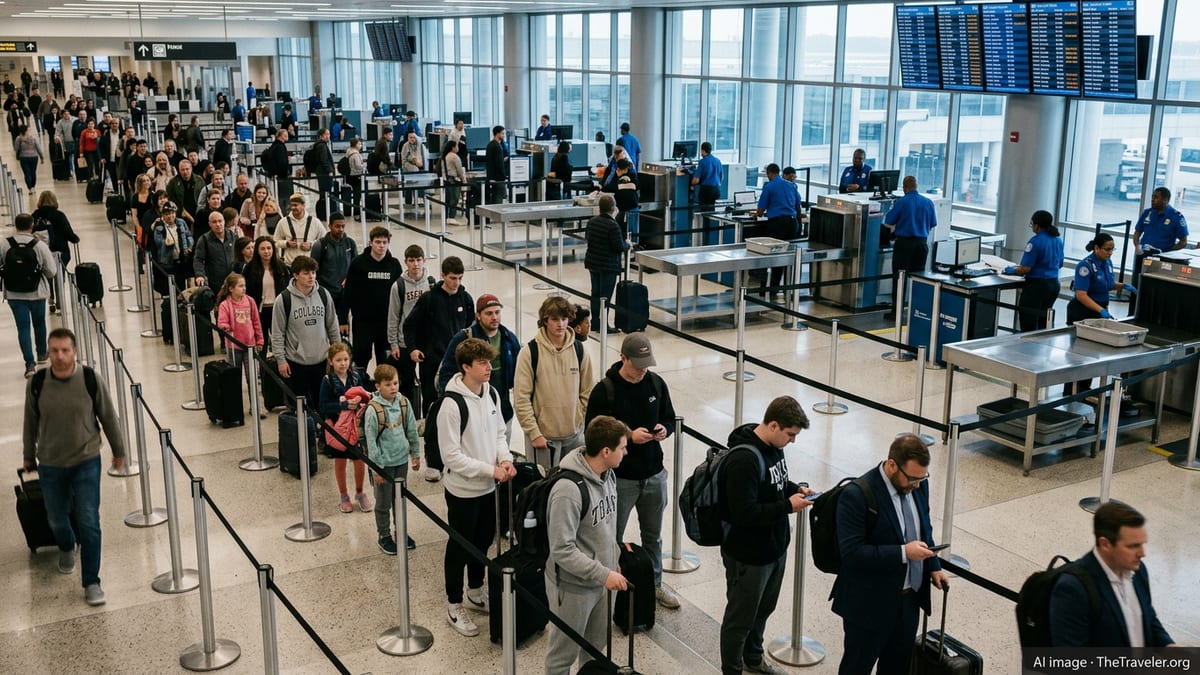
High level summit focuses on chronic disruption
According to recent industry coverage, FAA Administrator Bryan Bedford convened leaders from the largest U.S. carriers in Washington this week, including executives from American Airlines, Delta Air Lines, United Airlines and Southwest Airlines, to focus specifically on the drivers of delays and cancellations. Reports indicate that the talks centered on how the agency and airlines can better align schedules, staffing and technology as the busy fall and winter travel periods approach.
Publicly available information shows that the meeting follows months of elevated disruption levels as airlines grapple with crowded skies, constrained air traffic control staffing and increasingly volatile weather patterns. Federal data released in recent months point to delay rates that remain higher than pre pandemic norms at several major hubs, even as overall traffic has returned.
Travel industry reports suggest that Bedford used the session to brief airline leaders on the FAA’s latest traffic management tools and to emphasize the need for coordinated action in order to produce noticeable improvements for passengers. The session was described in coverage as a working meeting focused on concrete changes rather than a broad policy discussion.
New SMART traffic system at the center of the plan
According to published coverage from travel trade outlets, the central element of the FAA’s new strategy is a data driven traffic management platform that some reports describe as a SMART style system. The technology is designed to ingest detailed information on weather, airspace constraints, runway capacity and airline schedules in near real time, then recommend adjustments to minimize bottlenecks before they cascade into large scale delays.
Industry reports indicate that the FAA aims to accelerate deployment of this upgraded system at key hubs where congestion has been most acute. By using predictive analytics, the platform is expected to help controllers and airline operations centers decide earlier when to space flights out more widely, reroute around storms or temporarily slow arrivals into overscheduled airports.
Publicly available FAA planning documents and prior rulemaking notices show that the agency has spent years modernizing its air traffic systems, but recent disruptions have increased pressure for tools that can translate that investment into more reliable day to day performance. The emphasis on a SMART style platform reflects a shift toward using shared operational data from both the FAA and airlines to manage limited capacity more proactively.
Targeted schedule cuts and caps at busy airports
Alongside technology upgrades, the new plan relies on targeted schedule reductions at some of the country’s most congested airports. Federal notices issued earlier this year describe how the Transportation Department and FAA can convene meetings with carriers under existing delay reduction authorities to set flight reduction targets at airports where persistent congestion has led to severe delays.
Recent regulatory filings highlight Chicago O’Hare as a key focus. Public notices outline a process in which the FAA administrator can bring airlines together to discuss voluntary cuts during peak hours, with the goal of easing pressure on runways and airspace without significantly reducing overall passenger access. Similar procedures were previously applied at Newark Liberty International Airport, where overscheduling contributed to sustained delays.
According to industry analysis, the new round of talks with airline CEOs builds on those formal mechanisms while broadening the conversation to a national scale. Rather than imposing across the board reductions, the approach under discussion appears to concentrate on trimming frequencies at the busiest times of day, encouraging upgauging to larger aircraft and smoothing schedules to avoid sharp peaks in arrivals and departures.
Balancing passenger experience, competition and small city access
Travel sector commentators note that any effort to cut schedules at major hubs must weigh several competing priorities. While fewer peak hour flights can reduce gridlock and improve on time performance, they can also raise concerns about higher fares or reduced options for smaller communities that rely on connections through large hubs.
Recent Department of Transportation materials addressing delay reduction warn against disproportionate cuts that would isolate regional markets or weaken Essential Air Service links. Publicly available guidance indicates that the FAA retains the ability to push back on airline reduction lists if they produce uneven impacts across routes or times of day, signaling that the agency is focused on maintaining a baseline of connectivity while still relieving congestion.
Analysts tracking airline schedules suggest that carriers are likely to respond by consolidating some short haul flights, operating larger aircraft on fewer frequencies and shifting some departures to shoulder periods. For travelers, this could translate into slightly fewer time choices at the busiest banks, but a better chance that flights depart and arrive as planned.
What travelers can expect in the months ahead
Industry reporting indicates that the FAA’s technology rollout and related scheduling changes are expected to begin taking effect over the coming months, with initial benefits most visible at the largest coastal and Midwest hubs. Travelers may not notice the underlying systems at work, but they could experience fewer long ground holds, more predictable departure times and reduced instances of widespread cascading delays following summer style thunderstorms.
Travel analysts caution that no single plan can eliminate disruption entirely, particularly as the system continues to face staffing challenges and more frequent severe weather. However, the combination of smarter traffic management tools and coordinated schedule adjustments between regulators and airlines is widely viewed in industry coverage as a meaningful step toward a more resilient network.
For now, airline schedule filings and federal notices will offer the clearest early signs of how aggressively carriers embrace the FAA’s proposals. As the new measures phase in, on time performance statistics at key hubs will provide a tangible measure of whether the latest summit between the FAA chief and airline CEOs is succeeding in turning strategy into smoother trips for U.S. travelers.