


More news on this day
Storm driven ground stops affecting ten major East Coast airports have triggered thousands of delays and cancellations, stranding travelers and disrupting airline schedules across the United States at the height of the busy summer travel period.
Get the latest news straight to your inbox!
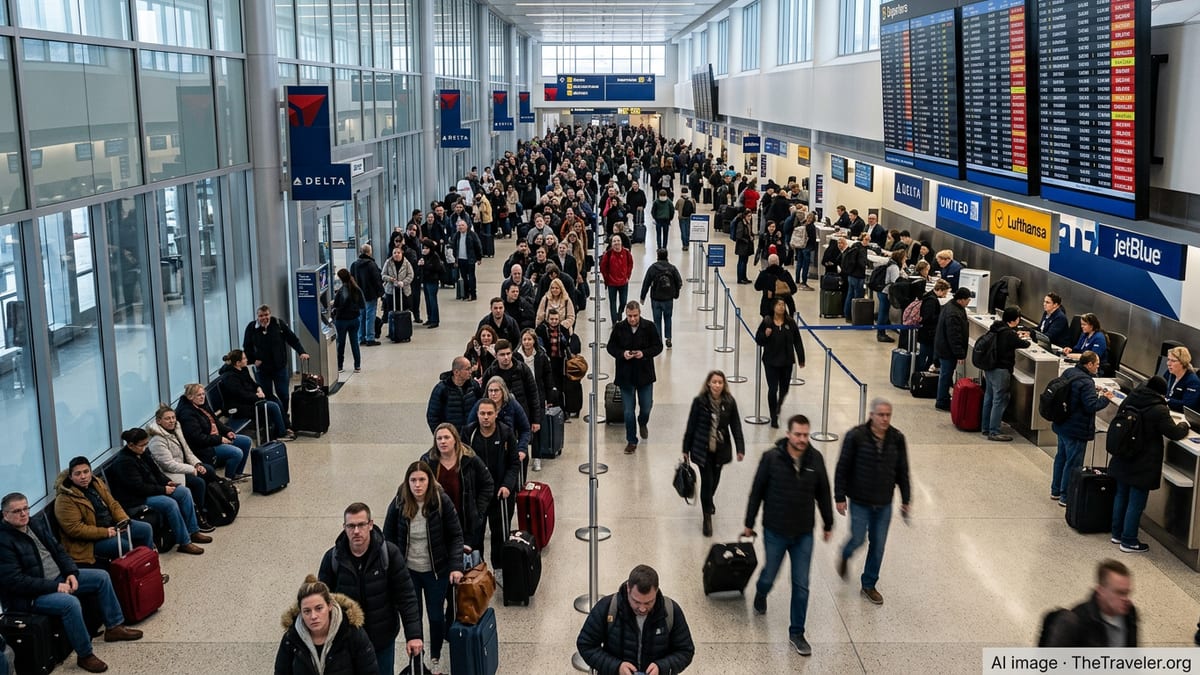
Severe Storms Trigger Coordinated Ground Stop
Publicly available operational advisories from the Federal Aviation Administration indicate that a fast moving line of severe thunderstorms prompted a series of ground stops on the East Coast, temporarily halting most departures at ten key airports serving Boston, New York, New Jersey, Philadelphia, Baltimore and the Washington region. The pauses were ordered as storms moved directly over major approach and departure corridors, sharply reducing visibility and forcing controllers to slow or suspend traffic flows.
Coverage from regional news outlets in New England and the Mid Atlantic shows that Boston Logan International Airport was among the first major hubs to be affected, with the FAA instituting a ground stop as heavy rain and lightning passed over eastern Massachusetts. Similar measures were then extended to LaGuardia, Newark Liberty, Teterboro, Westchester County, Philadelphia International, Baltimore or Washington International, Ronald Reagan Washington National and Washington Dulles International, creating a chain of restricted airspace along one of the world’s busiest aviation corridors.
Ground stops are a standard tool used by air traffic managers to protect safety during severe weather or other operational constraints. While they are often brief, their impact can be magnified when multiple airports in the same region are affected at once, leaving airlines with limited options to reroute aircraft and crews and causing delays that ripple across the national network for the rest of the day.
Thousands Of Flights Delayed Or Canceled
Flight tracking data cited in local and national coverage shows that the cascading effect of the East Coast ground stops quickly translated into thousands of disrupted flights nationwide. At Boston Logan alone, reports indicate several hundred delays and cancellations, with departure boards dominated by notices of late or scrapped services as the evening rush approached.
Similar patterns emerged at the New York and Washington area airports once restrictions took effect. When departures pause at multiple hubs that function as connection points, aircraft and crews are left out of position for later flights, leading to rolling cancellations that can stretch into the following morning. Airlines began preemptively trimming schedules as the storm line advanced, seeking to consolidate passengers onto fewer flights and reduce the number of aircraft and crew rotations at risk.
Recent FAA air traffic statistics underscore how quickly severe weather can overwhelm even a resilient system. Annual data show that weather remains a major driver of domestic cancellations, and periods of intense convective activity along the East Coast frequently rank among the worst travel days of the year in terms of total disrupted flights. The current episode fits that pattern, arriving during a peak summer week when load factors are already high and spare capacity is limited.
Impact On Travelers Across The United States
For travelers, the immediate consequence of the East Coast shutdowns was a wave of missed connections, overnight delays and abandoned trips. Because the affected airports serve as hubs and focus cities for multiple large U.S. carriers, passengers in regions far from the storm zone experienced knock on disruption as flights to and from secondary markets were delayed to wait for inbound aircraft or removed from schedules altogether.
Publicly available reports from major airports and airlines advise travelers to expect extended waits at customer service counters as rebooking volumes surge. With many affected flights full or nearly full in the days ahead, some passengers are being offered reroutes through unaffected hubs, while others receive travel credits or refunds if they choose to cancel altogether. Airline advisories also note that passengers may see continuing irregular operations even after skies clear, as airlines work to reposition aircraft and crews.
Travel experts point out that disruptions of this scale can also affect ground transportation and hospitality sectors. Hotels near major hubs often report spikes in last minute bookings when large numbers of travelers are stranded, while rental car agencies see elevated demand from passengers choosing to drive to their final destinations. Rail operators along the Northeast Corridor may also experience increased bookings as travelers seek alternatives to flying while airlines work through their backlogs.
Why The East Coast Is So Vulnerable To Weather Shocks
Aviation analysts note that the geography and traffic patterns of the Eastern Seaboard make it particularly sensitive to severe weather. The corridor from Boston to Washington hosts a dense concentration of large commercial airports, all served by overlapping air routes that funnel traffic through a relatively narrow band of airspace. When strong thunderstorms line up along that corridor, the effect is similar to closing multiple lanes on a major highway at once.
Published FAA planning documents describe how major East Coast hubs are interconnected within the National Airspace System. A slowdown or stop at one facility, especially in the New York metro area, quickly reduces capacity at others that depend on shared arrival and departure routes. Even a short ground stop at several airports can therefore create hours of follow on delays as controllers work through accumulated queues and airlines wait for gates, crews and service providers to become available.
The timing of the latest storms also heightened their impact. Summer afternoons and evenings typically see the heaviest departure banks for both domestic and transatlantic flights. When weather closes departure windows during these peak periods, opportunities to recover are limited, and flights that miss their slots may be forced to wait until the next day. This dynamic contributed to the unusually high number of cancellations reported across multiple carriers.
What Travelers Can Do As Disruptions Continue
With residual delays expected into the next operating day, publicly available guidance from airlines and aviation agencies emphasizes preparation and flexibility for anyone scheduled to travel to, from or through the affected East Coast airports. Travelers are being urged to monitor their flight status frequently through airline apps, opt in to text or email notifications, and avoid heading to the airport until their flight is shown as confirmed and on time.
Passenger rights also remain an important consideration. Consumer guidance notes that when an airline cancels a flight departing from or within the United States, customers are generally entitled to a refund if they choose not to travel, regardless of the reason for the cancellation. Separate, discretionary travel waivers may allow passengers to change itineraries without additional fees when large scale weather events disrupt operations, although specific terms vary by carrier and fare type.
Looking ahead, transportation planners and industry observers continue to debate how best to strengthen the system against recurrent East Coast weather shocks. Ideas under discussion in public forums include expanding use of advanced forecasting to fine tune ground stops, investing in additional runway and taxiway capacity at key hubs, and exploring schedule adjustments that spread demand more evenly throughout the day. For now, though, the latest round of storms and the resulting ground stops offer another reminder that even a highly managed airspace can still be vulnerable to the forces of nature.