


More news on this day
Rail travel across part of South Devon was thrown into chaos after an early-morning fire at Paignton train station, with three teenage boys now arrested on suspicion of arson in connection with the blaze.
Get the latest news straight to your inbox!
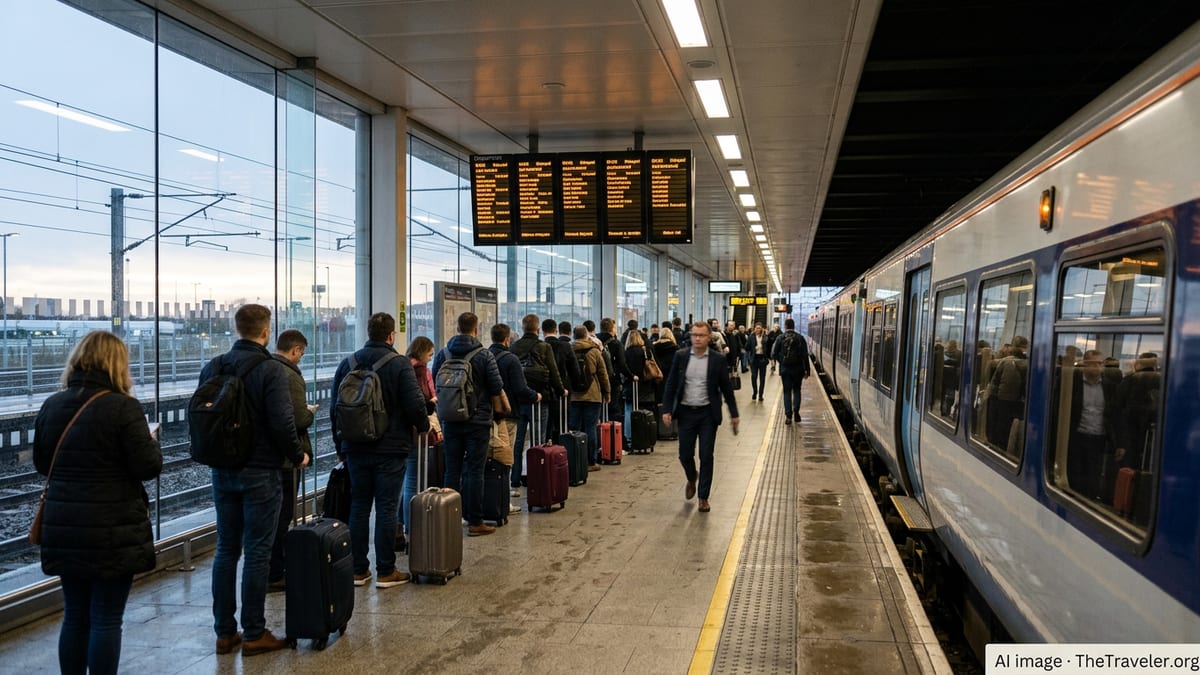
Arrests follow early-morning blaze at coastal hub
According to published local coverage, the fire broke out shortly before 6am on Tuesday 21 July at Paignton railway station in Torbay, South Devon. Devon and Somerset Fire and Rescue Service attended the scene after reports of flames affecting part of the station infrastructure.
Reports indicate that three boys aged 13, 15 and 16 were arrested in the Paignton area later the same day on suspicion of arson following the incident. They were taken into custody for questioning and have since been released on conditional bail while further inquiries continue.
Publicly available information shows that no injuries were reported in connection with the fire, which was brought under control by firefighters after significant smoke and disruption in the immediate vicinity of the station. Images shared by regional news outlets show damage concentrated around station structures near the tracks.
Investigators are expected to review CCTV, witness accounts and on-site forensics as part of efforts to establish the exact cause and circumstances of the blaze. At this stage, reports emphasize that inquiries remain ongoing and no charges have yet been confirmed.
Train services between Newton Abbot and Paignton hit hard
The blaze led to widespread rail disruption across one of South Devon’s most popular leisure corridors at the height of the summer holiday season. According to travel updates and operator statements, all services between Newton Abbot and Paignton were initially suspended on Tuesday as damage to signalling and related infrastructure was assessed.
Services from Exeter St David’s were reportedly forced to terminate at Newton Abbot, leaving trains unable to serve intermediate Riviera line stops at Torre and Torquay, as well as Paignton itself. This prevented through-travel along a section heavily used by tourists heading for the English Riviera and by local commuters moving between seaside towns.
Replacement road transport options were limited by simultaneous road closures around the station and along Torbay Road, a key seafront route linking Paignton with nearby areas. As a result, passengers faced extended journey times, diversions via alternative lines, or the need to rebook for later in the day once safety checks were completed.
National journey planners and rail-information services highlighted disruption that extended throughout Tuesday, with some residual knock-on effects into Wednesday as timetables and rolling stock were repositioned. Travellers heading for connections further west were advised to allow additional time and check for last-minute changes.
Road closures compound disruption in Paignton town centre
The impacts of the fire were felt well beyond rail passengers. Regional traffic bulletins recorded closures on Torbay Road in both directions and on Victoria Street close to the station, with updates describing a “building fire” affecting access through the town centre.
These closures affected car traffic, local buses and pedestrian movement in an area that ordinarily forms a busy interchange between Paignton’s rail and bus stations, nearby shops and the seafront. Commuters, school groups and visitors making early departures for day trips around Torbay experienced delays and diversions while emergency crews remained on scene.
Publicly available information from local authorities has in recent weeks highlighted ongoing regeneration and construction works near the station and along Victoria Street. The combination of planned works and an unplanned incident such as this fire has raised concerns about the vulnerability of key access points into the resort during the peak tourism period.
Some travel-watch services for Devon and Cornwall noted that the early-morning timing of the fire limited potential exposure to large crowds on platforms and surrounding streets, but it coincided with the build-up to the morning peak, amplifying disruption for those already en route.
Popular tourist gateway faces short-term uncertainty
Paignton station serves as a primary gateway for visitors to the English Riviera, offering direct services from Exeter and connections onward to Torquay, Brixham by bus, and the wider Torbay area. It also sits near the heritage line that runs toward Kingswear, a route frequently used by visitors combining mainline rail with steam services.
The fire arrives at a time when the town is actively promoting rail as a sustainable way for holidaymakers to reach South Devon’s beaches and attractions. Published tourism materials emphasize the convenience of arriving by train directly into the centre of Paignton, within a short walk of the seafront, pier and family-friendly attractions.
Any medium-term closure of parts of the station, or reductions in service frequency while repairs take place, could place additional pressure on regional road networks already under seasonal strain. Local hospitality businesses rely heavily on predictable rail links, particularly for visitors who choose not to drive or who are travelling from London and the Midlands with through tickets.
While core services are expected to resume as soon as infrastructure checks are complete, it may take longer for full normal operations, including cross-platform access and any affected facilities, to be fully restored. Travellers planning late-July and early-August trips are being encouraged via transport updates to monitor service information closely.
Safety, youth and rail security in focus
The arrests of three teenagers in relation to the Paignton station fire have renewed attention on youth-related incidents around transport hubs and the potential consequences of deliberate or reckless behaviour near railway infrastructure. Recent case studies across the United Kingdom have highlighted how fires, trespass and vandalism can rapidly escalate into major safety risks.
Research into physical attacks on railways and associated infrastructure points out that even seemingly small ignition points or acts of damage can have outsized effects once they intersect with signalling systems, power supplies or crowded public environments. In a coastal town like Paignton, where the main station sits at the heart of commercial and tourist activity, the ripple effects are particularly visible.
Local community groups and transport advocates are likely to follow the outcome of the investigation closely, including any measures introduced to improve lighting, surveillance coverage or youth engagement around stations along the Riviera line. Education campaigns aimed at schools and youth organisations about the dangers and legal implications of fire setting near transport assets may also gain renewed emphasis.
For now, the key focus remains on restoring full rail connectivity between Newton Abbot and Paignton, repairing any fire-damaged infrastructure and ensuring that residents and visitors can continue to rely on train services as a central part of summer travel across South Devon.