


More news on this day
Severe thunderstorms sweeping across the Northeast have prompted the Federal Aviation Administration (FAA) to halt departures at 10 major U.S. airports, triggering a fresh wave of delays and cancellations that is rippling through the national air travel system.
Get the latest news straight to your inbox!
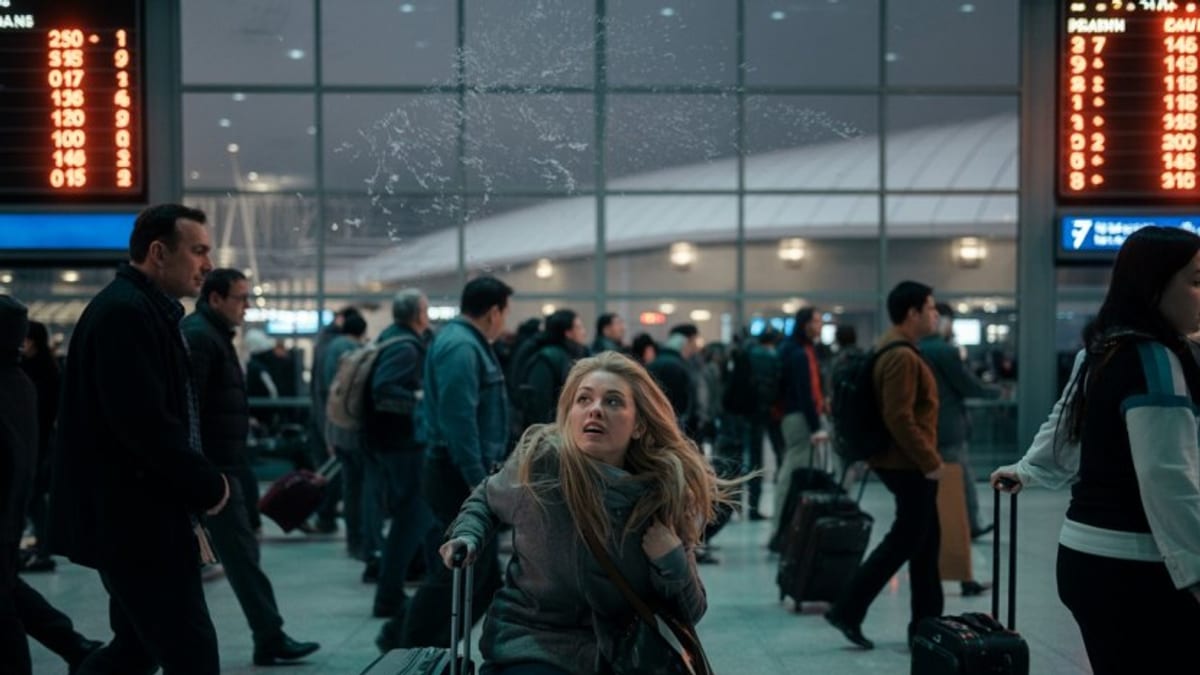
Ground Stops Expand as Storms Intensify Over the Northeast
According to real-time advisories from the FAA’s Air Traffic Control System Command Center, a Northeast Severe Weather Avoidance Plan has been in effect as lines of thunderstorms move through key flight corridors, forcing ground stops and delay programs across major hubs. These tactical measures temporarily halt or meter departures bound for affected airports when storm cells block safe arrival and departure paths.
Recent FAA planning advisories describe extended ground stops for New York area airports and Washington, D.C.–area facilities as convective weather moves across the region, with updates reflecting conditions that can change in 15- to 30-minute increments. These advisories emphasize that the scope and duration of ground stops are repeatedly revised as storm cells form, intensify and shift along heavily traveled routes in the Mid-Atlantic and Northeast.
Ground stops are a standard tool used when weather or other hazards sharply reduce an airport’s ability to handle normal traffic. Under such restrictions, flights already in the air may be slowed or re-routed, while departures from other parts of the country are held at the gate until controllers determine that sufficient capacity has returned.
The measures in the Northeast follow a summer pattern in which severe storms have repeatedly forced the FAA to pause or slow operations at multiple East Coast airports on the same day, concentrating disruption at some of the country’s busiest nodes and magnifying knock-on effects nationwide.
Ten Key Airports Affected as Weather Bottlenecks Spread
Published FAA traffic management notices and industry tracking point to a familiar cluster of busy facilities bearing the brunt of the latest storm-related ground stops and delays. These include the three major New York–area airports, Newark Liberty International, New York John F. Kennedy International and LaGuardia, as well as Washington Reagan National and the region’s other large hubs frequently mentioned in current advisories.
When thunderstorms trigger a regional weather avoidance plan, the impact can quickly extend to other large airports along the Eastern Seaboard and further inland. In similar recent events, FAA advisories have highlighted constraints at Boston Logan, Philadelphia, Baltimore/Washington International, Charlotte and Atlanta, with some notices referencing additional weather impacts as far away as Florida and the upper Midwest.
On days when storms repeatedly cross arrival and departure corridors, those ten airports collectively handle a substantial share of the nation’s scheduled traffic. Publicly available operations data and disruption reports show that multi-airport weather events like this can lead to thousands of delays and cancellations in a single day, especially during the busy summer travel period when schedules are already near capacity.
Because these facilities function as both origin and connection points, a halt at a single Northeastern hub can reverberate across dozens of smaller cities whose flights feed into the network, leaving travelers stranded far from the immediate storm zone.
Nationwide Cancellations Highlight a Fragile Summer Network
Aggregated statistics from airline performance trackers and independent disruption analyses indicate that severe thunderstorm outbreaks in the East frequently translate into nationwide ripple effects. Recent reports have documented days with more than 8,000 flight delays and well over 1,000 cancellations linked to widespread convective weather, with the largest impacts clustered at East Coast and Central U.S. hubs.
Because airlines schedule around peak demand and operate tight daily rotations of aircraft and crews, any sudden reduction in runway capacity can quickly throw off those rotations. Flights that cannot depart on time may miss later connections, aircraft may end up out of position for the next day’s schedule, and crew duty limits can trigger further cancellations even after storms have moved away.
As a result, travelers flying between cities far from the Northeast often feel the effects of weather there. Recent consumer reports and on-the-ground accounts describe flights in relatively clear regions being delayed or canceled because their aircraft or crews were previously held at storm-affected airports, or because traffic managers restricted certain routes that normally pass through the turbulent airspace.
Publicly available government and industry analyses have repeatedly warned that, without additional staffing and capacity enhancements in congested corridors, intense summer weather could continue to produce outsized disruptions for U.S. travelers, even on days when only one region is directly affected by storms.
How Ground Stops Work and Why Thunderstorms Trigger Them
FAA reference materials describe a ground stop as a traffic management initiative that halts or limits flights to a specific airport or region in response to conditions that reduce safe arrival and departure rates, including convective weather, low visibility, operational outages or security issues. For weather events, the objective is to keep aircraft from departing into airspace where they may be forced to hold for extended periods or divert because of blocked approach paths.
Thunderstorms pose a particular challenge for air traffic managers because they can produce rapidly changing hazards such as wind shear, microbursts, hail and intense turbulence. Aviation weather guidance notes that jet aircraft can only safely overfly such storms when flying well above the cloud tops, a condition that is not always possible on congested routes or during climb and descent phases around busy airports.
During significant convective events in the Northeast, the FAA’s command center issues a series of advisories outlining expected storm timing, potential traffic flows that remain open, and anticipated use of ground stops and ground delay programs. These notices frequently refer to “severe weather avoidance plans” that reroute flights around active cells and temporarily close or restrict certain arrival and departure corridors.
Passengers typically see the results as mounting departure delays, rolling cancellations and long lines at customer service desks, even when skies above the airport appear relatively calm. Industry guidance stresses that this reflects the wider state of the region’s airspace, rather than conditions visible from a single terminal window.
What Travelers Can Do if Their Flight Is Affected
The FAA’s daily air traffic reports and weather advisories recommend that passengers check directly with their airlines for flight-specific information, since carriers control their own schedules and rebooking policies. Most airlines encourage travelers to monitor their mobile apps or flight-status pages and to sign up for push alerts when severe weather is in the forecast for the Northeast or other major hubs.
Experience from recent multi-airport storm events suggests that early-day departures generally have a better chance of operating as planned, since afternoon and evening convective development often coincides with peak traffic volumes. Travel forums and consumer advocates frequently recommend booking morning flights, building extra connection time into itineraries that involve New York, Washington, Boston or other weather-sensitive hubs, and avoiding the last departure of the night when possible.
When a flight is canceled or significantly delayed due to weather, U.S. regulations do not require airlines to provide compensation, but many carriers publish customer service commitments outlining meal vouchers, hotel support or fee waivers in certain circumstances. Travelers are advised to review these policies before departure and to keep digital copies of their itineraries, receipts and notifications to support later claims or insurance requests.
With thunderstorms and pop-up severe cells now a regular feature of the late-summer travel landscape, publicly available guidance from regulators, airlines and independent analysts all point to the same strategy: build flexibility into travel plans, monitor evolving conditions closely and be prepared for cascading impacts when the Northeast’s busiest airports fall under ground stop restrictions.