


More news on this day
New York’s LaGuardia Airport has emerged as the second worst major U.S. airport for flight delays in a new analysis of federal on-time performance data, reinforcing the New York region’s reputation as one of the country’s most challenging air corridors for travelers.
Get the latest news straight to your inbox!
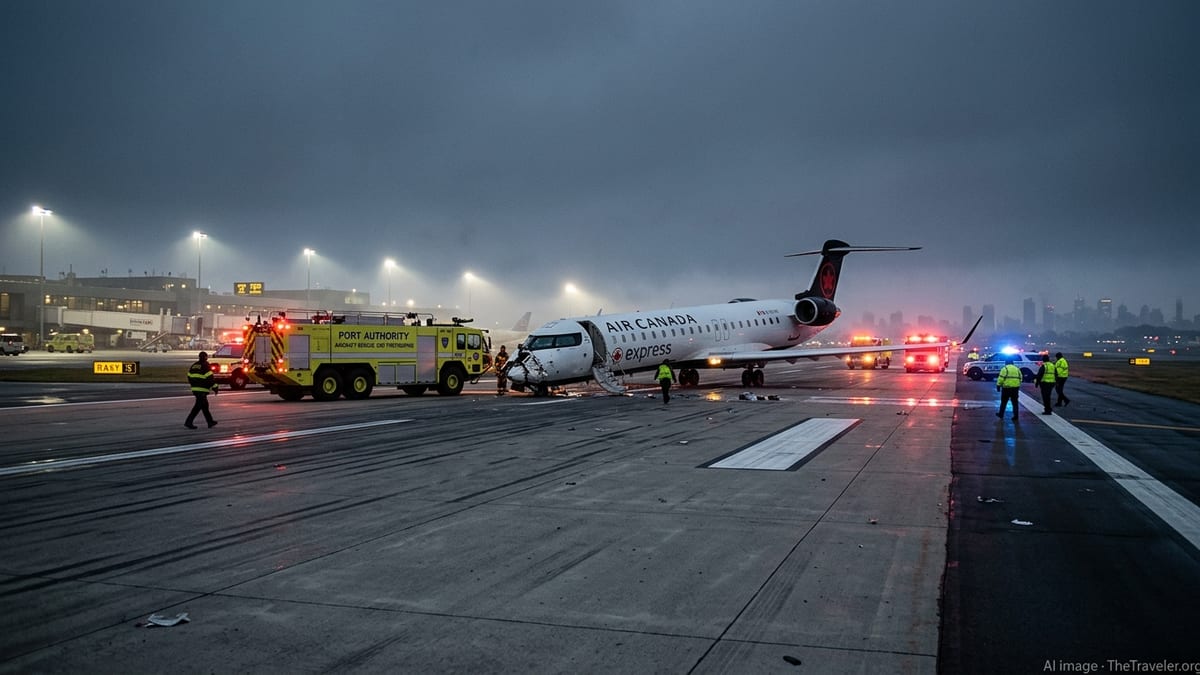
Fresh rankings put LaGuardia near the top of delay charts
The latest rankings draw on millions of domestic flights tracked by the U.S. Department of Transportation’s Bureau of Transportation Statistics and aggregated by independent aviation data firms. According to published coverage, the new analysis examined roughly 7.8 million flights across dozens of large U.S. airports over a recent 12 month period.
Across that sample, LaGuardia recorded delays on about 26 percent of its operations, placing it second among major U.S. airports for the share of flights arriving or departing late. Publicly available summaries indicate that the average delay at LaGuardia came in just above 20 minutes per flight, though disruptions can be far longer during peak travel periods or severe weather.
The findings align with a broader pattern in which New York area airports consistently rank among the country’s most delay prone. Previous syntheses of federal data have shown Newark Liberty International and LaGuardia near the top of national disruption lists, with John F. Kennedy International Airport also performing worse than the U.S. average for on time departures and arrivals.
While specific rankings can vary slightly depending on methodology, the new report’s headline conclusion is clear: LaGuardia sits just behind the country’s worst major airport for delays, cementing its position as one of the most disruption heavy hubs in the United States.
Congested skies and limited runway capacity drive chronic bottlenecks
LaGuardia’s performance is closely tied to the unique geography and airspace constraints of the New York metropolitan area. Aviation studies and regional planning reports have long noted that three major commercial airports share a tightly packed slice of controlled airspace around New York, creating persistent bottlenecks that ripple across airline networks nationwide.
Unlike some newer hubs with room to expand, LaGuardia operates with a compact airfield and relatively short runways that limit its capacity to add flights or absorb operational shocks. Federal caps on scheduled movements are intended to prevent gridlock, yet the combination of heavy demand, complex air traffic patterns and frequent summer thunderstorms leaves little margin when schedules begin to slip.
National transportation statistics show that a significant portion of U.S. delays are attributed to the broader airspace system rather than airport specific incidents. In constrained regions such as New York, that can translate into ground delay programs, holding patterns and reroutes that affect flights even when local weather appears manageable to passengers waiting at the gate.
Analysts note that these structural constraints help explain why New York airports often appear together in rankings of the most delayed hubs, and why improvements in terminal facilities alone cannot fully resolve the problem.
How LaGuardia compares with other major U.S. hubs
The new ranking places LaGuardia just behind the nation’s worst major airport for delays, a position Newark Liberty International has held in several recent cross airport comparisons that blend cancellation and delay metrics. In some 2026 league tables, Newark showed about 26 percent of flights delayed, while LaGuardia and Chicago O’Hare clustered close behind with disruption rates in the low to mid 20 percent range.
Other analyses focused more narrowly on long waits find LaGuardia at or near the top as well. A 2026 review of U.S. airports with the highest share of flights delayed by at least 60 minutes, for example, ranked LaGuardia among the leading offenders for lengthy holdups, even when its average delay time appeared somewhat lower than peers.
Outside the New York region, hubs such as Orlando, Dallas Fort Worth and Chicago O’Hare frequently appear in national delay rankings, reflecting both their scale and exposure to disruptive weather. Yet the concentration of three major airports in a single coastal airspace means the New York system exerts an outsized influence on national performance, with delays at LaGuardia or Newark often cascading into knock on disruptions hundreds of miles away.
By contrast, some long haul gateways with comparable passenger volumes, including several large European and Asian hubs, have posted significantly stronger on time records in recent international comparisons, highlighting the particular intensity of congestion in the U.S. northeast corridor.
What the ranking means for travelers using LaGuardia
For travelers, LaGuardia’s position near the top of the delay rankings translates into a higher probability of schedule disruptions, especially during peak business travel hours and busy holiday weekends. Trip planning guides increasingly advise passengers flying through the New York area to build in additional buffer time for connections or important same day commitments.
Analyses that compare performance across New York’s three main airports suggest that choosing between LaGuardia, Newark and JFK can meaningfully affect the odds of a smooth journey, depending on route and airline. In some datasets, the spread in on time performance between the best and worst of the three amounts to several extra significantly delayed flights over the course of a frequent traveler’s year.
Experts in travel planning also point out that airline choice, departure time and season can be just as important as airport selection. Morning departures tend to have fewer knock on disruptions from late arriving aircraft, and some carriers have built stronger records for keeping flights moving during irregular operations.
Even so, LaGuardia’s new No. 2 ranking among delay prone U.S. airports serves as a reminder that passengers using the airport face elevated schedule risk relative to many other major domestic hubs, and may wish to plan itineraries with that reality in mind.
Upgrades and policy efforts aim to ease long term pressure
The ranking lands as LaGuardia and the broader New York airport system continue multi year modernization programs intended to improve reliability and passenger experience. In recent years LaGuardia has undergone a sweeping terminal redevelopment, replacing outdated facilities with new concourses and upgraded gate areas designed to streamline boarding and turnaround operations.
Federal aviation documents describe parallel efforts to modernize the national air traffic control system and introduce new procedures in congested corridors, including the New York region. These initiatives aim to improve the efficiency with which controllers manage arrivals and departures, potentially reducing delays that stem from airspace constraints and traffic flow management programs.
Policy papers from transportation agencies also emphasize the importance of demand management at capacity constrained hubs, including the use of slot limits and incentives that encourage airlines to operate larger aircraft rather than ever more frequent small jets. By carrying more passengers per movement, such measures can ease pressure on crowded runways without reducing overall connectivity.
While it remains to be seen how much these changes can shift LaGuardia’s position in national rankings, the latest data underscore the stakes. With delays at New York airports affecting a significant share of U.S. travelers every year, incremental gains in on time performance at LaGuardia could have benefits that extend well beyond the city’s immediate catchment area.
New York’s LaGuardia Airport ranks No. 2 for delays