


More news on this day
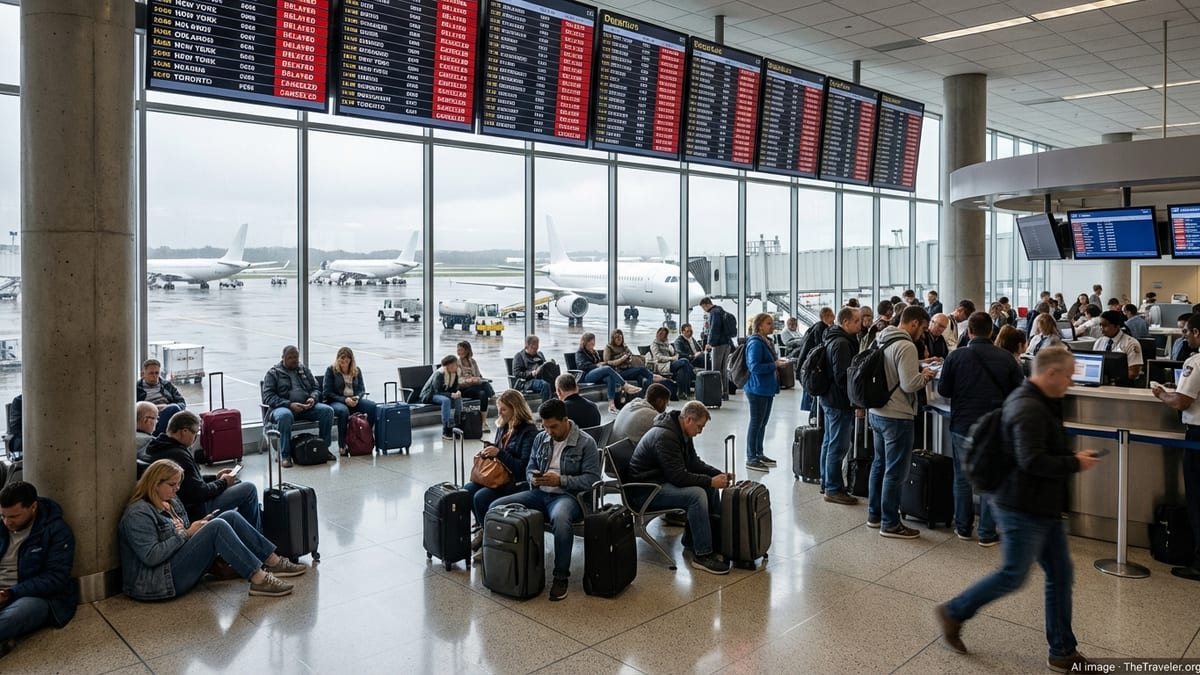
Air travel across the U.S. Northeast was thrown into disruption on Monday, September 21, 2026, after a communications failure tied to a construction-related fiber cut prompted the Federal Aviation Administration to halt or sharply restrict flights at several of the East Coast’s busiest airports.
Get the latest news straight to your inbox!
What happened and why it mattered
Published coverage indicates the disruption began with a failure of a primary communications circuit serving the FAA’s Philadelphia-area air traffic facility that manages arrivals and departures for multiple high-density airports. When systems attempted to transition to backup connectivity, the backup fiber line was found to be severed, turning a routine redundancy plan into a broader outage.
The fiber damage was linked in reporting to construction work along a rail corridor in New Jersey. Multiple outlets described the cut as accidental and connected it to rail-related construction activity, with separate reports referencing telecom infrastructure in the area and the role of a major carrier’s cable network.
Because the affected facility supports a large share of Northeast terminal-area traffic flows, the failure quickly rippled across the national airspace system. The Northeast is uniquely vulnerable to cascading effects: a pause in arrivals at one major hub can trigger gate holds, missed crew connections, and aircraft out-of-position issues that extend well beyond the region.
Which airports were affected and what travelers saw
Ground stops and major flow restrictions were reported Monday for airports including Newark Liberty International (EWR), John F. Kennedy International (JFK), LaGuardia (LGA), Philadelphia International (PHL), and Teterboro (TEB), with knock-on impacts into Boston Logan (BOS). Local coverage also described diversions into Boston as flights were rerouted away from the most constrained New York-area fields.
Operationally, Newark appeared to take some of the heaviest impact for much of the day. Flight-tracking coverage cited a prolonged period during which commercial arrivals were effectively paused, reflecting how difficult it can be to safely manage dense arrival banks when key communications pathways falter.
By later Monday, published updates indicated service was gradually resuming as repairs progressed, though the recovery phase can be slow. Even once the immediate cause is fixed, airlines and airports still have to unwind backed-up departure queues, reposition aircraft, and rebuild schedules that were designed around tightly timed Northeast turns.
The scale of delays and why they spread nationwide
Real-time disruption trackers cited widespread delays and cancellations across the Northeast network on September 21, with Newark reporting particularly severe departure delays earlier in the day. Travelers at other airports across the country also experienced delays as inbound aircraft and crews were delayed out of the Northeast.
This kind of outage tends to generate a two-wave problem. The first wave is the immediate ground stop or controlled flow, which prevents arrivals or departures for safety and airspace management. The second wave comes later: aircraft that were supposed to fly multiple segments in a day end up in the wrong city, while flight crews hit legal duty-time limits, turning initial delays into cancellations hours later.
The timing also added pressure because the New York area was already in a high-demand period, with heavy business travel and major events drawing additional traffic. In such conditions, even a short interruption can overwhelm spare capacity at gates and on taxiways.
Infrastructure questions: redundancy, construction risk, and modernization funding
The incident renewed attention on how dependent modern aviation is on terrestrial telecommunications, especially around major terminal radar approach control areas. Published coverage described a scenario where a primary circuit failed and the backup path was unavailable due to physical damage, raising questions about how backup links are monitored and protected.
Construction-related fiber cuts are a known risk for critical infrastructure, and the Northeast corridor contains dense, overlapping rights-of-way for rail, utilities, and telecom. When a single corridor carries multiple key links, accidental damage can have outsized effects, particularly if redundancy paths are not fully independent.
The disruption also landed amid ongoing national debates over air traffic control technology and staffing. Recent congressional action has included significant funding aimed at modernizing aging air traffic systems and supporting controller hiring, a policy backdrop that makes any high-profile outage especially consequential for travelers and airlines.
What to do if you’re flying in the Northeast after a ground stop
For travelers with trips to or from the New York, New Jersey, Pennsylvania, and New England corridor, the most practical step is to check airline apps and airport departure boards frequently, especially if traveling the morning after a major disruption. Even when flights restart, aircraft rotations and crew assignments may still be out of sync into the next day’s schedules.
It can also help to confirm whether your itinerary relies on tight connections through the impacted airports. When Northeast hubs are constrained, later-day departures may be more vulnerable to knock-on delays, and rebooking options can narrow quickly as airlines try to protect long-haul and international operations.
For anyone heading to the airport, publicly available guidance during similar events emphasizes verifying your flight status before leaving for the terminal and allowing extra time for rebookings and baggage changes if a cancellation occurs. Airlines typically prioritize reaccommodation once the system stabilizes, but the highest-demand corridors may take longer to normalize.