


More news on this day
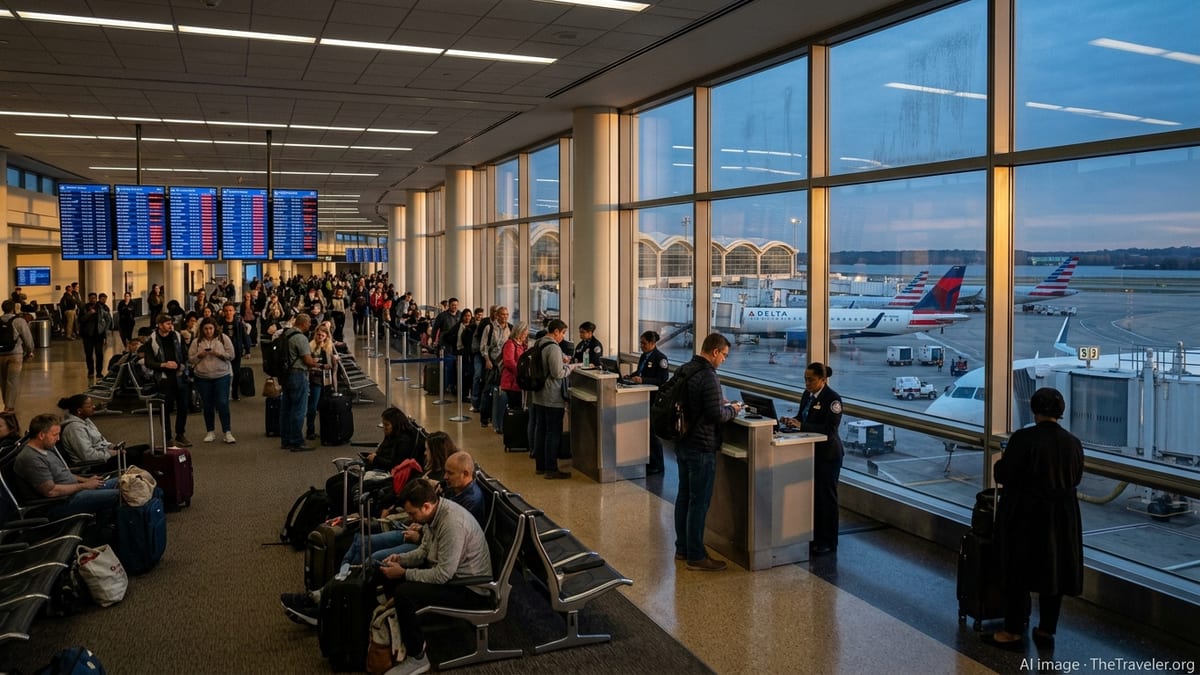
Ground stops at six airports across the U.S. Northeast disrupted travel on Monday, September 21, 2026, after an FAA “equipment outage” interfered with air traffic operations and triggered hours of delays and cancellations across one of the country’s busiest flight corridors.
Get the latest news straight to your inbox!
Which airports were affected and what a “ground stop” means
Published coverage indicated the FAA issued ground stops for flights bound for Philadelphia International (PHL), Newark Liberty International (EWR), Teterboro (TEB), John F. Kennedy International (JFK), LaGuardia (LGA), and Westchester County Airport (HPN). While the timing and duration varied by airport, the pauses were significant enough to ripple into surrounding hubs as airlines worked through backed-up schedules.
A ground stop is among the most restrictive air traffic management tools because it holds departures at their origin for flights destined to an affected airport, rather than having aircraft circle in holding patterns near the destination. For travelers, that can mean long gate holds before pushback, delayed boarding times, missed connections, and crews timing out before reaching their next segment.
Even after a ground stop expires, delays can persist well into the evening as aircraft and crews end up out of position and airports manage a surge of late arrivals and tightly packed departure banks.
What reports indicate caused the outage
Reports indicated the disruption was linked to issues with some radio frequencies at the Philadelphia Terminal Radar Approach Control facility, commonly called Philadelphia TRACON. TRACON facilities manage aircraft arriving and departing within a metro area, sequencing traffic and coordinating with towers and en-route centers.
Separately, other published coverage attributed the broader disruption to a telecommunications problem in the region, with references to damaged fiber lines affecting air traffic operations. While early social-media chatter speculated about cybersecurity, publicly available reporting did not indicate a cyberattack as the cause of Monday’s outage.
The episode renewed attention on how a localized technical issue can cascade quickly through the Northeast corridor, where major airports sit close together and depend on tightly coordinated air traffic flows to keep schedule banks on time.
How the disruption played out for travelers
In New Jersey, the slowdown at Newark was especially visible. Flight-tracking coverage described periods when commercial arrivals were effectively halted for hours, with knock-on effects for departures as gates filled and inbound aircraft diverted or delayed.
In Philadelphia, travelers faced a messy mix of ground stops, ground delays, and cancellations. Local reporting citing flight-tracking data described hundreds of delays and a substantial number of cancellations as airlines triaged the day’s schedules and attempted to protect later banks.
The disruption also spilled beyond the six ground-stopped airports. Boston Logan (BOS) experienced delays in part because it absorbed diversions and managed increased volume, according to published local coverage and FAA advisory references cited in news reports.
For passengers, the practical result was uncertainty: itineraries that looked fine in the morning could deteriorate as aircraft rotations broke, crews hit duty limits, and airlines ran out of spare equipment to cover canceled segments.
What travelers can do right now if they’re flying the Northeast
Travelers departing Tuesday, September 22, 2026, or later should expect lingering irregular operations in the region as carriers reposition aircraft and crews. Checking an airline’s app for gate changes, updated departure times, and rebooking options is likely to be more useful than relying on the original confirmation email.
For time-sensitive trips, consider proactively shifting to an earlier departure if seats are available, since later flights may be more vulnerable to downstream delays. When rebooking, connections with longer layovers can reduce the risk of missed onward flights if the first leg slips.
It can also help to verify whether your airline is offering fee waivers for date changes on impacted routes, a common step during major air traffic disruptions. Publicly posted airport and airline advisories often include the eligible travel dates and the cities covered.
Finally, passengers heading to the airport should confirm their flight’s status first. During ground stops and recovery periods, delays can change rapidly, and a flight that is “on time” may later shift as air traffic restrictions evolve and aircraft assignments are swapped.