


More news on this day
The Federal Aviation Administration has begun rolling out a new artificial intelligence supported traffic management platform, part of an $875 million program aimed at spotting bottlenecks earlier in the day and reducing the cascading flight delays that routinely frustrate travelers across the United States.
Get the latest news straight to your inbox!
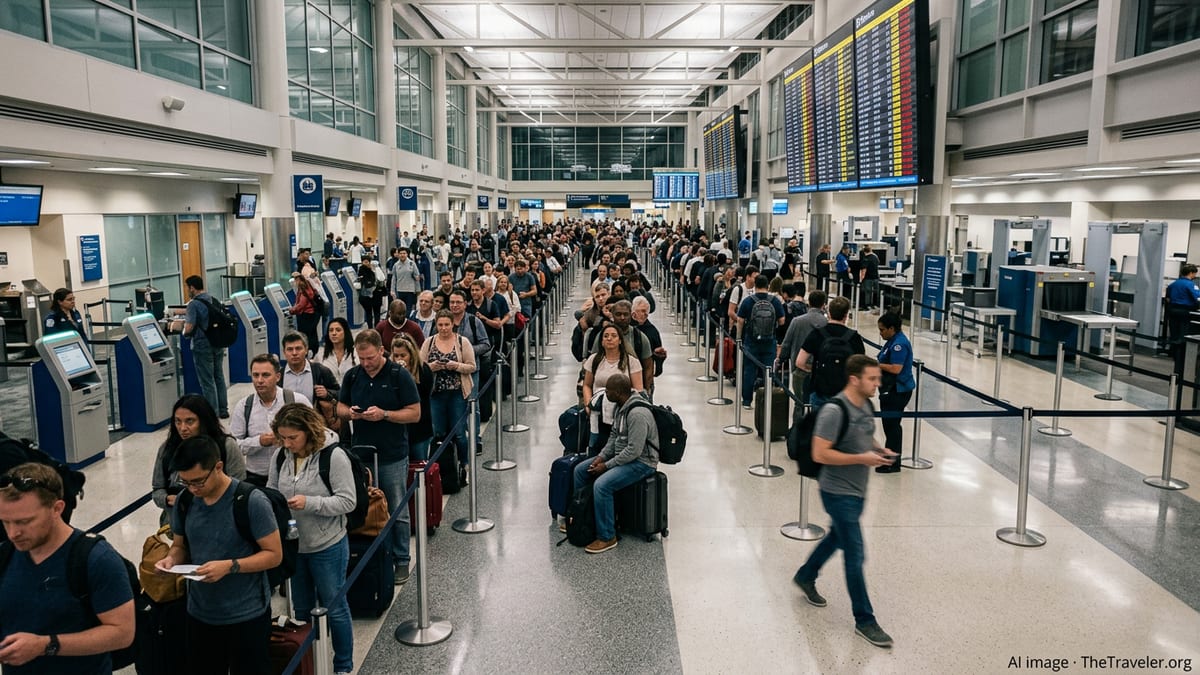
New SMART platform targets congestion before it builds
Publicly available FAA materials and recent news coverage describe the new system as Strategic Management of Airspace, Routes and Trajectories, or SMART, a decision-support platform that ingests data from hundreds of sources to build a live picture of conditions across the national airspace. The system draws on airline schedules, radar and satellite feeds, airport capacity data, weather forecasts and information on airspace restrictions to anticipate where traffic will begin to exceed available capacity.
Instead of reacting to congestion once aircraft are already lining up on taxiways or circling near hub airports, SMART is designed to highlight those hot spots hours in advance. The intent is to give traffic managers, airline operations centers and airport teams a longer planning horizon so they can reroute flights, adjust departure rates or sequence arrivals before delays become systemwide.
Coverage of the launch indicates that SMART will initially run alongside existing traffic flow tools at the FAA’s Air Traffic Control System Command Center outside Washington, D.C., where specialists oversee flows into and out of major hubs such as New York, Atlanta, Chicago and Los Angeles. By focusing early deployment on some of the country’s most delay-prone corridors, the agency aims to demonstrate measurable benefits during peak travel periods and disruptive weather events.
The initiative aligns with the FAA’s long-running NextGen modernization program, which has gradually shifted the system toward trajectory-based operations and more data-driven decision making. SMART’s use of machine learning models to predict traffic flows is presented as an evolution of those efforts rather than a standalone experiment.
AI as decision support, not a replacement for controllers
Information released to date emphasizes that SMART is built as a decision-support system, not as a replacement for air traffic controllers or local tower staff. The platform generates forecasts, highlights predicted chokepoints and can suggest alternative routing or scheduling strategies, but human specialists remain responsible for choosing which measures to implement.
This approach reflects the FAA’s broader posture toward artificial intelligence in safety-critical applications, which has focused on deterministic and highly constrained tools rather than fully autonomous systems. Agency research plans and Department of Transportation strategy documents have pointed to AI and machine learning as ways to handle large volumes of operational data and to support collaborative decision making across airlines, airports and regulators.
For travelers, the distinction is largely invisible, but it shapes how changes will appear on the day of travel. Instead of an algorithm automatically rerouting aircraft, passengers are more likely to see airlines adjusting departure times slightly, choosing alternative arrival paths or shifting connections based on options that have been surfaced by SMART and reviewed by human operations teams.
By keeping controllers and traffic managers in the loop, the agency also aims to build confidence among front-line staff who will rely on the new tools during high-pressure events such as summer thunderstorms, early winter storms or large-scale ground stops in congested regions.
$875 million contract and phased national rollout
According to contract information cited in recent business and aviation reports, the FAA has awarded an $875 million, 12-year agreement to Air Space Intelligence to develop and operate SMART. The long contract horizon reflects both the complexity of integrating a new platform into the heart of the national airspace system and the expectation that the system will evolve as models are refined and additional data sources come online.
Initial deployment is centered on the Command Center, with a phased expansion to key regional facilities and busy hub airports. Early demonstrations are expected to focus on high-density corridors in the Northeast and along transcontinental routes, where even modest efficiency gains can translate into significant reductions in delays and missed connections for passengers.
Published coverage indicates that full nationwide integration will take several years, both to validate performance in a variety of conditions and to train operational staff. During this period, SMART will run in parallel with legacy planning tools, allowing side-by-side comparisons of predictions and outcomes. The goal is to show that the AI-supported platform can consistently anticipate problems earlier than existing systems while maintaining or enhancing safety margins.
The multiyear timeline also leaves room for adjustments based on lessons learned from major travel periods such as Thanksgiving, winter holidays and peak summer vacation seasons, when the network is most stressed and the payoff from better planning can be most visible to travelers.
What travelers might notice during busy seasons
While the technical details of SMART play out behind the scenes, travelers could begin to see concrete changes in how delays are managed during severe weather or heavy traffic days. If the system functions as intended, airlines and the FAA may be able to introduce small schedule adjustments earlier, avoiding the last-minute ground stops and long tarmac waits that often disrupt entire days of flying.
One example described in public briefings involves summer thunderstorms along the East Coast. With more accurate predictions of when and where storms will constrain specific routes or arrival paths, traffic managers can meter departures into affected regions in advance, route some flights along alternative tracks and shift others slightly later in the day. Passengers might still see schedule changes, but the hope is that more of these adjustments will be announced hours ahead instead of occurring only after boarding has begun.
Travelers at large hubs may also notice more consistent use of published departure and arrival rates during peak banks, as SMART’s capacity estimates help avoid over-scheduling into limited runway or gate availability. In practice, that could mean fewer long queues on taxiways, more predictable connection windows and potentially less need for rolling delays that move departure times back in 15- or 30-minute increments.
For international flights feeding into major U.S. gateways, better coordination between oceanic flows and terminal area capacity could help smooth arrival waves, reducing the risk that weather-driven restrictions trigger extended holding patterns or diversions. The early focus on data sharing between the Command Center, airlines and airports is intended to support that kind of systemwide optimization.
Part of a broader push to modernize US air travel
The SMART launch arrives amid a broader effort to overhaul the technology backbone of U.S. air traffic management, following several high-profile disruptions in recent years and ongoing concerns about controller staffing at key facilities. Alongside automation upgrades in en route centers and terminal areas, the FAA has highlighted new tools for surface surveillance, departure queue management and wake turbulence spacing as ways to increase efficiency without compromising safety.
Within that context, AI-supported systems like SMART are framed as another step toward a more predictive, data-rich approach to running the national airspace. Research plans published by the agency point to continued work on using machine learning for traffic flow management, advanced weather interpretation and collaborative decision making involving airlines and airports.
For the travel industry, the stakes are significant. Persistent delay problems can increase operating costs for airlines, strain airport resources and frustrate travelers who may factor reliability into their choice of carriers and destinations. If SMART and related tools deliver even incremental improvements during peak seasons, the cumulative effect over years could influence how airlines schedule hub operations and how airports plan future expansions.
As the system moves from early deployment into broader use, upcoming holiday and summer travel periods are likely to provide the first real-world tests of whether the new AI-assisted approach can meaningfully reduce the ripple effects of congestion that have become a familiar part of the flying experience in the United States.