


More news on this day
U.S. aviation regulators are pressing airlines to fly fewer, more realistic schedules at the country’s most strained hubs, expanding slot-style controls and formal schedule caps in an effort to reverse a domestic reliability problem that has left a large share of flights arriving late during peak travel periods.
Get the latest news straight to your inbox!
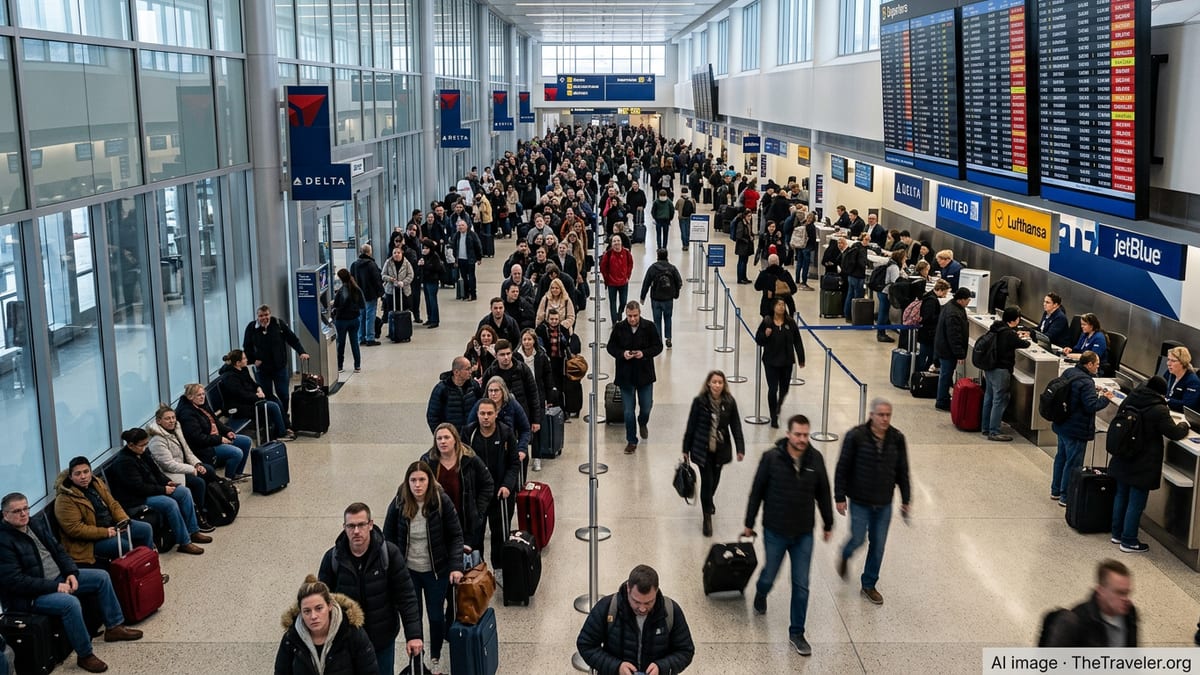
From “more flights” to “workable flights” at the busiest hubs
Published coverage and federal notices show a clear shift in tone: instead of treating ambitious schedules as a commercial decision for carriers, the Federal Aviation Administration is increasingly using its congestion-management authority to set or extend hard limits at airports where demand routinely outstrips runways, gates, and air traffic control capacity.
At Chicago O’Hare International Airport, the FAA imposed a summer 2026 scheduling reduction that limited peak-day operations to 2,708 daily operations, down from more than 3,080 flights planned on the busiest days. The cap is intended to prevent a sharp year-over-year schedule increase that federal materials indicate would have produced wider disruptions across the National Airspace System, given O’Hare’s network role.
New York-area constraints remain central to the broader push. FAA materials continue to frame “slots” as a time-specific authorization to take off or land at a constrained airport, and the agency has extended or maintained congestion-relief measures at airports that already operate under slot or schedule-facilitation frameworks, including John F. Kennedy International (JFK), LaGuardia (LGA), and Newark Liberty (EWR).
Slot adoption and schedule caps: what’s changing in practice
In the U.S., “slots” and “schedule facilitation” are often discussed together, but they function differently. Publicly available FAA descriptions show that slot coordination is the more formal system, while schedule facilitation relies on structured cooperation with carriers to keep planned operations within what an airport can reliably handle.
At O’Hare, regulators relied on International Air Transport Association (IATA) Level 2 concepts to structure the reduction, basing airline allocations on approved summer 2025 schedules rather than letting the most aggressive growth plans win scarce capacity by default. Federal language around proportional reductions emphasizes spreading the burden across users while still protecting essential connectivity where possible.
At Newark, published federal register materials describe extending operating limitations through October 24, 2026, citing ongoing staffing and equipment challenges. The Newark framework also includes enforcement language, including potential civil penalties for operations above set limits, signaling that voluntary compliance is increasingly being backed by stronger consequences.
Separately, FAA documents show continued use of slot-usage waivers in the New York region through the summer 2026 season, designed to let airlines trim schedules without losing future operating rights for flights they choose not to run. The intent is to reduce cancellations and severe knock-on delays by encouraging carriers to publish schedules they can actually operate with available air traffic resources.
The technology angle: FAA scheduling software and “deconflicting” demand
Alongside caps and slot-related rules, recent reporting describes the FAA briefing major airline leaders on plans to use advanced software to overhaul how schedules are evaluated and managed. The initiative is framed as a way to improve flight management by aligning planned airline demand more closely with what the airspace and airports can handle, hour by hour.
For travelers, the practical impact of better “schedule deconfliction” could show up in fewer days where delays cascade across multiple airports. Congested hubs can amplify disruptions because inbound delays quickly become outbound delays, and busy banks of flights at the same times of day leave little room to recover.
The software push also reflects a broader recognition that delays are not only about runway throughput. Gate availability, taxiway congestion, local airspace complexity, and staffing levels can all become binding constraints, meaning the limiting factor for an airport’s “real capacity” can change by season, construction project, or staffing conditions.
Why reduced schedules are back on the table now
Recent FAA actions align with a wider industry backdrop in which airlines have also been signaling capacity restraint for financial reasons. Reuters coverage in mid-September 2026 described major U.S. carriers scaling back planned schedules after a rise in fuel prices pressured profit outlooks, reinforcing the idea that fewer flights can be both an operational and economic choice.
Regulatory pressure and market pressure do not always point in the same direction, but in this case both can encourage airlines to publish less aggressive timetables. A tighter schedule can reduce “late arriving aircraft” chains that build through the day, and it can also help airlines hold more reserve crews and aircraft for irregular operations rather than flying every asset at maximum utilization.
Still, fewer scheduled flights can translate into fewer seat options on specific city pairs at certain times. That can matter most at heavily peaked business travel hours and on short-haul routes that depend on frequency more than aircraft size. The FAA’s orders and guidance have indicated an interest in avoiding disproportionate impacts, but the tradeoff between reliability and maximum frequency is inherent in capacity-constrained systems.
What travelers should watch for in late 2026 and into 2027
For consumers, the biggest near-term signal will be timetable changes and “schedule trimming” announcements tied to specific hubs. At airports under caps or slot-style controls, the reductions typically show up as fewer departures in the most crowded hours, more retimed flights into shoulder periods, and a greater emphasis on protecting key connecting banks.
Travelers may also notice that airlines become less willing to sell extremely tight connections at capped airports, particularly during summer peaks. That shift can be a sign that carriers are padding schedules to improve completion rates, or that they are trying to avoid misconnects that can spiral into rebooking backlogs.
Finally, the next evolution to watch is whether the U.S. continues expanding the use of Level 2 style schedule facilitation and stronger enforcement language at additional airports beyond the best-known constrained markets. Public FAA material already notes several airports managed under slot rules or voluntary schedule facilitation, and ongoing staffing, construction, and demand patterns could drive similar measures elsewhere during future peak seasons.