


More news on this day
Nigeria’s largest domestic airline by flight volume, Air Peace, has rejected the Nigeria Civil Aviation Authority’s August 2026 flight-disruption report, arguing that the regulator’s figures are inaccurate and that the analysis fails to separate airline-caused delays from disruptions driven by factors outside carriers’ control.
Get the latest news straight to your inbox!
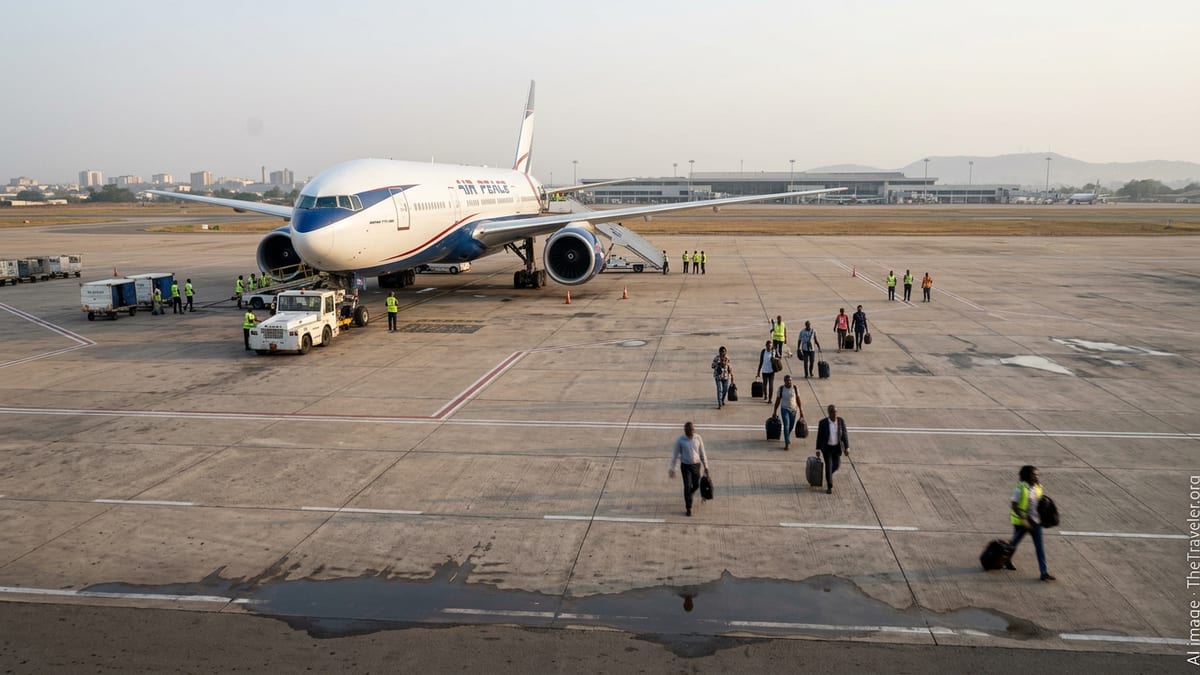
What the NCAA report said about August 2026 disruptions
Published coverage indicates the NCAA’s August 2026 summary of domestic airline flight disruption operations attributed 1,330 delayed flights to Air Peace out of 1,864 flights it said the carrier operated during the month, alongside a small number of cancellations. The data points, widely reproduced across Nigerian business and aviation reporting on September 17, 2026, placed Air Peace among the most affected operators in the month’s disruption tables.
The report has drawn heightened attention because it is being treated by many travelers as a performance scorecard at a time when domestic aviation demand in Nigeria remains highly sensitive to punctuality, missed connections, and last-minute schedule changes. It also arrives alongside ongoing public debate about whether airlines are overscheduling relative to available aircraft and crew, a concern that has featured in recent NCAA messaging about aligning published schedules with operational capacity.
While the NCAA has published broader consumer-protection guidance and enforcement updates in recent years, publicly available reporting suggests the August 2026 disruption summary has become a focal point because it provides a named, airline-by-airline breakdown that can quickly shape public perception.
Air Peace’s rebuttal: undercounted flights and a distorted delay rate
Air Peace’s response centers on a claimed mismatch between its internal operational totals and the NCAA’s published movement count for August. According to multiple published accounts on September 17, 2026, the airline said it operated roughly 2,564 completed flights in the month, rather than the 1,864 flights attributed to it in the regulator’s report, a gap of more than 700 flights.
The airline’s argument is that removing that volume from the dataset would mechanically inflate any calculated delay percentage, producing a figure that does not reflect the full scale of its operations. In its rebuttal as described in published coverage, Air Peace urged the regulator to review and audit how it compiles disruption statistics and to ensure future reports better capture airline operating volumes and context.
Air Peace also questioned the timing and framing of the monthly reporting, with published coverage noting the airline queried why the NCAA would begin a monthly disruption series with August rather than July, following the release of earlier quarterly reporting dated July 31. The broader implication is that methodology and continuity matter, especially when the results are being used by passengers to make purchasing decisions.
External factors Air Peace says contributed to delays
Air Peace’s rebuttal, as reported by several Nigerian outlets, also emphasizes disruption drivers it describes as external to the airline. Coverage points to the airline citing industrywide operating constraints and events that can ripple through daily schedules, including disruptions tied to industrial action that reportedly began on August 11 and affected operations for an extended period.
In addition to labor-related disruption, airlines operating domestic schedules in Nigeria frequently cite constraints such as air traffic flow management, weather, airport infrastructure limitations, and aircraft-on-ground situations across the sector. Air Peace’s position, as reflected in published reporting, is that delay reporting should differentiate between controllable delays and those driven by the operating environment to avoid misleading comparisons.
For travelers, the practical effect of these compounding factors is that a delay early in the day can cascade across later rotations, especially on high-frequency trunk routes. When schedules are tightly banked, a single late aircraft arrival may affect multiple subsequent sectors, increasing the odds of missed onward travel plans even when the original delay cause was remote from the passenger’s point of departure.
What Nigeria’s passenger-rights rules mean for travelers
The NCAA’s consumer-protection framework is anchored in Nigeria Civil Aviation Regulations, Nig.CARs 2023, including Part 19 on consumer protection. The rules set out airline obligations when flights are delayed or cancelled, and they also provide a formal channel for complaints when passengers believe an airline has not met those obligations.
Publicly available NCAA guidance for passengers outlines care and assistance expectations tied to delay length, including provisions that airlines provide refreshment and basic communications support during longer waits. The same framework also describes refund and rerouting obligations and specifies timelines for reimbursement in certain circumstances.
For passengers caught in prolonged disruptions, the NCAA also operates a consumer-protection process that allows complaints to be escalated beyond the airline. The authority’s consumer portal and published passenger-rights materials indicate that travelers can submit complaints and track outcomes when service recovery, refunds, or other obligations are disputed.
Air Peace’s dispute with the August 2026 disruption report does not change those rights, but it underscores why travelers may want to document key details during disruptions, including departure time changes, boarding announcements, and any written notices provided at the airport, as these details often determine how a complaint is evaluated under the rules.
Why the data dispute matters for route planning and ticket buying
For travelers, a regulator’s disruption report is most useful when it is both comparable across airlines and transparent about what counts as a delay, how cancelled flights are treated, and whether delays are categorized by cause. Air Peace’s rebuttal highlights that even small definitional differences, such as whether certain chartered sectors, extra sections, or irregular operations are included, can significantly shift headline percentages.
It also raises a broader question about how disruption data should be communicated to consumers. A single month’s results can reflect unusual events, including industrial actions and airport constraints, and may not represent an airline’s longer-term reliability. Travelers comparing carriers on routes such as Lagos to Abuja or Lagos to Port Harcourt often weigh schedule frequency, rebooking options, and customer service responsiveness alongside punctuality statistics.
Published coverage suggests Air Peace is pressing for a review of the NCAA’s data-collection and reporting approach. If the regulator responds with methodological clarifications or revised reporting, passengers may see more granular breakdowns that separate carrier-responsible delays from systemwide constraints. Until then, travelers are likely to continue relying on a mix of official passenger-rights rules, airline notifications, and multi-month performance context when planning time-sensitive domestic trips.