


More news on this day
The Federal Aviation Administration has begun testing a new artificial intelligence-supported system designed to anticipate flight disruptions before aircraft leave the gate, aiming to help the national air traffic network respond earlier to congestion and weather-driven bottlenecks.
Get the latest news straight to your inbox!
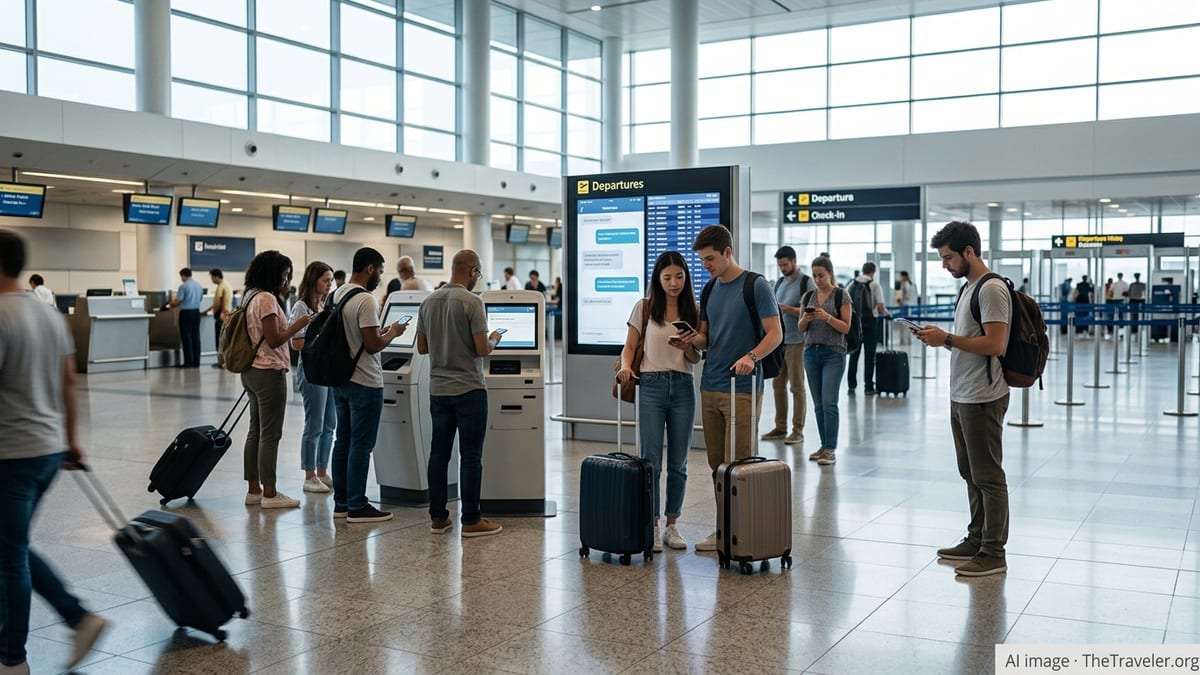
What the FAA’s new system is meant to do
Published coverage and FAA materials describe the effort as part of a broader shift toward predictive traffic management, where the agency tries to identify schedule conflicts and capacity shortfalls hours ahead of time rather than reacting once delays stack up on the ground. The tool under test is tied to a program known as Strategic Management of Airspace, Routes, and Trajectories, commonly referred to as SMART.
SMART is described as a cloud-based platform that synthesizes multiple streams of operational data to produce a shared picture of expected demand and available capacity before departures. The FAA’s public descriptions say the system analyzes airline schedules, weather, airport capacity, airspace conditions, and operational constraints, then uses AI-supported models to project traffic flows and flag potential conflicts before they occur.
For travelers, the practical goal is earlier intervention. Instead of waiting until a runway configuration changes, a major storm line approaches, or downstream airspace becomes saturated, the system is intended to surface warning signs early enough for traffic managers to adjust routes and timing and reduce the cascading delays that can ripple through the day’s flight schedule.
How it fits into a larger modernization of traffic flow management
The FAA has positioned the predictive tool as part of a bigger technology refresh at the Air Traffic Control System Command Center, the hub that coordinates national traffic flow initiatives. Publicly available information shows the agency is moving from an older traffic flow management platform toward a replacement called Flow Management Data and Services, or FMDS, described as the future backbone for how the Command Center analyzes demand and manages congestion.
FAA descriptions of FMDS say it is designed to analyze flight plans, airline schedules, and real-time position updates to project congestion in advance, supporting earlier and more coordinated decision-making across the system. SMART is characterized as an enhancement within that FMDS environment, using the same data foundation to improve how the system forecasts conflicts and evaluates options before departures.
The modernization push comes as the FAA and airlines have continued to face disruption drivers that are hard to solve with procedural changes alone, including weather volatility, busy peak travel banks at major hubs, and staffing constraints in parts of the air traffic system. The design premise is that better prediction and earlier coordination can reduce the need for last-minute tactical fixes that are disruptive for passengers and inefficient for airlines.
What travelers might notice at airports if the predictions work
Most passengers experience air traffic management through outcomes such as late departures, extended taxi-out times, missed connections, or rolling gate holds. The FAA’s stated intention is not to eliminate delays entirely, but to make disruptions more predictable and to reduce avoidable congestion by coordinating schedules and routes before planes queue up for departure.
In practice, that can mean more proactive adjustments to departure times and routings when the system foresees a mismatch between planned demand and what airports or airspace can safely handle. Under existing practices, the FAA already uses traffic management initiatives such as ground delay programs and airspace flow programs to meter demand when capacity is constrained. The difference with a predictive AI-supported layer is the potential to spot conflicts earlier, run what-if scenarios faster, and share a more consistent outlook with operators before passengers board.
That earlier visibility can also affect how disruptions propagate across an airline’s network. When delays are discovered late, one late outbound aircraft can trigger a chain of late subsequent segments. If congestion is forecast earlier in the day, airlines may have more time to swap aircraft, reposition crews, or adjust connections, reducing knock-on impacts even when the original constraint cannot be avoided.
Testing now, with big claims but gradual real-world impact
Recent reporting indicates the FAA began testing an AI-supported computer system intended to help predict schedule conflicts and weather issues, supporting traffic managers and controllers as they consider reroutes. The agency’s own fact sheet language frames SMART as a platform that can visualize where aircraft are headed, how much traffic the system can accommodate, and where congestion or weather could create challenges before takeoff.
Even with strong modeling, the near-term effect for passengers is likely to be incremental. Predictive tools depend on the quality of input data, the accuracy of weather forecasts, and the operational flexibility available to airlines and airports. In heavily constrained airspace, the system may still need to rely on familiar measures such as metering departures, assigning controlled departure times, or shifting routes to balance demand.
There are also governance and safety-assurance questions that typically accompany AI in aviation settings. The FAA has published work on AI safety assurance in other contexts, and public advisory materials have emphasized the need for clear metrics and responsible integration. For travelers, those guardrails translate into slower rollout but potentially higher confidence that decision support tools are being introduced methodically, with human oversight remaining central to operational decisions.
Why this matters as delays remain a defining travel pain point
Air travel delays often feel random at the gate, but the underlying causes are frequently systemic, driven by how tightly airline schedules stack demand into peak periods and how quickly weather or constraints in one region can saturate downstream routes. A predictive system that looks at the national picture and highlights future pinch points is aimed at reducing the surprise factor and smoothing operations earlier in the chain.
For passengers, the most meaningful improvements would show up as fewer prolonged taxi queues, fewer last-minute gate holds with limited information, and more reliable arrival estimates during complex weather days. The FAA’s public framing focuses on preventing disruptions before they happen, with the idea that earlier traffic management actions could reduce strain on controllers and improve overall predictability.
Travelers should still expect that severe weather, runway closures, and major equipment outages can overwhelm even the best planning tools. But if the FAA’s testing translates into broader operational use, AI-supported forecasting could become one of the key behind-the-scenes levers shaping how airlines and air traffic managers manage disruption before it reaches the boarding door.