


Faro Airport is the main gateway to Portugal’s Algarve coast, and in summer it can feel as busy as the beaches it serves. With new border systems bedding in, reports of long queues at peak times, and a terminal packed with seasonal holiday traffic, smart planning makes all the difference. This guide walks you step by step through departures at Faro Airport, from check-in to boarding, with a focus on security, passport control and how to handle summer queues without unnecessary stress.
Get the latest updates straight to your inbox!
Understanding Faro Airport Departures Layout
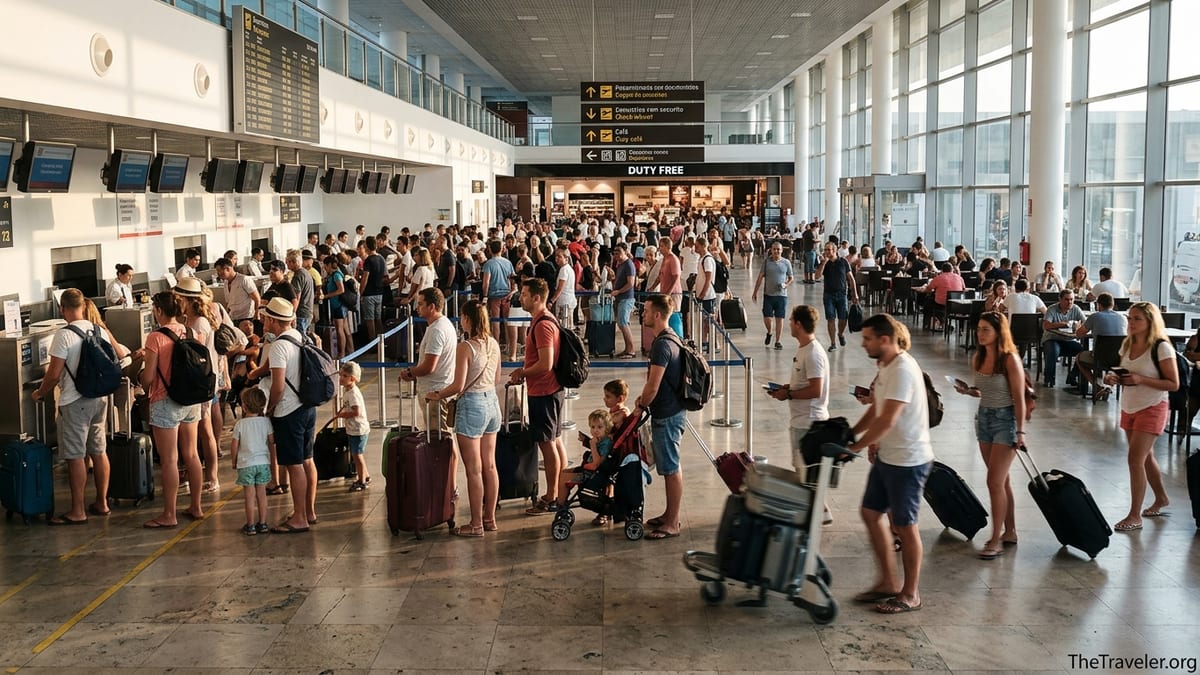
Faro Airport has a single modern terminal handling all commercial flights, so all departures follow the same broad path: you enter on the departures level, check in with your airline, clear security, pass through the main duty free store and food court area, then continue to your gate at the far ends of the pier. The compact layout is helpful, but at busy times the central check-in hall and security lanes can quickly feel congested.
Check-in desks are grouped by airline and open into a common departures hall. Low cost carriers such as Ryanair and easyJet often occupy long stretches of adjacent desks, while legacy airlines like TAP Air Portugal, British Airways or Lufthansa typically have smaller dedicated islands. In high season, it is common to see the queues for large holiday flights to the UK, Ireland or Germany snaking back toward the terminal entrance, especially in the early morning wave.
Once you clear security, you enter an airside departures lounge that runs lengthwise along the building. The central area immediately after security is where you find the large Portugal Duty Free store plus several cafes and grab-and-go outlets, with additional seating areas as you move toward the A and B gate clusters. The single-terminal design means walking times are modest for most gates, but during summer you should still allow at least 10 to 15 minutes from security to a more remote gate, particularly if you plan to stop for food or shopping.
The terminal has been progressively upgraded over the past decade, with brighter interiors, improved air conditioning and expanded commercial space. However, Faro remains primarily a leisure airport with heavy peaks rather than smooth all-day traffic. That means your experience will vary dramatically depending on whether you travel on a quiet Tuesday afternoon in March or a Saturday morning in August at the height of school holidays.
Check-In Timing and Airline Counters
For most short haul departures from Faro, standard advice is to arrive at least 2 hours before flight time in the shoulder seasons, increasing to around 3 hours ahead in peak summer or for early morning departures. This aligns with the airport operator’s guidance to allow generous time for check-in and security, and reflects recent traveler reports of periods when queues have stretched across the hall at busy times.
Many airlines open their bag-drop counters 2 to 3 hours before departure. For example, on a typical July Saturday, a 10:00 flight to Manchester may start check-in around 07:00, with a line forming even earlier as package holiday coaches drop off large groups. If you are traveling with checked luggage on such flights, it is sensible to aim to reach the terminal doors shortly before your airline’s counters open so you are toward the front of the queue, especially if you are a family with children or multiple bags.
Passengers with hand baggage only and mobile boarding passes can often bypass the longest queues by using dedicated “bag drop only” or “online check-in” counters where available, or by going straight to security if the airline allows it. For instance, some frequent summer travelers on carriers like Ryanair or easyJet report arriving about 2.5 hours before departure, checking their bag in the first half hour, then heading immediately to security and passport control rather than lingering in the public area.
Priority services offered by some airlines, such as “priority bag drop” or “business class / premium” counters, can be particularly valuable at Faro on peak days. While they do not solve security or border waits, they typically reduce the first bottleneck at check-in, which can be the difference between a calm journey and watching the clock tick down while still in the landside hall.
Security Screening: What to Expect and How to Prepare
After check-in, all passengers move toward the central security screening zone. Faro uses standard European security procedures, with walk-through metal detectors, X-ray scanners for cabin baggage and random additional checks. The airport operator emphasizes that being prepared before you reach the belt is one of the most effective ways to make the process faster for everyone, and this is especially true when the lines are busy with infrequent holiday travelers.
In practice, this means having liquids in containers of 100 ml or less grouped in a clear plastic bag, taking laptops and larger electronics out of your bag if requested, and removing belts or metal items before you step into the scanner. On a quiet weekday afternoon outside school holidays, travelers frequently report clearing security in under 15 minutes. On the other hand, on a Saturday in August in the 06:00 to 10:00 wave, it is not unusual to wait 30 to 45 minutes if several full flights feed into the lanes at once, particularly when families ahead are still unpacking bags at the X-ray.
Faro Airport occasionally opens extra lanes during peak times, but staffing patterns and the sudden arrival of multiple coaches can create unpredictable surges. To cope, treat security as a potential pinch point and build at least 30 to 40 minutes of buffer into your schedule in summer. If you are traveling with strollers, baby food, or medical liquids, allow additional time for secondary checks and keep any supporting documentation easily accessible.
Limited fast-track options may be available through some airlines or third-party services, typically giving access to a separate, shorter lane at security. These can be good value during peak school holiday weeks if you are anxious about queues, though they do not exempt you from standard checks. As a rule, even with fast track, you should not cut your arrival time too fine, since passport control and gate boarding can still take longer than you expect.
Passport Control, EES and Summer Queue Patterns
After security, non-Schengen passengers pass through passport control. For British and Irish holidaymakers, who make up a large proportion of summer departures, this is where some of the longest waits have been reported since the United Kingdom left the European Union and since the roll-out of the EU’s new Entry/Exit System. Travelers describe very different experiences depending on the time of day: some report sailing through in 10 minutes on a quiet morning, while others recount queueing for 45 minutes or more when several UK-bound flights depart close together.
The new Entry/Exit System involves registering biometric data for many non-EU nationals on their first trip under the scheme, typically through electronic kiosks followed by a check at a staffed booth. This initial enrollment can take significantly longer than a routine passport stamp. Faro has invested in extra kiosks and lanes, but during the first major summer after implementation, queues are still variable and can build quickly when several flights to London, Manchester and Dublin leave back-to-back.
Patterns emerging from recent traveler reports indicate that late morning and mid-afternoon can see heavy congestion at passport control on peak days, particularly Fridays and weekends in July and August, as package holiday charter rotations line up. By contrast, departures after 20:00 or midweek flights outside school holidays are often far quieter, with some passengers describing a near walk-through experience. If you have flexibility when booking, choosing less popular time slots can significantly reduce queue risk.
Regardless of your time of travel, the safest strategy in summer is to proceed to passport control as soon as you are airside, rather than lingering for long in shops or cafes in the central area. Several travelers who missed flights or experienced last-minute dashes in recent seasons have reported underestimating how quickly the passport queue could lengthen when a couple of extra flights were called. Think of it as the second major bottleneck after security, and clear it early so you can relax closer to your gate.
Food, Shops, Duty Free and Lounges
Once you are through security, Faro’s departures area offers a mix of duty free shopping, cafes and casual dining options. The central Portugal Duty Free store just beyond security is the biggest retail presence, selling a familiar range of spirits, wines, cosmetics, perfumes, confectionery and local products. Travelers often highlight the opportunity to pick up Portuguese wines and regional delicacies like Algarve almond sweets or tins of quality seafood as last-minute gifts.
Food options airside include coffee chains, bakery-style counters and sit-down bars where you can get sandwiches, salads, pastries and hot dishes. For example, passengers regularly mention picking up a pastel de nata and an espresso, or ordering a simple plate of grilled chicken with rice and salad. Prices are typical of a medium-sized European holiday airport: a cappuccino might cost the equivalent of 3 to 4 euros, a sandwich around 6 to 8 euros, and a basic hot meal perhaps 12 to 15 euros, depending on the venue and season.
The airport’s VIP lounge, managed in partnership with the airport operator, is located near one of the A gates in the departures lounge. It provides more comfortable seating, quieter surroundings, complimentary snacks and drinks, and workspaces with power outlets. Access may be granted through business class tickets, certain airline or bank cards, or by paying at the door. For travelers facing a 3-hour buffer before departure during high season, this can be an appealing way to escape the bustle of the main seating areas where families with small children and tour groups tend to congregate.
Landside, in the public departures hall, there are additional cafes and small shops where you can buy a quick breakfast or last-minute travel items before check-in, though choice is more limited than airside. Because predicting security and passport waits is difficult in busy periods, many experienced Faro travelers now prefer to head airside early and plan to eat or shop near their gate rather than risk cutting things too fine in the landside hall.
Managing Summer Queues and Peak Season Strategies
Summer at Faro Airport, especially from late June through early September, brings intense pressure on the terminal, with spikes around UK, Irish, Dutch and German school holidays. Local media and traveler forums periodically highlight days when queues for check-in and security have stretched back toward the doors, or when passengers have waited anxiously at passport control as boarding times approached. While such worst-case scenarios do not happen every day, the risk is high enough that a cautious strategy is justified for most summer departures.
If you have a morning flight between about 06:00 and 11:00 in July or August, a realistic plan is to arrive at the airport 3 hours before departure. For a 09:30 UK-bound flight on a Saturday, that means being at the terminal around 06:30. That extra hour compared with typical short-haul recommendations accounts for potential double-queueing at check-in and security, plus the possibility of a long wait at passport control if multiple non-Schengen flights are called. Families, large groups and anyone needing special assistance should err on the side of even more time, especially if dependent on coach transfers that may arrive in waves.
Travelers on quieter midweek or evening flights in June or September sometimes report that 2 hours was comfortably sufficient, with time left over for a leisurely breakfast and some shopping. However, because it is hard to know in advance exactly how many flights will be feeding each process when you arrive, a generous buffer remains wise. If in doubt, consider your own risk tolerance: if missing the flight would mean losing a connection, paying for new tickets or missing work, plan conservatively.
Once inside the building, your best defense against summer queues is to keep moving forward at each stage rather than pausing for extended breaks. That means going straight to your airline’s desks to drop bags, proceeding promptly to security once you have boarding passes, and then heading directly to passport control. Save your coffee, duty free browsing and lounge visit for after you are through the two main bottlenecks. Many recent Faro regulars say this “clear formalities first, relax later” approach has turned potentially stressful mornings into manageable routines.
Simple practical steps also help: travel with hand luggage only if feasible to avoid check-in queues, use mobile boarding passes where accepted, pre-pack your liquids and electronics for quick removal at security, and keep passports to hand for both security ID checks and border control. If you are traveling with older relatives or young children, brief them on the process in advance so you are not repacking bags at the front of the line while the clock is ticking.
Practical Examples: Different Departure Scenarios
To understand how all these pieces fit together, it helps to picture a few realistic scenarios. Imagine a family of four from Manchester with a 10:00 departure on a late July Saturday. Their transfer coach drops them at Faro at 07:00. By 07:05 they have joined a growing check-in queue; it takes 35 minutes to reach the desk and check two large suitcases. They are at security by 07:50 and, thanks to having liquids and tablets packed in easy-to-access pouches, they clear the screening lanes by 08:10. They proceed straight to passport control, where a queue of mostly UK-bound passengers stretches through the holding area. It takes another 35 minutes to get their passports checked. At 08:45 they are finally airside beyond border control, with just over an hour until departure and about 30 minutes until boarding, enough time to grab a quick brunch from a café near their gate.
Contrast that with a couple flying to Frankfurt on a Tuesday evening in early May with a 19:45 departure. They arrive at Faro at 18:00 with online check-in already complete and only cabin luggage. The airline’s check-in counters are quiet, so they head straight to security and clear in under 10 minutes at around 18:15. Passport control has only a short line for Schengen flights, and they are sitting near their gate by 18:30, with more than an hour to enjoy a relaxed drink in the departures lounge before boarding is announced.
A third example involves a solo traveler to Dublin on a Sunday in mid-August with a 09:15 flight. Confident after a smooth experience the previous year, they arrive at 07:20, less than 2 hours before departure. Unfortunately, several UK and Irish flights are scheduled within a 60-minute window. Check-in for their airline takes 30 minutes, security another 25 minutes as two lanes appear short-staffed, and by the time they reach passport control at around 08:15 they find a very long queue of non-EU passengers, some still completing Entry/Exit System enrollment. Boarding for their flight begins while they are still in line. Although they ultimately make it to the gate just before final call, the experience is fraught and illustrates why shaving arrival times too close in high summer is risky.
These examples are not fixed rules, but they reflect patterns reported by many recent travelers: off-peak flights often feel routine, while peak holiday waves can turn Faro’s otherwise manageable terminal into a high-pressure environment. Using them as benchmarks can help you choose your own comfort margin when deciding what time to arrive and how quickly to move through each step.
The Takeaway
Departing from Faro Airport can be smooth and straightforward if you understand where the potential bottlenecks are and plan accordingly, especially in the busy summer months. A single compact terminal and clear flow from check-in to security to passport control work in your favor, but heavy leisure traffic and new border procedures can quickly create queues at each stage when several flights coincide.
As a rule of thumb, aim to arrive around 3 hours before departure in peak season and 2 hours in quieter periods, then prioritize clearing formalities before relaxing. Travel light when possible, prepare well for security, and proceed promptly to passport control once airside. Make use of the airport’s duty free, cafes and lounges as rewards after you have passed the main checkpoints rather than as distractions beforehand.
By combining realistic timing with a few simple habits, you can turn Faro’s high-season crowds into a manageable backdrop rather than a source of anxiety, leaving you free to enjoy a final pastel de nata or a last glimpse of the Algarve sunshine before you board.
FAQ
Q1. How early should I arrive at Faro Airport for a summer departure?
In July and August, aim to be at the terminal around 3 hours before your scheduled departure time, especially for morning flights and if you have checked baggage.
Q2. Are queues really that bad at Faro Airport in peak season?
Experiences vary, but at busy times there can be long lines at check-in, security and passport control, particularly for UK and Irish flights that depart close together in the morning and late morning waves.
Q3. Is 2 hours enough for an off-peak departure from Faro?
Outside school holidays or for quieter midweek and evening flights, many travelers find 2 hours sufficient, but you should still allow extra time if you need to check bags or are unfamiliar with the airport.
Q4. What is the best strategy to avoid missing my flight because of queues?
The safest approach is to move steadily through each stage: check in as soon as your airline’s desks open, go directly to security once you have your boarding pass, then proceed straight to passport control before shopping or eating.
Q5. Does Faro Airport have fast-track security?
Some airlines and third-party providers offer access to a fast-track lane at security, which can reduce waiting time, but it does not bypass passport control and you should still arrive with a comfortable buffer.
Q6. Are there good food options airside after security?
Yes, once through security you will find a large duty free store, coffee bars, snack counters and casual restaurants where you can buy pastries, sandwiches, salads and hot meals before boarding.
Q7. Is there a lounge at Faro Airport and is it worth it?
Faro has a VIP lounge in the departures area offering quieter seating, drinks and light snacks. It can be good value if you have a long wait in peak season and prefer to avoid crowded gate areas.
Q8. How long does passport control usually take at Faro?
Waiting times are highly variable. On quiet days it can take around 10 minutes, while in summer peaks, especially with new biometric procedures for some non-EU nationals, queues can extend to 30 to 45 minutes or more.
Q9. Should I eat before or after security at Faro Airport?
Because security and passport control can become busy without much warning, it is generally wiser to clear both first and then eat or have a drink airside near your gate.
Q10. What can I do if I am running late for my flight?
If you are short on time, speak to airline staff at check-in or to airport staff near security and passport control. They may be able to direct you to a priority lane for imminent departures, although this is not guaranteed and depends on operational conditions.