


More news on this day
One person has died after a vehicle and train collided near Pecan Tree Road and U.S. 78 in the St. George area, according to early regional news coverage and transportation reports.
Get the latest news straight to your inbox!
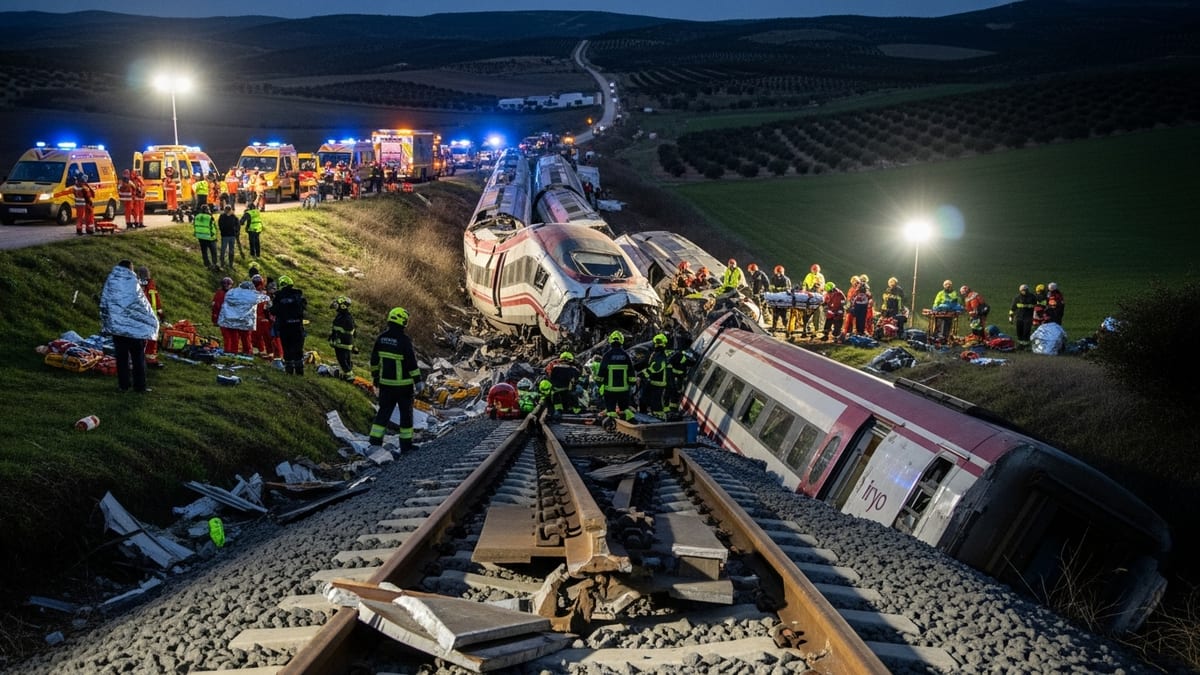
Crash reported at rural rail crossing
Initial regional coverage indicates the collision occurred where a rail line intersects Pecan Tree Road close to U.S. 78, in a largely rural stretch outside St. George. The impact reportedly involved a single road vehicle and a freight train moving through the crossing, with the force of the crash resulting in fatal injuries to the vehicle’s driver or sole occupant.
Based on publicly available mapping and transportation data, the area around Pecan Tree Road and U.S. 78 includes a mix of two-lane roads, agricultural tracts, and scattered homes. Rail corridors running parallel or near U.S. 78 serve both through freight and local industrial traffic, placing long, heavy trains across relatively low-volume local roads at multiple points.
Early descriptions of the incident have not yet clarified the direction of travel of either the train or the road vehicle, nor whether the vehicle was crossing the tracks from Pecan Tree Road or approaching from a nearby connector. Formal crash diagrams and state-level transportation records typically lag behind initial reports by several days, so detailed reconstruction of the sequence of events has not yet been published.
The identity of the person killed, as well as information on potential additional occupants, had not been fully detailed in the open reports available at the time of writing. Information on the type of vehicle and the train’s consist also remained limited.
Emergency response and traffic impacts
Reports indicate that local responders were dispatched to the scene shortly after the collision, with both the crash location and nearby segments of U.S. 78 affected by emergency activity. Road users in the area likely experienced temporary closures or diversions on Pecan Tree Road and at adjacent access points while responders secured the site and coordinated with rail personnel.
In serious rail collisions, standard practice typically involves isolating the affected section of track, inspecting rail equipment, and documenting conditions at the crossing. Publicly available transportation incident summaries show that such investigations can keep rail traffic halted or heavily restricted for several hours, particularly where fatal injuries are involved.
For drivers, even brief closures at a junction such as Pecan Tree Road and U.S. 78 can complicate local circulation, as alternative east–west and north–south routes in rural corridors are often spaced several miles apart. Travelers passing through the St. George area after the crash likely encountered detours or slowdowns while the site remained active.
There were no early indications in the publicly accessible reports of significant derailment damage or hazardous material release from the train, factors that can greatly extend both road and rail disruptions when they occur.
Rail crossing safety under renewed scrutiny
The deadly crash near St. George adds to a pattern of road and rail conflicts that transportation researchers have tracked for years. Studies of U.S. grade-crossing incidents have found that collisions between trains and road vehicles, while relatively infrequent compared with overall road crashes, often result in severe or fatal outcomes because of the mass and braking characteristics of trains.
National safety analyses emphasize that driver behavior, sight lines, warning devices, and train speeds all interact at rural crossings, where traffic volumes may be modest but exposure to fast-moving freight trains remains significant. Research into crash patterns at crossings highlights that even a single high-speed impact can produce disproportionately serious consequences compared with typical roadway collisions.
Publicly available safety guidance urges drivers who encounter trains at passive or active crossings to treat the rails as a zone where stopping distances and visibility are critical. When a vehicle stalls or becomes trapped on the tracks, guidance recommends leaving the vehicle immediately and moving away at an angle from the tracks in the direction of the oncoming train’s approach, to avoid debris fields.
Advocacy groups and transportation planners have long pushed for targeted improvements at rural crossings that experience close calls or collisions, including better signage, clearer pavement markings, or in some cases the installation of gates and active warning systems. Fatal crashes such as the one reported near Pecan Tree Road often lead to a fresh review of conditions at the specific site.
Investigations and possible next steps
According to published coverage and common investigative protocols for rail-related deaths, the crash near Pecan Tree Road and U.S. 78 is expected to be reviewed by local law enforcement, state transportation agencies, and representatives of the rail operator. Those inquiries typically examine train data logs, visibility at the crossing, road and track geometry, signage, and any available witness accounts or camera footage.
Investigators commonly assess whether the crossing devices, if present, were functioning as designed, and whether the driver’s approach speed, stopping distance, or lane positioning played a role. Weather, time of day, and recent maintenance history at the crossing also tend to be factored into official summaries that may be released weeks or months after the incident.
Depending on findings, transportation planners sometimes review whether additional measures are warranted at the location, such as enhanced warning signs, rumble strips, vegetation clearing to improve sight lines, or more substantial infrastructure changes. In rare cases, severe or repeated incidents can contribute to longer-term projects to realign roads or separate grades, though such projects require significant funding and planning.
The fatality near St. George underscores the persistent challenge of managing the interface between road traffic and rail operations in growing regions. Even as broader crash rates may fluctuate from year to year, single events at rural crossings can have a lasting impact on surrounding communities and on the ongoing debate over how best to balance mobility, freight movement, and safety.