


More news on this day
Travelers heading to Ecuador are being urged to review plans after fresh security measures, including a night-time curfew in parts of the major port city of Guayaquil, prompted the United States government to caution against non-essential travel to affected areas.
Get the latest news straight to your inbox!
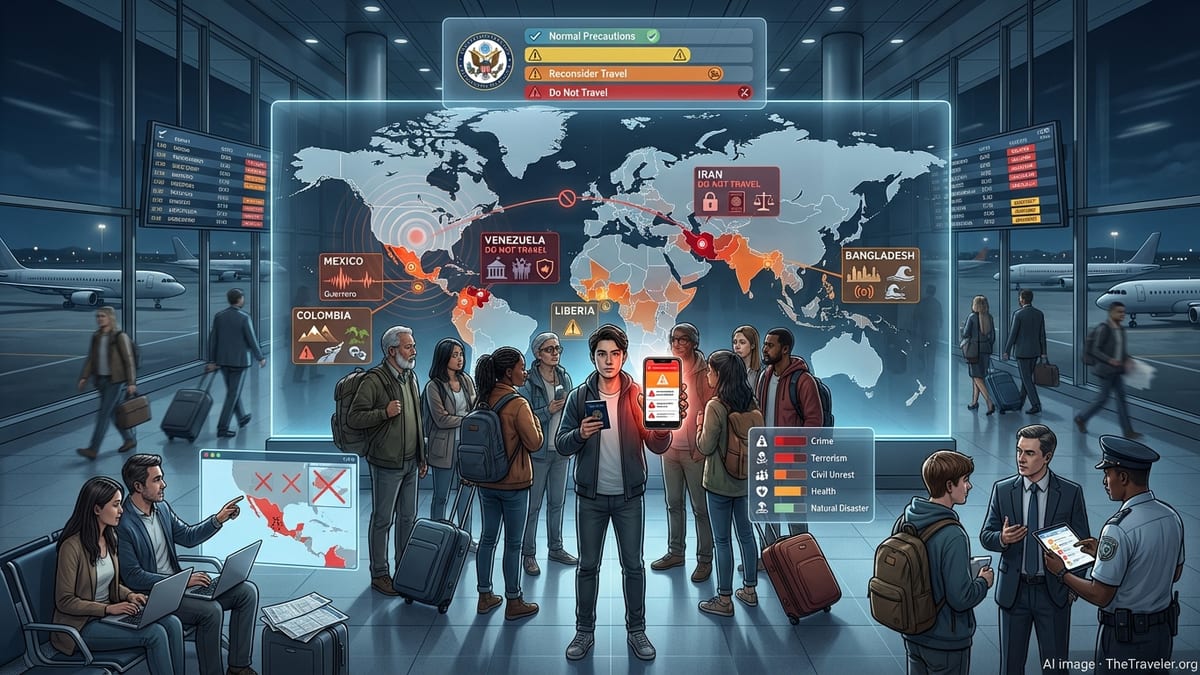
Curfew in a gateway city for Galápagos-bound visitors
Published coverage indicates that Guayaquil, one of Ecuador’s busiest tourist gateways and a common transit point for Galápagos itineraries and Pacific beach resorts, is now subject to an overnight curfew in specific districts following a rise in violent crime and targeted security operations. Reports describe restrictions on movement during night hours, with residents and visitors instructed to remain indoors except for limited, pre-defined exceptions.
According to recent reporting, the Ecuadorian government has paired the curfew with increased patrols and security checkpoints around key transport corridors and neighborhoods that have seen elevated gang activity. While popular hotel zones, the Malecón 2000 riverfront promenade and airport access roads remain open during daytime, travelers may encounter blocked side streets, document checks and detours close to curfew hours.
Tourism data cited in local and international coverage show that Ecuador welcomed 990,402 tourist arrivals between January and August 2026, a 9.4 percent increase on the same period a year earlier. The new restrictions therefore come at a time when the country has been experiencing a marked rebound in international tourism, heightening concern among travel providers about potential disruptions for peak-season visitors.
Air traffic to José Joaquín de Olmedo International Airport in Guayaquil is reported to be operating on normal schedules, and there are no indications of nationwide movement controls. However, ground transfers between the airport, central hotels and bus terminals can be affected in the late evening and early morning, when drivers and passengers must account for any curfew windows.
US advisory urges avoidance of non-essential travel
Publicly available information from the United States government shows that the curfew and security situation have prompted a heightened travel advisory. Recent coverage notes that the State Department has circulated an “avoid non-essential travel” message specifically for areas subject to intensified law-enforcement activity, citing risks linked to organized crime, armed confrontations and sudden road closures.
In line with established advisory language, the communication stresses that conditions can change quickly, with little warning, and that US government assistance may be constrained in neighborhoods experiencing active security operations. The notice also points travelers to long-standing guidance encouraging registration in official alert systems in order to receive security updates while abroad.
The warning distinguishes between curfew-affected districts of Guayaquil and other parts of Ecuador where routine tourism continues, including the Galápagos Islands and several highland and coastal destinations. However, it emphasizes that travelers who must pass through Guayaquil to connect to domestic flights or buses should build in extra time and remain alert to any operator-specific instructions or schedule adjustments.
Travel industry briefings summarized in media reports indicate that some tour companies are reviewing their standard routing to minimize late-night land transfers through Guayaquil. Others are advising clients to opt for mid-afternoon arrivals and early evening departures, reducing the likelihood of crossing curfew checkpoints or encountering restricted areas after dark.
What the curfew means in practice for visitors
Curfew orders of the type now in effect in parts of Guayaquil typically prohibit non-emergency movement on public streets during specified night-time hours, often beginning in the late evening and lasting until early morning. During these periods, visitors found outside hotels, guesthouses or private residences can expect to be questioned, turned back or instructed to return indoors, unless they fall under formal exemptions such as essential medical travel.
Hotels near the city’s main riverfront and airport are reported to be adjusting restaurant and bar operating hours, as well as airport shuttle schedules, to ensure guests are not traveling during restricted times. Some properties are increasing on-site entertainment and dining options in response, seeking to keep guests within their compounds from late evening onward.
Publicly accessible advice from foreign governments and risk consultancies describes a range of potential practical impacts for visitors when night curfews are in place. These include the suspension of most nightlife, reduced taxi availability, fewer ride-hailing vehicles on the road, and a lower frequency of intercity buses departing during night hours. In Guayaquil’s case, observers note that it may become more difficult to arrange spontaneous late-night travel between the airport and outlying beach towns.
Travelers already on the ground are being encouraged in open-source guidance to confirm with airlines, cruise lines and domestic tour operators whether any last-minute timing changes have been introduced to keep transfers and excursions within daytime windows. Passengers connecting to Galápagos flights from Guayaquil’s airport may be advised to overnight in airport-area hotels rather than attempting long, pre-dawn drives from other regions while curfew provisions remain active.
Balancing security concerns with Ecuador’s tourism appeal
Despite the curfew and advisory language, publicly available tourism board materials and recent destination coverage continue to highlight Ecuador’s natural and cultural attractions, from Andean colonial cities to Amazonian eco-lodges and the Galápagos archipelago. Industry observers note that, for now, restrictions in Guayaquil are localized and time-limited, rather than nationwide measures targeting all visitor movement.
Travel analysts quoted across multiple reports suggest that the ultimate impact on Ecuador’s tourism recovery will depend on how long the curfew remains in place and whether comparable measures are expanded to other key hubs. Short-lived, targeted restrictions focused on specific neighborhoods may have only modest effects on overall visitor numbers, while longer or broader crackdowns could prompt travelers to defer or reroute trips.
For travelers weighing upcoming itineraries, publicly sourced guidance consistently recommends a destination-specific approach. Rather than canceling trips across the country, tourism experts encourage monitoring the precise wording of advisories, checking whether pre-booked accommodation lies within curfew zones, and staying in close contact with airlines and tour operators about any changes affecting late-night or early-morning segments.
Several major international hotel brands present in Guayaquil are, according to travel trade coverage, reinforcing existing security protocols, such as controlled access to lobbies after dark and coordination with vetted transport providers. These measures, combined with the visible presence of security forces in certain districts, aim to reassure guests while complying with the curfew framework.
Practical planning tips for US travelers
Open-source US government safety materials emphasize the importance of adjusting personal routines in destinations experiencing heightened security measures. For Guayaquil, this can mean booking flights that arrive and depart in daylight, avoiding last-minute changes that might push connections into curfew hours, and confirming that airport transfers are arranged with reputable operators familiar with current restrictions.
Security advisories also underline the value of staying in well-established accommodation, particularly during periods of local tension or unrest. Visitors may wish to prioritize hotels in central, well-lit areas that maintain 24-hour reception desks and have clear procedures for late arrivals, in case of flight delays that coincide with curfew windows.
Travel risk guidance typically recommends that visitors carry copies of travel documents, maintain charged mobile phones with local emergency numbers stored, and keep hotel contact details readily accessible. In locations under curfew, additional emphasis is placed on avoiding non-essential outings after dark, steering clear of demonstrations, and following any instructions disseminated through official channels or property notices.
For those still considering trips that route through Guayaquil, publicly available information suggests regularly checking official US advisories and Ecuadorian government announcements in the days before departure. If conditions stabilize and curfew rules are relaxed, operators may quickly normalize late-evening services. If restrictions tighten, travelers may need to rebook to alternative gateways within Ecuador or adjust itineraries to prioritize regions not affected by night-time movement limits.