


More news on this day
Train services on a major intercity corridor were thrown into disarray after a fire near key rail infrastructure prompted the evacuation of a busy station, leaving thousands of travelers facing cancellations, diversions and lengthy delays.
Get the latest news straight to your inbox!
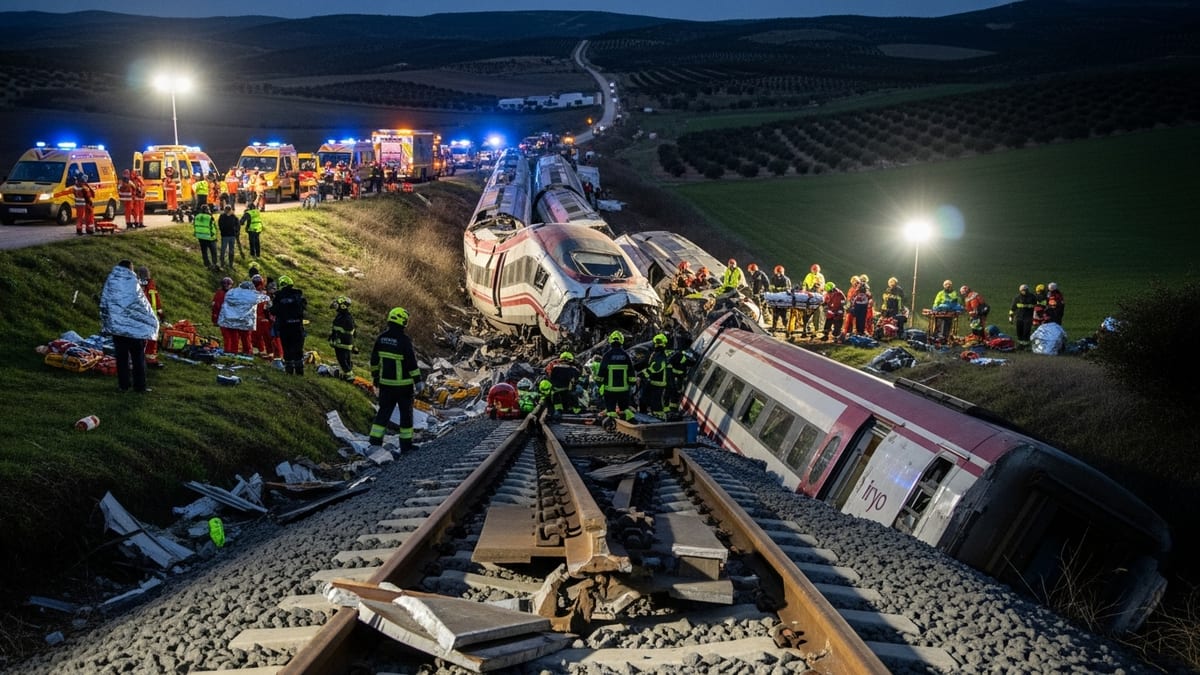
Fire triggers emergency evacuation and shutdown
According to early coverage from multiple news outlets, a blaze in buildings adjacent to the tracks led to smoke drifting into a central city station, triggering alarms and an immediate evacuation order. Station concourses and platforms were cleared while services passing through the complex hub were suspended as a precaution.
Publicly available information indicates that rail traffic was halted on several approaches to the station while fire crews worked to bring the incident under control and rail engineers assessed any potential damage to overhead wiring, platforms and signalling equipment. Images circulating on social media showed dense smoke in the streets outside the station and passengers waiting on closed-off sidewalks with luggage in hand.
Rail operators reported that no serious injuries were initially linked directly to the fire, though some passengers required assistance after being caught in crowded stairwells and concourses during the evacuation. Medical teams were positioned outside the station to support anyone affected by smoke or the crush of people leaving at once.
By mid-morning, monitoring sites tracking national rail movements showed wide gaps in the timetable around the affected hub, underlining how a single disruption at a key interchange can ripple across an entire network.
Network-wide delays and diversions for rail passengers
Timetables on intercity and regional routes were quickly rewritten as trains were held at outlying stations, diverted to alternative terminals, or turned back short of their destination. According to rail travel data and journey planner updates, knock-on delays spread well beyond the immediate metropolitan area as crews and train sets were left out of position.
Some long-distance services were rerouted over slower conventional lines, adding substantial extra journey time but preserving at least a skeleton connection for travelers with time-sensitive plans. In other cases, operators opted to cancel entire services to avoid worsening congestion around the affected junctions and depots.
Local commuter routes suffered rolling disruption throughout the day, with gaps in service followed by heavily crowded trains. Rail-user forums and traveler reports described passengers standing shoulder to shoulder on platforms, checking mobile apps for the latest departure information and, in many cases, abandoning rail travel altogether in favor of intercity coaches or car-share options.
Published service summaries suggested that normal operations would not resume immediately even after the fire was contained, with residual delays predicted into the evening peak as dispatch centers worked to rebalance rolling stock and crew rosters.
Impacts on airports and onward travel plans
Because the affected station acts as a feeder for both domestic and international journeys, the disruption quickly spilled over into the wider travel ecosystem. Some high-speed and regional services connect directly with airport terminals or dedicated shuttle links, and their suspension left air travelers facing missed flights or tight connections.
Airlines using the nearby airports have advised in public travel notices that passengers should allow additional time to reach check-in desks, highlighting that road transfers are facing heavier traffic as taxi and rideshare demand rises. Travel agents and tour operators have also flagged increased pressure on same-day coach services, which are absorbing stranded rail passengers.
Travel planning platforms show that hotel searches in districts close to the affected hub spiked within hours of the incident, suggesting some travelers opted to delay their onward journeys rather than risk late-night arrivals after heavily disrupted itineraries. For rail-focused itineraries, this has meant rebooking on later departures or shifting to alternative city pairs entirely.
For airport-bound travelers, the incident serves as a reminder that even robust rail links can be vulnerable to localized infrastructure issues, with a single fire near a key junction capable of cascading into widespread itinerary changes.
Safety protocols and infrastructure resilience under scrutiny
The incident has renewed attention on how major rail hubs manage fire risk in dense urban environments where tracks, platforms, retail spaces and neighboring buildings sit side by side. Safety guidelines for modern stations require evacuation routes that can handle thousands of people within minutes, along with clear audio and visual instructions once an alarm is triggered.
Based on previous fire-related disruptions documented in European and North American rail systems, rapid decisions to suspend traffic and evacuate stations are treated as a core safety principle, even when the fire is technically outside railway property. Rail infrastructure managers typically undertake follow-up inspections of tunnels, canopies, cable ducts and overhead power systems to ensure heat or smoke has not compromised structural elements.
Urban planners and transport analysts have also pointed to the importance of redundancy, such as alternative routing options, cross-city tunnels and suburban terminals that can temporarily absorb displaced services. Where networks are heavily centralized around a single station, any incident affecting that node is far more likely to result in network-wide cancellations rather than isolated delays.
Infrastructure reports published in recent years have already highlighted the challenge of aging stations that were not originally designed for current passenger volumes. Events like this fire-related shutdown are likely to intensify calls for upgraded fire suppression systems, better compartmentalization between retail units and platforms, and faster communication to passengers when evacuation becomes necessary.
Advice for travelers caught in the disruption
Passenger advocacy groups and travel advisors recommend that anyone planning to travel through the affected region in the coming hours check real-time updates from rail operators and national journey planners before setting out. Many tickets are being accepted on alternative routes, and some operators have temporarily lifted peak restrictions to give travelers more flexibility.
For those already en route, the most reliable information tends to come from official rail apps and station departure boards, which reflect last-minute platform changes and short-notice cancellations. Third-party navigation tools can be useful for mapping alternative routes via buses or metro networks, but may lag behind on rail-specific disruptions.
Travel experts also suggest building extra buffer time into connections between rail, air and long-distance coach services whenever services are recovering from a major incident. Even after tracks reopen and station buildings are declared safe, residual delays often continue while traffic flows normalize and crews reach their scheduled starting points.
For future trips, frequent rail users increasingly advocate for a multi-modal approach to contingency planning, including knowing the main bus terminals near key stations, understanding fare rules for ticket acceptance on partner operators, and keeping essential items such as medications and chargers in a small day bag in case of long waits outside evacuated station buildings.