


The first 30 days after arriving in Thailand are decisive for whether a relocation will function smoothly or become administratively complex. Newcomers must complete a series of practical setup tasks related to address reporting, identity documentation, communications, and financial access. This briefing outlines a structured, time-bound checklist for the first month in Thailand, highlighting which steps usually need to be completed in week 1, week 2, and by day 30, and where coordination with landlords, employers, or schools is critical.
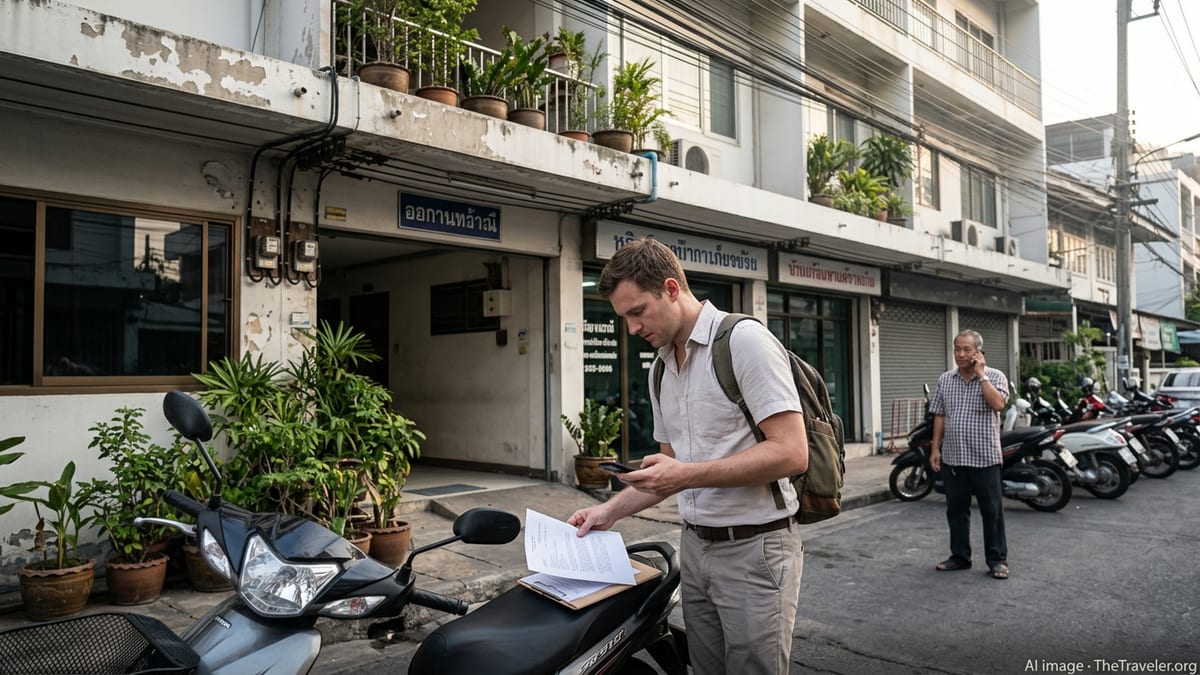
Strategic Overview of the First 30 Days
The initial month in Thailand is less about long-term integration and more about quickly establishing a compliant, verifiable footprint in the country. For most foreign residents this means ensuring that immigration address notifications are in order, that local contact details and bank access are operational, and that documentation is aligned for later processes such as work permit applications, school enrollment, or driving license issuance.
In practice, a structured sequence helps. Within the first 3 to 7 days, the priority typically includes confirming that the required address notification (TM30) has been submitted by the landlord or accommodation provider, obtaining a Thai mobile number, and securing basic payment rails. By the end of week 2, many residents look to open a local bank account and gather supporting documents that will be reused across multiple agencies. By day 30, attention normally shifts to stabilizing recurring payments, confirming how future 90-day address reporting will work if a long-term stay is planned, and checking that all records reflect the same name and address details.
Requirements can vary depending on visa type, location, and which immigration or government office is involved. Different provincial immigration offices may apply documentation expectations somewhat differently, and financial institutions may set their own thresholds for account opening. For decision-making, it is therefore important to understand the overall framework and plan time for local variations and extra document requests rather than relying on a single uniform standard.
The following sections break the first 30 days into functional domains: legal address reporting and documentation, communications and connectivity, banking and payments, transport and licensing prerequisites, and essential local registrations and recurring services. Each domain outlines typical expectations and the documentation usually required.
Address Registration and Immigration-Linked Notifications
One of the earliest and most important tasks is ensuring that the stay is correctly registered with Thai immigration systems. Under Thailand’s Immigration Act, the property owner, hotel, or landlord is required to notify immigration of a foreigner staying at their premises using the TM30 residence notification form, generally within 24 hours of arrival at that address. In hotels and serviced apartments this is normally handled automatically at check-in; in private rentals, landlords may still be unfamiliar or slow to comply, so new residents should verify that the notification has been completed.
Although the TM30 notification is legally the responsibility of the accommodation provider, in practice many later processes rely on this record. Immigration offices in several provinces increasingly expect a current TM30 receipt or an electronic record when processing 90-day address reports, extensions of stay, or when issuing certain confirmations of residence. If the address on file is not up to date, online 90-day reporting systems may reject applications, forcing the applicant to appear in person and potentially regularize address records before other requests can be processed.
The typical document set needed for a landlord to file a TM30 includes copies of the foreigner’s passport photo page, visa or permission-to-stay page, arrival stamp, and sometimes the arrival/departure card (TM6), together with the landlord’s Thai ID and proof of property ownership. New residents should request a copy or printout of the TM30 acknowledgment slip where possible and keep it with their passport, as some provincial offices request it for subsequent procedures. If moving accommodation within the first 30 days, it is important that the new host files a new TM30 for the updated address, again usually within 24 hours of arrival at the new location.
For long-term stays exceeding 90 consecutive days, Thailand also requires a separate 90-day address notification by the foreigner. This is distinct from TM30 and is normally due on or before day 90 from the last entry into the country. It is not generally required within the first 30 days, but the groundwork laid during the first month largely determines how straightforward the first 90-day report will be. Having a consistent address history, up-to-date TM30 records, and clarity about which local immigration office has jurisdiction reduces administrative friction later.
Identity, Documentation and Core Paper Trail
Beyond immigration stamps, Thailand is a document-driven environment, and creating a coherent paper trail early is central to later processes such as bank account opening or applying for a driving license. Many offices expect the same core set of documents, presented in slightly different combinations. Investing time in preparing a complete file within the first weeks can significantly reduce repeat visits.
The baseline documentation set for a foreign resident typically includes: passport with at least six months’ remaining validity, current visa or permission-to-stay stamp, arrival stamp, and if still issued, the TM6 arrival card. Additional key items often needed are a signed copy of the rental contract specifying address and duration, a letter from the landlord confirming residence, and in some cases a Thai-language house registration book (Tabien Baan) for the property. Where the stay is employment-based, a letter from the employer confirming position, salary, and address is often requested by banks and some government offices.
Newcomers should also plan to obtain a formal proof-of-address or residence certificate from their local immigration office or, in some districts, from the police or local municipality. This certificate is frequently requested when applying for a Thai driving license, registering a vehicle, or in some cases opening a bank account. The certificate normally relies on the underlying TM30 record and may require rental contract copies, landlord ID and house registration, and passport details. Processing time can range from same-day issuance to several days depending on the office.
An organized approach within the first month often includes scanning and securely storing digital copies of all documents, keeping multiple sets of signed photocopies, and maintaining consistent spelling of names and addresses across all paperwork. Inconsistencies between the passport, rental contract, and immigration records can cause delays when later interacting with financial institutions or authorities.
Communications and Digital Connectivity Setup
Establishing reliable local communications is a first-week priority. Thailand’s mobile market is dominated by a few large operators that provide prepaid and postpaid SIM cards with nationwide 4G and expanding 5G coverage in major urban areas. Newcomers typically obtain a prepaid SIM initially, with registration conducted at carrier shops, convenience stores, or airport kiosks. Under Thai regulations, SIM cards must be registered with an ID; foreigners are usually required to present a passport at the point of sale.
Recent anti-fraud measures have tightened the linkage between SIM registration and financial services. Authorities have promoted rules that require the name registered to the SIM card to match the name on mobile banking accounts if the SIM will be used for one-time passwords or banking authentication. This means that mismatches between passport details and SIM registration can later cause problems when activating mobile banking with Thai banks. During the first 30 days, it is therefore advisable to ensure that the SIM registration reflects the exact passport name and to keep the registration slip or confirmation SMS.
For residents planning to work remotely or rely heavily on online services, residential broadband setup should also be considered early, especially in non-central locations where installation lead times can be one to two weeks. Internet service providers generally require a passport, a local mobile number, and proof of address or a rental contract, and sometimes ask for a small installation fee and a refundable equipment deposit. In condominiums or serviced apartments, building-wide service contracts may limit provider choice; newcomers should verify existing infrastructure with building management before signing longer-term leases.
Within the first month, it is helpful to standardize contact details that will be used across institutions: a single Thai mobile number, a primary email address, and one residential address. Using the same set of contact information consistently when opening bank accounts, signing utility contracts, or dealing with immigration reduces the likelihood of verification problems caused by outdated information.
Banking, Payments and Financial Access in the First Month
A functional payment setup is central to day-to-day life in Thailand. While cash remains widely used for small transactions, digital payments via QR-code transfers and mobile banking applications are pervasive in cities. For many relocation scenarios, a local bank account and corresponding mobile banking app will eventually be necessary for receiving salary, paying rent, and managing utilities.
Opening a bank account in Thailand can be straightforward for some categories of residents and more constrained for others. Branch-level policies vary significantly, and requirements may differ between banks and even between branches of the same bank. Typical documents requested include passport, valid visa or extension of stay, proof of local address such as a rental contract or residence certificate, and in employment cases a letter from the employer. Some banks are more willing to open accounts for residents on long-stay visas or with employment-based sponsorship, while others may restrict account opening for people on shorter-term permissions.
Within the first 30 days, a practical approach is to identify two or three banks with nearby branches and confirm, in person, their current documentation expectations. Allowing time for multiple visits is prudent, as additional documents such as work contracts, employer letters, or TM30 receipts may be requested. Once an account is opened, linking it to mobile banking typically requires a Thai mobile number registered under the same legal name as the account holder, which underlines the importance of accurate SIM registration.
For newcomers who do not yet qualify for a full bank account, alternative arrangements commonly include continued use of international cards for ATM withdrawals and in-store payments, together with multi-currency digital wallets. However, since many landlords and smaller service providers still prefer bank transfers to local accounts, residents planning a long stay should treat bank account setup as a core objective for the first month and coordinate with employers or relocation providers where necessary to meet bank requirements.
Transport, Licensing Prerequisites and Local Address Evidence
Many foreign residents in Thailand will eventually need the ability to legally drive a car or motorcycle, either by using an international driving permit or by obtaining a Thai driving license. While the formal licensing process itself often occurs after the first month, several critical prerequisites can and should be arranged within the first 30 days to avoid delays later.
One key prerequisite is an official proof-of-address document accepted by the Department of Land Transport. Depending on the province, this may be a residence certificate issued by immigration, a confirmation letter from an embassy, or, less commonly, another government-issued document showing the local address. Because issuance of residence certificates is often tied to current TM30 records and may require a processing period, starting this process during the first month is advisable for anyone planning to obtain a local driving license or register a vehicle in the following months.
Another early-stage consideration is understanding the jurisdiction and locations of the relevant Department of Land Transport offices. Different provinces and, in large cities, different branches handle testing, license issuance, and renewals. Operating hours and queue systems can vary, and some offices now require pre-booked appointments. Gathering this information in the first 30 days allows new residents to plan future licensing activities around work schedules and other commitments instead of facing unanticipated full-day visits later.
For those who anticipate regular use of ride-hailing or delivery platforms, registering accounts with accurate name details and a Thai mobile number within the first month can also streamline transport arrangements. Although this is not a formal regulatory requirement, consistent personal data across apps, banks, and official documents supports smoother identity verification and reduces the chance of account issues when updating payment methods or changing devices.
Essential Local Services, Recurring Payments and Household Setup
By the end of the first month, attention typically shifts toward stabilizing the household environment and putting recurring services on predictable schedules. Common elements include electricity and water accounts, residential internet, and possibly gas or community maintenance fees. The organizational challenge is less about technical connection and more about aligning account names, addresses, and payment methods so that bills can be paid reliably.
Utility providers and building management companies generally require passport identification and some form of address evidence, often the rental agreement. In condominiums and managed buildings, utilities may be billed through building management with monthly statements delivered behind the door or via messaging apps. New residents should, within the first 30 days, confirm the billing cycle, payment channels, and any late payment penalties, and then decide whether to pay by cash at payment counters, via bank transfer, or using mobile banking once a Thai account is available.
Another aspect of early setup is understanding which services are contracted in the tenant’s name and which are embedded in the rent. For example, some landlords include internet service or cleaning in the rental amount, while others require separate contracts. Clear written agreements reduce disputes and make it easier to change providers if service quality is inadequate. Capturing all account numbers and customer IDs in a single reference document during the first month provides a useful tool for managing future interactions with call centers and service technicians.
Where recurring digital services are involved, such as cloud storage, software subscriptions, or communication tools important for work, residents should also review how these services handle logins from Thailand. Some banking and corporate systems apply additional security checks or restrictions by geography. Verifying access and, if necessary, updating account recovery methods to a Thai mobile number within the first month can prevent accidental lockouts that might otherwise disrupt work or financial transactions.
The Takeaway
The first 30 days in Thailand are operationally dense. Address notifications, documentation, connectivity, banking, and household services all compete for attention, and minor gaps in the early phase can compound into larger administrative obstacles later. A structured checklist that prioritizes TM30 confirmation, document consolidation, SIM registration, bank access, and proof-of-address certificates provides a realistic pathway to stable residency.
For individuals and employers evaluating whether relocation to Thailand is practical, the key conclusion is that the setup burden is manageable but front-loaded. Success depends less on complex legal rules and more on coordination with landlords and employers, attention to detail in documents, and willingness to visit a few different offices or bank branches when requirements vary. Time invested in the first month materially reduces risk of later disruptions tied to immigration reporting, financial access, or licensing processes.
FAQ
Q1. What should be the very first administrative step after arrival in Thailand?
The immediate priority is confirming that the accommodation provider has submitted the TM30 residence notification for your address, typically within 24 hours of check-in or move-in.
Q2. Is TM30 something the foreigner must file personally?
By law the property owner, landlord, or hotel is responsible for TM30 filing, but in practice foreigners often need to remind or assist them and should request a copy of the acknowledgment slip.
Q3. Do I need to complete 90-day reporting within my first month in Thailand?
No. The 90-day report is generally required once you have spent 90 consecutive days in Thailand, but ensuring correct TM30 and address records in the first month makes that process smoother.
Q4. How early should I try to open a Thai bank account?
Many residents target the second or third week, after securing a stable address, Thai SIM card, and supporting documents such as a rental contract or residence certificate that banks commonly request.
Q5. Can I rely only on foreign bank cards during my first 30 days?
It is possible to operate with foreign cards initially, but for long-term stays landlords, employers, and some service providers often expect transfers from a Thai bank account, so early planning is advisable.
Q6. Is a Thai driving license required during the first month?
Not in most cases, provided you have appropriate foreign or international driving permissions, but obtaining address certificates and understanding licensing procedures in the first 30 days reduces delays later.
Q7. Why is SIM registration accuracy important for new residents?
Thai regulations increasingly require that the name on a SIM card match the bank account holder’s name for mobile banking, so correct passport details at registration prevent later authentication issues.
Q8. What documents should I organize and copy in the first 30 days?
Key items include passport and visa pages, arrival stamp, rental contract, landlord ID and property documents where provided, TM30 slip, residence certificate, and any employer or school letters.
Q9. How much time should I budget for visits to banks and government offices?
Newcomers should plan for multiple half-day visits in the first month, as requirements can vary by office and additional documents are sometimes requested before applications are accepted.
Q10. What is the main risk of neglecting setup tasks in the first month?
The primary risk is administrative friction later, including difficulties with 90-day reports, visa extensions, bank access, or driving licenses, all of which depend on accurate early address and identity records.