


More news on this day
Travelers flying between Split and Frankfurt are facing disruption after a Croatia Airlines service to Germany rejected its takeoff at high speed at Split Airport on May 16, prompting temporary cancellations and delays on the busy leisure route.
Get the latest news straight to your inbox!
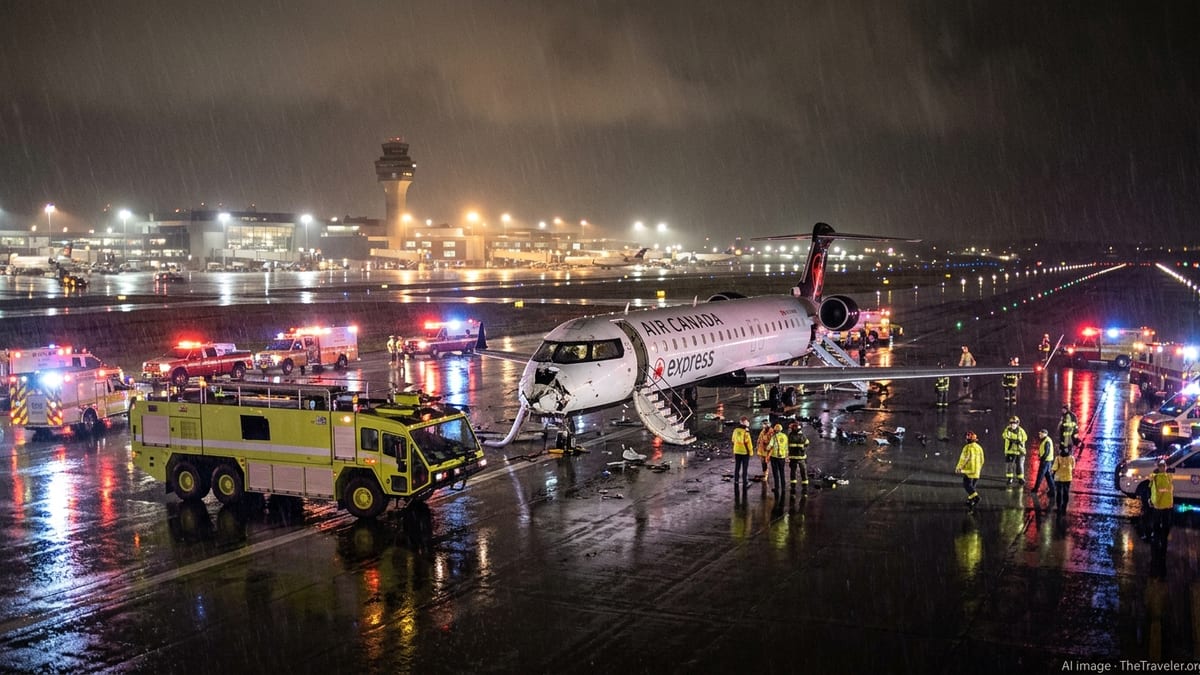
High-speed rejected takeoff halts Split departure
Publicly available aviation incident reports indicate that Croatia Airlines flight OU412, operating from Split to Frankfurt on May 16, was accelerating for departure from Split Airport’s main runway when the crew initiated a high-speed rejected takeoff. The Airbus A220, operating with 130 passengers and five crew on board, reportedly veered toward the left side of the runway before coming to a stop.
Initial accounts describe what is known as a runway excursion during the abort, with the aircraft partially leaving the paved surface. Technical summaries circulating in the aviation community note that the crew opted to halt the takeoff at around 123 knots, a decision consistent with standard operating procedures when a potential safety issue is detected late in the takeoff roll.
According to publicly shared statements from the airline, there were no injuries among passengers or crew, and the aircraft was brought to a controlled stop. Fire and ground services at Split supported the response, and passengers were disembarked and later rerouted to their final destinations.
The aircraft involved has been identified in specialist tracking databases as one of Croatia Airlines’ newest narrowbody jets. The combination of a high-speed abort and runway excursion is now the subject of a technical review by aviation safety specialists, though early commentary emphasizes that the decision to reject the takeoff reflects a safety-first culture in commercial aviation.
Cancellations and delays on Split–Frankfurt services
In the immediate aftermath of the incident, Split Airport temporarily halted departures to allow for inspections of the runway surface and the recovery of the aircraft. Schedules and real-time tracking sites show that several services on the Split–Frankfurt route were cancelled or delayed as a result, affecting both Croatia Airlines and partner codeshare flights.
Timetables for the normally reliable Split–Frankfurt link, which is operated by Croatia Airlines, Discover Airlines and Condor, show as many as 17 direct weekly departures in the current season. These flights form a key bridge between Croatia’s Adriatic coast and one of Europe’s busiest hub airports, meaning that disruption on this route can quickly spill over into missed long-haul connections and rebookings across multiple airlines.
Passenger comments on social platforms and travel forums over the weekend pointed to missed onward connections from Frankfurt to North America and other European destinations. Some travelers reported overnight stays in Frankfurt or alternative routings via Munich and Vienna as airlines sought to clear backlogs created by the canceled Split departures.
By May 20, live status boards showed the Split–Frankfurt route operating again, although with some residual delays. Industry watchers note that while the immediate operational impact at Split was short-lived, the incident added pressure to an already tight schedule at Frankfurt, where even minor delays can cascade through the day’s waves of departures and arrivals.
Frankfurt disruptions add to the strain
The timing of the Split incident comes amid a broader period of instability for flights into and out of Frankfurt. Recent travel-industry coverage highlights that cancellations linked to Lufthansa and its partners have been affecting hub operations this month, with multiple short-haul flights trimmed from schedules as carriers grapple with cost pressures and network adjustments.
Briefing documents circulating in the German aviation sector point to a mix of factors behind the wider disruption, including industrial relations issues, high fuel prices and strategic reductions in regional flying. Frankfurt, as Germany’s primary long-haul gateway, has been a focal point of these changes, with knock-on effects across European feeder routes such as Split.
Travel discussion boards show passengers transiting Frankfurt in recent days describing long queues, tight minimum connection times and heightened concerns about missed onward flights. The additional complications created by a temporarily interrupted Split service added another layer of uncertainty for holidaymakers and business travelers relying on the route for same-day connections.
While the Split runway event and the broader Frankfurt operational challenges are not directly connected, their convergence underscores how quickly a localized incident on a short European sector can reverberate through an already stretched hub system, leaving travelers with limited options during peak travel windows.
Summer season pressures on Split–Frankfurt traffic
Split Airport serves as one of Croatia’s main gateways for summer tourism, and published traffic statistics show a marked ramp-up in flights from late spring into the main holiday months. Frankfurt is among the key destinations from Split, providing both point-to-point service and onward connections for travelers heading to North America, Asia and other parts of Europe.
Route data compiled by aviation analytics providers show that Croatia Airlines, Discover Airlines and Condor jointly offer near-daily frequencies between Split and Frankfurt during the season. Many of these flights are timed to feed into Frankfurt’s morning and late-afternoon banks of departures, making punctuality on the sector especially important for travelers holding through-tickets.
Analysts note that as tourism flows into Croatia continue to grow, high demand on coastal routes leaves airlines with limited slack to absorb disruption. When a flight such as OU412 is removed from the rotation unexpectedly, it can take several days and multiple aircraft swaps to restore the schedule fully, particularly if crews and aircraft are already tightly utilized.
Forward schedules currently published for the coming weeks still list the usual pattern of Split–Frankfurt services, suggesting that airlines expect to operate the route broadly as planned once technical checks on the incident aircraft and runway infrastructure are complete.
What travelers on the route should do now
For passengers booked between Split and Frankfurt in the coming days, industry guidance emphasizes close monitoring of flight status and allowing extra time for connections through Frankfurt. Many travel-management firms advise checking both the airline’s own channels and independent tracking tools beginning 48 hours before departure, as late timetable adjustments have become more common this season.
Travel advisers also recommend opting for flexible or changeable tickets where possible, particularly for itineraries that rely on tight connections at Frankfurt to reach long-haul destinations. In the event of a delay or cancellation on the Split–Frankfurt leg, documented industry practice is for airlines to rebook passengers on the next available service or provide alternative routings through other hubs.
Passengers departing from Split are encouraged to build in additional time at the airport while operations normalize, as residual schedule changes and occasional aircraft substitutions may still occur as airlines rebalance their fleets. For travelers already in Frankfurt and returning to the Croatian coast, checking gate changes and day-of-operation updates can help avoid missed boarding calls on busier departure banks.
Although the May 16 incident highlighted how quickly a single operational event can disrupt a popular leisure route, safety specialists and airline statements continue to stress that high-speed rejected takeoffs are a known and well-practiced contingency in modern aviation, aimed precisely at preventing more serious outcomes.