


The first 90 days after arrival in Mexico are decisive for whether a relocation works in practice. This period is when an expat must convert immigration status into day to day operability: obtaining local identifiers, accessing financial services, securing communications, and connecting to essential utilities. The following briefing outlines a realistic, sequence oriented setup plan focused strictly on what most new residents need to function smoothly in Mexico during their first three months.
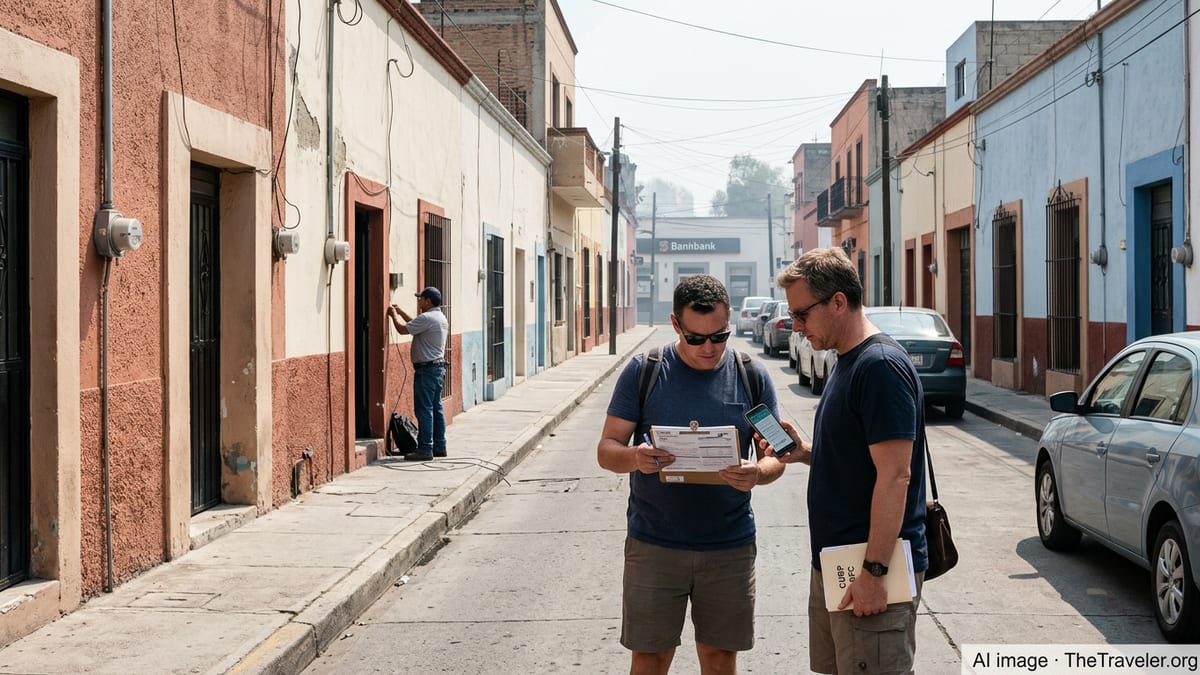
Strategic Overview of the First 90 Days
Within the first 90 days, the key operational objective is to move from being a short term visitor reliant on foreign cards and roaming plans to a locally integrated resident able to pay bills, sign contracts, and authenticate identity in Mexico. This normally involves obtaining a CURP (Unique Population Registry Code), preparing for the new biometric CURP framework, securing a Mexican bank account or alternative payment solution, establishing a local mobile number, and getting basic utilities and digital services into the expat’s name or at least reliably accessible.
Timelines vary by city and individual profile, but a pragmatic sequencing is: days 1–30 focused on address proof and mobile connectivity; days 30–60 on identity numbers and banking; and days 60–90 on full integration with utilities, recurring payments, and digital government services. This schedule assumes the expat arrives with a valid passport and, for longer term moves, some form of temporary or permanent residency that can be converted into local identifiers.
New residents should also be aware that Mexico is in the process of rolling out a biometric version of the CURP that will gradually become the default identity credential for many public and private transactions. Planning the first 90 days with this change in mind can reduce the need to repeat procedures later.
Identity Foundations: CURP and Biometric CURP
The CURP (Clave Única de Registro de Población) is Mexico’s universal personal identifier for citizens and residents. It is widely used for tax records, school registrations, access to public health services, many employment related procedures, and an increasing range of private sector transactions such as banking and telecommunications contracts. The CURP is an 18 character alphanumeric code generated from personal data and is mandatory for individuals with regular residence status who intend to carry out formal activities in Mexico.
Historically, foreign residents often obtained a CURP automatically when their residence permit was issued, or through dedicated CURP service modules by presenting an immigration document and photo ID. As of 2025 and into 2026, Mexico is implementing a biometric CURP, which adds fingerprints, photograph and other biometric elements and is supported by a Single Identity Platform. Public reports indicate a nationwide rollout culminating around February 2026, after pilot phases in selected states and major urban centers. The biometric CURP is intended to become an officially recognized identity document for all residents with regular immigration status.
During the first 90 days, new expats should verify whether their immigration process has already generated a CURP and whether local offices are issuing the biometric version. In larger cities, civil registry or population registry offices may already be capturing biometrics and issuing the updated credential. Requirements typically include a certified birth certificate, passport, existing CURP (if any), proof of address, and sometimes a valid Mexican email and phone number. While the traditional CURP remains functional during the transition, lack of a biometric CURP over the next years may increasingly complicate access to some services, including banking and certain government programs.
Operationally, expats should budget at least one half day to obtain or confirm their CURP, with potential follow up visits if biometric enrollment is not immediately available. Keeping digital and printed copies of the CURP certificate is advisable, as many online forms and service providers will request the number.
Tax Identification (RFC) and Its Practical Impact Early On
The Federal Taxpayer Registry (Registro Federal de Contribuyentes or RFC) is Mexico’s tax identification number used for all activities that generate taxable income or require formal invoicing. While not every new expat needs an RFC in the first 90 days, more situations now request it, including formal employment, issuing invoices as a freelancer, or becoming an importer of record for shipments above certain thresholds. The RFC is administered by the Tax Administration Service (SAT) and registration usually requires an in person appointment.
Foreign residents with temporary or permanent status, a CURP, and proof of address can generally apply for an RFC at a SAT office. Documentation commonly includes passport, residency card, CURP, and a recent utility bill or similar proof of domicile. Appointments in major cities can be limited, so expats intending to work, invoice clients in Mexico, or import personal goods should monitor SAT appointment availability early in their first 90 days and book as soon as their address documentation is in place.
Recent regulatory developments have also tied customs and import procedures more closely to RFC registration for consignees. This has practical implications for expats relying on high value shipments or frequent cross border logistics. Without an RFC, shipments can face delays or require intermediaries. For many lifestyle focused moves, the RFC can reasonably wait until after the initial 90 days, but for employment, business, or complex logistics plans it should be integrated into the early setup roadmap.
Expats should note that RFC registration is free but typically requires a personal visit, biometric capture, and some waiting time. Planning this step around other administrative visits, such as to banks or identity offices, can reduce overall disruption.
Establishing Proof of Address and Utility Accounts
Proof of address is a cornerstone requirement for many other setup steps in Mexico, including banking, identity procedures, internet contracts, and sometimes mobile postpaid plans. The standard document is a recent utility bill (comprobante de domicilio) in Spanish, such as electricity (CFE), water, landline, or fixed internet, usually not older than 90 days. Property tax receipts and certain government issued statements are also widely accepted.
During the first 30 days, many expats reside in temporary accommodation where utilities are in the landlord’s or a previous tenant’s name. In practice, some institutions accept a utility bill where the service address matches the applicant’s physical address even if the name on the bill is a landlord’s, while others insist that the client’s name appear on the document. Policies vary by bank, telco, and region, so expats should clarify these details before scheduling appointments.
Where possible, negotiating in advance with the landlord to place at least one utility (often electricity or internet) in the expat’s name can significantly accelerate the rest of the setup process. Transfer of utility accounts is usually straightforward but may involve deposits and local office visits, which can extend timelines to several weeks in smaller municipalities. As a contingency, expats can request a signed lease accompanied by the landlord’s utility bill; some providers will treat this combination as acceptable address proof within the first months.
By days 60–90, the objective should be to have at least one primary utility in the expat’s own name at the settled residence, with a regular payment pattern established, ideally via bank transfer or direct debit. This not only facilitates future procedures but also builds a documented history of residence useful for renewals, future rentals, or local credit evaluations.
Banking and Payments in the First Three Months
Access to a Mexican bank account or equivalent peso denominated payment solution is central to operating efficiently beyond the short term. Practices evolve, but in recent years most large banks have tightened requirements and often insist on a valid temporary or permanent residence card, passport, and proof of address in Mexico in order to open a standard personal account. Some niche or digital accounts may accept foreigners with more flexible documentation, but offerings change and are not uniformly available nationwide.
New arrivals typically rely on foreign debit or credit cards and ATM withdrawals in the first weeks. While this is workable, fees and exchange rate spreads add up, and some local landlords or service providers prefer direct peso deposits. As soon as a local address and mobile number are secured, expats can survey banks and fintech platforms in their city to confirm current requirements. Key variables include minimum opening deposit (often in the low thousands to tens of thousands of pesos for premium accounts), minimum balance to avoid fees, and whether online banking and international transfers are supported in English or Spanish only.
A realistic 90 day sequence is: days 1–30 using foreign cards while gathering address proof; days 30–60 applying for a Mexican account once residency card and utility bill are available; and days 60–90 migrating recurring payments such as rent, utilities, and mobile service to the Mexican account. New residents without residency status may find only a limited number of basic accounts available; in such cases, maintaining a well planned combination of foreign accounts, multi currency digital wallets, and cash access is critical.
Expats should also be aware that financial institutions in Mexico increasingly request foreign tax information for compliance with international reporting standards. New account holders may be asked to provide their home country tax identification number and sign self certification forms regarding tax residency.
Mobile, Internet, and Digital Access
A local mobile number is one of the earliest and most practical setup steps and can usually be completed on arrival. Prepaid SIM cards are widely available and generally require only a passport, although registration rules can vary and may tighten in line with broader security and identity policies. Obtaining a Mexican mobile number in the first days is advisable, as many online systems for government appointments, banking, and delivery services rely on SMS codes to a local number.
Postpaid mobile contracts and fixed internet or bundled services usually require more robust documentation: passport or local ID, proof of address, sometimes CURP, and in some cases local bank account details for direct debit. For this reason, many expats live with prepaid mobile service and landlord controlled internet during the first 30 to 60 days, upgrading to personally held contracts once identity and banking steps are complete.
By around day 60, expats aiming for long term residence should assess whether their internet and mobile arrangements meet work and lifestyle requirements. In urban areas, fiber or high speed cable options are common, but installation lead times can range from a few days to several weeks, particularly in new buildings. Scheduling installation after confirming medium term housing but before the busiest local periods (such as holidays) can avoid delays.
Digital access also means creating logins for key online portals: tax authority (if RFC is obtained), banking apps, public utility platforms, and appointment systems for immigration and identity services. Maintaining secure backups of passwords and using two factor authentication tied to a local number or authenticator app reduces the risk of being locked out of critical systems while abroad or traveling domestically.
Service Contracts, Recurring Payments, and Practical Routines
Once identity, address, banking, and connectivity are in place, the remaining weeks in the first 90 day window should be used to stabilize service contracts and payment routines. This typically includes regularizing rent payments, setting up automatic or recurring payments for electricity, water, internet, and mobile, and, if relevant, arranging domestic services such as cleaning or maintenance through formal or informal channels.
Many Mexican service providers still rely on paper bills delivered to the service address, though digital billing is expanding. Expats should familiarize themselves with local bill cycles and payment channels. For example, electricity and some other utilities can often be paid at banks, convenience stores, or online platforms, each with specific deadlines. Missing payment windows can lead to service interruptions that take time to restore, so integrating bill due dates into calendars or reminders is recommended.
New residents should also consider how their Mexican routines interface with ongoing obligations abroad, such as mortgage payments, insurance premiums, or subscriptions. Coordinating international transfers and accounting for varying settlement times can prevent payment failures. Where possible, aligning major Mexican recurring payments with local income or regular transfer dates simplifies cash flow management.
By the end of the first 90 days, a well managed relocation typically results in a stable package of local contracts under the expat’s own name, predictable monthly expenses denominated in pesos, and a clear separation between daily Mexican costs and any remaining foreign financial commitments.
The Takeaway
The first 90 days in Mexico are less about exploration and more about constructing a reliable administrative foundation for daily life. Success hinges on sequencing: securing a local mobile number and at least provisional proof of address, obtaining CURP and preparing for the biometric identity environment, opening a suitable banking or payment channel, and progressively moving utilities and contracts into the expat’s name.
Given evolving regulations around identity, tax registration, and financial compliance, expats should work with approximate timelines rather than fixed expectations, leaving margin for delayed appointments or documentation issues. Those who approach the first three months as a structured project, with clear milestones for identity, address, banking, and services, are far more likely to experience a smooth and sustainable transition into their new Mexican base.
FAQ
Q1. Do I need a CURP in my first 90 days in Mexico?
In many cases yes, especially if staying beyond short term tourism, working, or signing formal contracts. Some services can be accessed without it initially, but CURP is increasingly required for banking, utilities, and employment, so obtaining it early is prudent.
Q2. How quickly can a new expat realistically open a Mexican bank account?
If all documents are ready, some expats open accounts within 2 to 4 weeks of arrival, but many need 30 to 60 days to secure proof of address and residency documents that banks require.
Q3. Is a local address mandatory for most setup procedures?
Yes, most institutions require a recent proof of address such as a utility bill or property tax receipt. In the first months, some may accept a landlord’s bill plus a lease, but longer term integration usually demands a bill in the expat’s own name.
Q4. Can I manage with only foreign bank cards during the first three months?
It is possible, but not optimal. Foreign cards work for many purchases and ATM withdrawals, yet fees, exchange rates, and limits make a local peso account or wallet highly beneficial within 90 days.
Q5. When should I apply for an RFC tax number?
Apply within the first 90 days if planning to work, invoice clients, or import goods formally. If relocating for retirement or without Mexican source income, the RFC can sometimes wait until a specific need arises.
Q6. Do I need a Mexican mobile number before doing other procedures?
A local number is not always legally required but is functionally essential. Many appointment systems, banks, and service providers rely on SMS codes to a Mexican number, so getting a SIM early simplifies everything else.
Q7. How long does it usually take to get fixed internet installed?
In major cities, installation can be arranged within several days to 2 weeks after contract signing, while in smaller towns or new developments it may take several weeks, especially during peak demand periods.
Q8. Are utility accounts easy to transfer into my name?
Processes are generally straightforward but vary by state and municipality. Transfers may require identification, proof of property rights or lease, and a deposit. Completion can range from same day to a few weeks.
Q9. What happens if I do not obtain the biometric CURP promptly?
During the transition period, traditional CURP remains valid, but over time lack of a biometric CURP may cause complications with services that adopt the new format as their primary identity reference.
Q10. How should I prioritize tasks if I feel overwhelmed during the first 90 days?
Prioritize in this order: secure stable housing and proof of address, obtain a Mexican mobile number, confirm or obtain CURP, open a local bank or payment account, then move utilities and recurring payments into your own name.