


More news on this day
A sinkhole discovered during a routine airfield inspection has shut down one of LaGuardia Airport’s two runways, with aviation data and federal advisories showing widespread flight delays and cancellations across New York’s busiest domestic hub.
Get the latest news straight to your inbox!
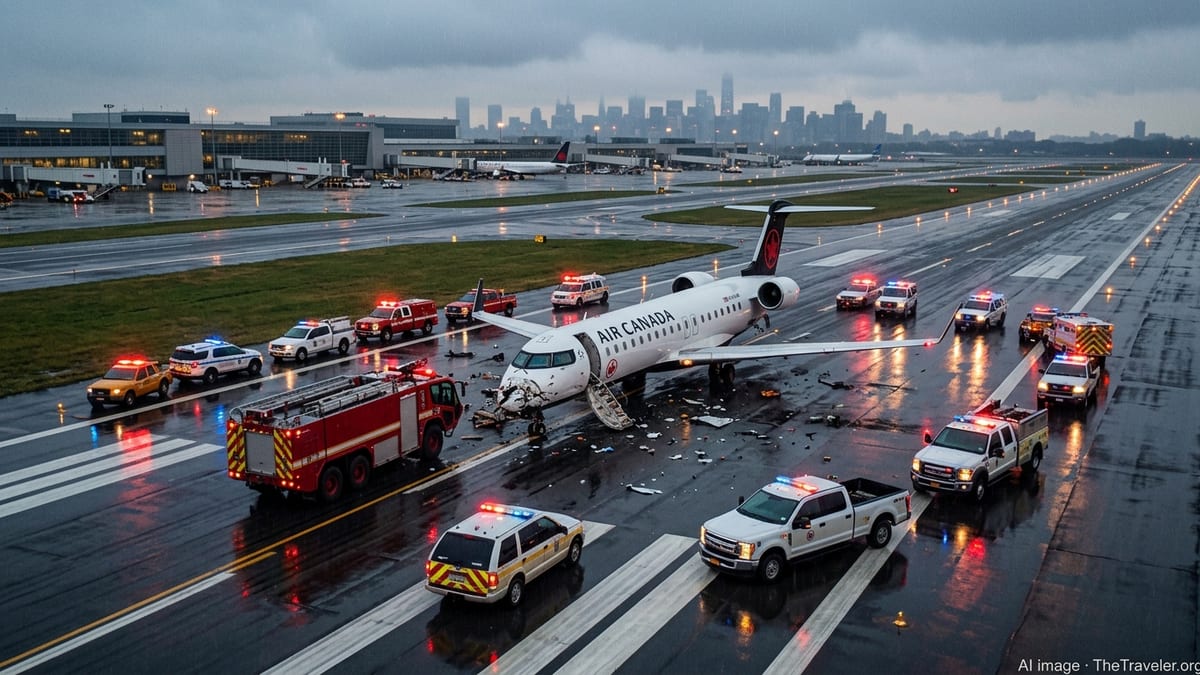
Runway 4/22 Closed After Routine Inspection Finds Sinkhole
Publicly available information from airport operators and aviation trackers indicates that crews at LaGuardia Airport in Queens discovered the sinkhole late Wednesday morning, May 20, during a standard daily inspection of the airfield. The depression was found near Runway 4/22, a primary arrival and departure route and one of only two runways at the constrained urban airport.
Reports indicate that the Port Authority of New York and New Jersey ordered Runway 4/22 closed immediately after the discovery, and emergency construction and engineering teams were dispatched to assess the extent of the damage and begin stabilization work. Images shared in local coverage show repair equipment and materials positioned along the affected pavement as crews work around active taxiways.
The Federal Aviation Administration issued advisories slowing traffic into LaGuardia because of the runway outage combined with unsettled weather in the New York area. Ground delay measures mean arriving flights are being held at their departure airports for extended periods, while departures from LaGuardia are operating on reduced capacity.
According to flight-tracking services referenced in multiple news reports, the closure quickly cascaded through the schedule, with nearly 200 cancellations and well over 150 delays affecting flights into and out of LaGuardia by late Wednesday.
Delays and Cancellations Ripple Across Domestic Networks
LaGuardia functions primarily as a domestic and short-haul business airport, so any disruption to runway capacity rapidly affects frequent shuttle routes along the East Coast and high-demand business markets in the Midwest and South. Flight-status boards on Wednesday afternoon showed particularly heavy impacts on routes to Boston, Washington, Chicago and major Southeastern hubs, according to published coverage.
Data cited by national and local outlets indicates that average departure delays from LaGuardia climbed to around an hour and a half at peak disruption, with some individual flights facing even longer waits as airlines worked to adjust aircraft and crew positioning. Arrival flows into New York were also throttled, extending travel times for passengers already in the air.
The FAA’s traffic management advisories warned that delays were likely to worsen at times due to a line of thunderstorms in the region, compounding the capacity reduction caused by the disabled runway. Travelers on connecting itineraries through LaGuardia faced missed onward flights and rebookings onto later services or alternative airports such as John F. Kennedy International and Newark Liberty.
Airlines have responded by proactively canceling certain frequencies, particularly during peak hours, to prevent excessive tarmac waits and aircraft backlogs. Industry trackers show that carriers with large LaGuardia operations are adjusting schedules into Thursday while the repair timeline remains under evaluation.
FAA Advisories Signal Ongoing Disruption for Travelers
FAA planning tools and advisories described in media reports show that LaGuardia has been operating under a formal ground delay program, a mechanism used when airport capacity is significantly constrained. Under such programs, airlines are issued controlled slots for departures and arrivals, spreading flights more thinly across the day to match what the airport can safely handle.
Publicly available information from aviation data services indicates that as of early Thursday, May 21, residual delays were still being recorded, even as weather conditions improved. Some carriers have warned that knock-on effects could linger through the day as aircraft rotate back into position and crews reach their duty-time limits following extended operations the previous evening.
Travel industry analysts note that LaGuardia’s relatively small airfield and limited runway configuration make it especially sensitive to any runway closure. With only one runway fully available, the airport’s ability to absorb surges in traffic is reduced, increasing the likelihood of schedule disruptions when other factors such as thunderstorms or low visibility coincide.
Travelers are being urged through airline statements and airport alerts referenced in news coverage to monitor their flight status frequently, allow additional time at the airport, and consider flexible rebooking options where available.
Infrastructure Vulnerabilities Highlighted at Constrained Urban Airport
The appearance of a sinkhole on or near a primary runway has sharpened attention on the resilience of airfield infrastructure at older, space-limited airports like LaGuardia. Much of the airport sits on reclaimed land along the Flushing Bay waterfront, and past planning documents from federal and regional agencies have highlighted the need for ongoing pavement maintenance and drainage upgrades.
Aviation experts quoted in recent analyses note that sinkholes can be triggered or exacerbated by sub-surface erosion, aging utility corridors, or water infiltration under heavy-load pavements. While formal engineering findings for the LaGuardia incident have not yet been released, early reporting underscores how even a relatively small depression in the wrong place can take a crucial runway offline.
LaGuardia has undergone a multi-year, multibillion-dollar terminal redevelopment, but the incident shows that airfield infrastructure remains a critical pressure point. Industry observers suggest that future investment may need to focus more heavily on runway subgrade resilience, improved drainage, and real-time monitoring to detect early signs of instability.
For New York City, the event also reinforces how dependent the region is on a delicate balance of capacity spread across three major airports. Any long-lasting limitation at LaGuardia can quickly strain operations at JFK and Newark, particularly during peak travel seasons.
What Passengers Should Expect in the Coming Days
As of Thursday morning, reports indicate that repair work on the affected section of Runway 4/22 is continuing, with the timeline for full reopening not yet firmly detailed in public advisories. Some news outlets have suggested that the closure could extend at least into part of Thursday while engineers complete inspections and confirm the integrity of the surrounding pavement.
Travelers booked to or from LaGuardia over the next 24 to 48 hours are likely to encounter residual delays, schedule changes and potential cancellations as airlines gradually normalize operations. Same-day business travelers and those with tight connections may be especially vulnerable to disruption, and travel experts recommend considering earlier flights or alternative airports where practical.
Passenger advocates point out that many carriers activate flexible rebooking policies when infrastructure problems significantly affect operations at a major hub. While policy details differ by airline, publicly available guidance often allows changes to later dates or nearby airports without extra fees during defined disruption windows.
With the summer travel season approaching and demand for New York flights high, the LaGuardia sinkhole incident serves as a reminder of how quickly localized infrastructure issues can ripple through national air networks. For now, aviation planners and engineers will focus on restoring full runway capacity, while travelers adapt to a more complicated few days of flying in and out of the city.