


More news on this day
A massive sinkhole discovered on a key runway at New York’s LaGuardia Airport on May 20 has triggered widespread travel chaos, grounding or delaying hundreds of flights across the United States and stranding passengers at one of the country’s busiest aviation hubs.
Get the latest news straight to your inbox!
Runway 4/22 Closure Paralyzes a Major Northeast Hub
Publicly available information indicates that the sinkhole was found near Runway 4/22 during a routine morning inspection at LaGuardia on Wednesday, May 20, leading to an immediate shutdown of the airstrip for safety reasons. The affected runway is one of the airport’s principal corridors for takeoffs and landings, particularly during peak hours, making its loss a significant operational blow.
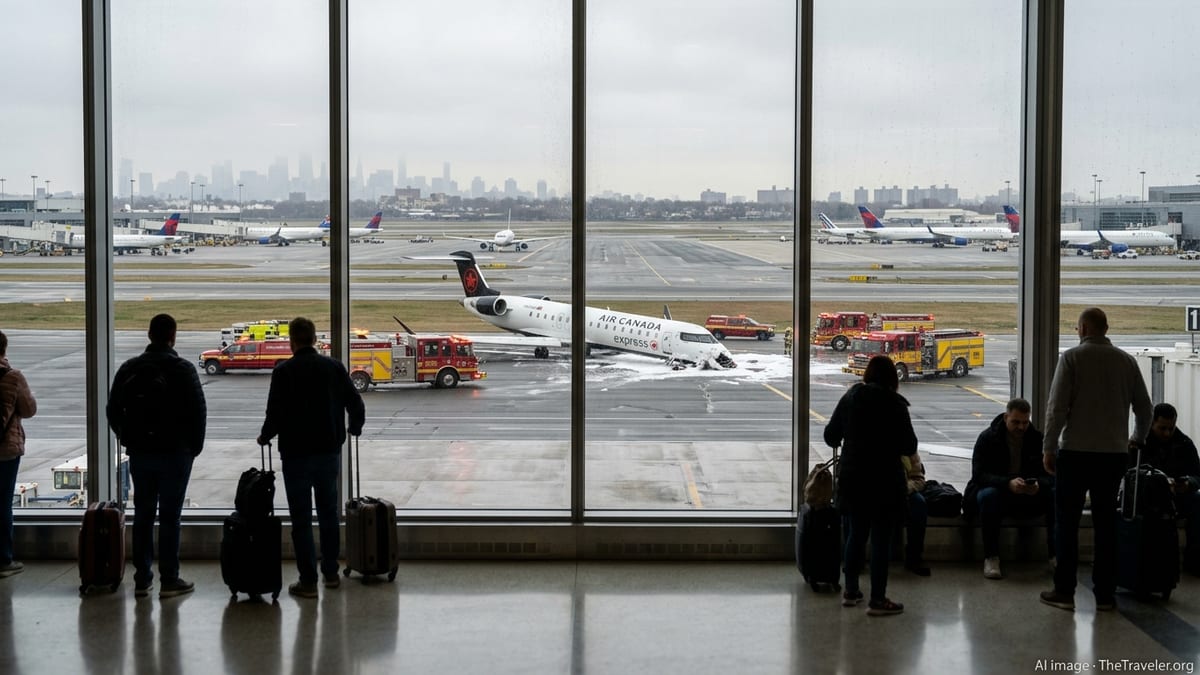
Images distributed by national broadcasters show repair crews and heavy equipment clustered around a gaping depression in the pavement, with sections of the runway cordoned off as engineering teams assess the underlying damage. Early descriptions characterize the defect as a sizable cavity in the surface, large enough to present a clear hazard to aircraft tires and landing gear.
With Runway 4/22 offline, LaGuardia has been forced to funnel operations onto remaining runways, sharply reducing capacity. Flight-tracking data and airline updates show that the airport quickly shifted from moderate delays to extensive disruption as the morning progressed, with ripple effects spreading throughout the national air network.
The situation is particularly acute because LaGuardia serves as a key short-haul and business travel gateway into New York City, handling large volumes of shuttle traffic to and from major cities along the East Coast and Midwest. Even a partial reduction in runway availability can translate into hours of congestion as aircraft wait for takeoff and landing slots.
Hundreds of Flights Canceled or Delayed Across the US
By Thursday morning, May 21, flight status boards for LaGuardia and other major airports showed hundreds of cancellations and delays linked to the runway closure. According to data compiled from airline and airport dashboards, carriers have been forced to cancel numerous departures from LaGuardia and preemptively scrub inbound flights from cities as far-flung as Chicago, Dallas, Atlanta, and Miami.
Published coverage from national news outlets describes a cascade of disruptions as aircraft and crews are left out of position. Flights that would normally cycle multiple short legs in a day have been interrupted, leaving knock-on delays in secondary markets that rely on LaGuardia connections. Passengers connecting through New York are facing missed onward flights, extended layovers, and last-minute itinerary changes.
Some airlines are consolidating services, combining passengers from multiple canceled flights onto the limited departures that can still operate under the constrained runway capacity. Reports indicate that same-day rebooking options are scarce on popular business routes, with some travelers being shifted to flights out of John F. Kennedy International Airport or Newark Liberty International Airport, or rebooked on services in the coming days.
Domestic routes are bearing the brunt of the disruption, but the effects are being felt across the broader network. Aircraft scheduled to operate LaGuardia runs are now stuck at outstations, contributing to delays at airports far from New York that are otherwise operating normally.
Weather Compounds Delays and Airspace Congestion
The timing of the sinkhole has been made worse by unsettled spring weather along the Eastern Seaboard. According to publicly available aviation advisories, the Federal Aviation Administration has implemented flow-control measures that slow the rate of arrivals into LaGuardia, citing both the runway closure and adverse weather in the New York region.
These restrictions effectively cap the number of planes allowed to approach the airport in a given period, creating airborne holding patterns and further stretching already tight schedules. With one major runway unavailable, the remaining capacity is highly sensitive to even modest reductions caused by low clouds, rain, or reduced visibility.
Industry analysts note that LaGuardia’s constrained footprint and busy airspace leave little room to absorb unexpected infrastructure problems. The airport’s proximity to other New York-area facilities, along with tightly choreographed arrival and departure routes, means that any disruption can quickly lead to congestion both in the sky and on the ground.
Travelers across the country are feeling the consequences, as aircraft bound for LaGuardia face ground stops at origin airports or extended departure holds. Even flights that eventually depart often do so with lengthy delays, compressing crew duty windows and raising the risk of further cancellations later in the day.
Engineers Race to Stabilize Runway and Assess Risk
Airport managers and engineering teams are now racing to determine the extent of the damage on Runway 4/22 and how quickly it can be safely repaired. Reports from local and national outlets indicate that crews have been excavating around the affected area to understand what caused the ground to give way beneath the runway surface.
LaGuardia has a complex history of construction and land reclamation, and aviation observers frequently point to underlying soil conditions and aging infrastructure as potential vulnerabilities. While the exact trigger for the sinkhole has not yet been publicly detailed, experts cited in published analyses suggest that factors such as water infiltration, subsurface voids, or utility issues can all contribute to sudden pavement failures in heavily loaded environments like runways and taxiways.
Repair efforts appear to be focused on both filling the cavity and reinforcing the surrounding area to prevent further subsidence once operations resume. That process typically involves soil stabilization, new sub-base materials, and fresh layers of runway-grade asphalt or concrete, followed by rigorous inspections before the strip can reopen to aircraft.
A clear timeline for full restoration of Runway 4/22 has not yet been widely reported, leaving airlines and passengers bracing for continued disruption. Aviation planners are preparing for the possibility that reduced capacity could persist for several days, depending on how extensive the reconstruction proves to be.
Passengers Face Long Lines, Rebookings, and Limited Alternatives
The operational challenges at LaGuardia are mirrored inside terminals, where travelers are encountering long lines at check-in counters, service desks, and security checkpoints. Social media posts and local coverage describe passengers camped out near gates, waiting for updates as airlines struggle to manage the scale of cancellations and rebookings.
With many flights fully booked at the start of the busy late-spring travel period, same-day alternatives are limited. Some travelers are opting to reroute through other New York airports or accept connections through different hubs, while others are turning to rail or intercity buses for regional journeys that have become impractical by air.
Consumer advocates note that passengers affected by major disruptions such as infrastructure failures may be entitled to rebooking assistance and, in some cases, hotel accommodation or meal vouchers, depending on airline policies and ticket type. However, the sheer number of disrupted itineraries is testing the capacity of customer service channels, making it difficult for some travelers to obtain timely assistance.
For those with upcoming departures to or from LaGuardia, publicly available guidance from airlines and airports emphasizes the importance of monitoring flight status closely, allowing extra time at the airport, and being prepared for last-minute changes to routes or schedules as the situation around Runway 4/22 continues to evolve.