


More news on this day
Travelers moving between Houston, Austin and San Antonio are facing a second straight week of weather-related uncertainty, as repeated storm systems across Texas keep short-hop flight schedules in flux.
Get the latest news straight to your inbox!
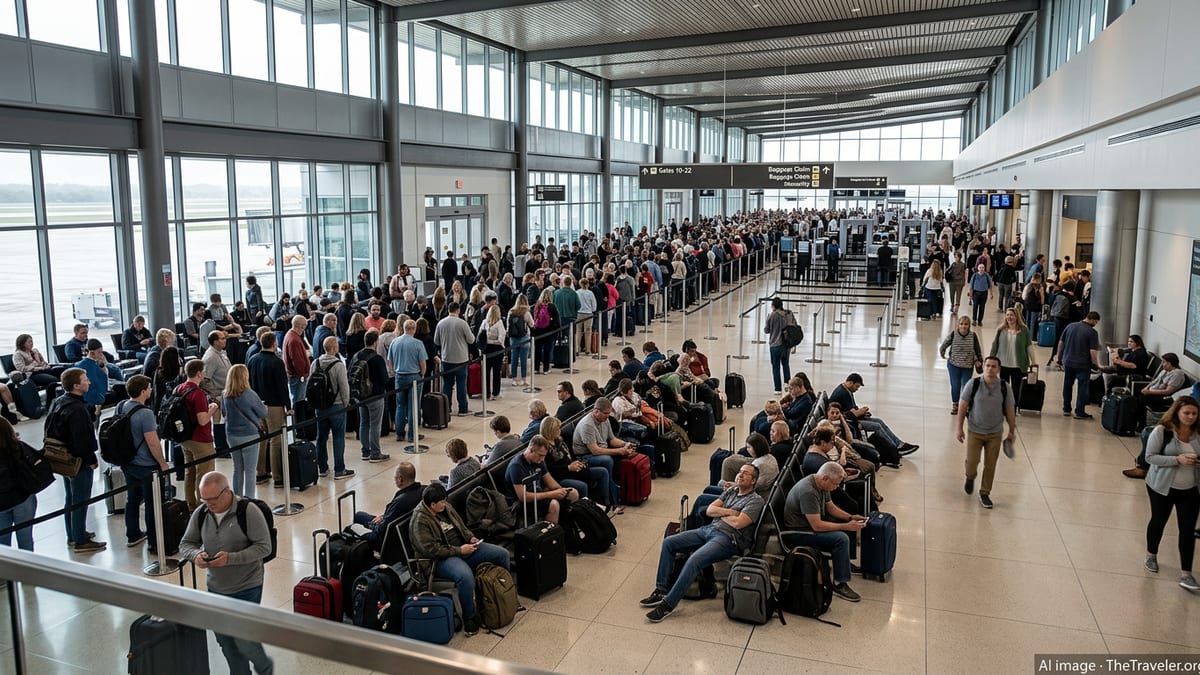
Regional Routes Under Pressure After Multiple Storm Days
The dense triangle of flights linking Houston, Austin and San Antonio is feeling the cumulative strain of May’s active weather pattern, with recent thunderstorms adding fresh disruption to routes that normally function as high-frequency shuttles. Publicly available flight-tracking data for services between Houston’s Bush Intercontinental and Austin-Bergstrom show operations largely recovering from earlier storms, but with lingering knock-on delays when new cells develop over Central Texas.
Published coverage indicates that severe storms on May 20 produced widespread delays at Austin-Bergstrom, with cascading schedule impacts for short-haul connections to Houston and San Antonio. The majority of affected flights ultimately operated, but often well behind schedule, tightening turnaround times on an already busy corridor.
In San Antonio, live status boards on Wednesday, May 21, pointed to mostly normal traffic patterns, yet flights to and from Houston remained sensitive to developing showers near the Gulf Coast. Routes between San Antonio International and Bush Intercontinental or Hobby rely heavily on narrow operating windows, meaning even modest weather holds can echo through the day’s schedule.
Airline operations planners typically use these intra-Texas hops to reposition aircraft and crews, so irregular operations on any leg in the triangle can ripple across the network. The result for travelers is a pattern of localized, short-lived disruptions that may not make national headlines, but still require near-constant attention to flight status tools.
Houston Hubs Watch Skies After Earlier Ground Delays
Houston’s two commercial hubs, Bush Intercontinental and Hobby, have already weathered one significant ground delay event this month, when strong storms on May 1 led to brief halts and slowdowns in departures and arrivals. Local media reports from that day described lines of aircraft waiting on taxiways and a spike in delays as the Federal Aviation Administration implemented traffic management initiatives to ride out the worst of the weather.
While those conditions have eased, the same seasonal storm pattern continues to influence planning for flights north and west toward Austin and San Antonio. Weather outlooks for late May show a continued risk of scattered thunderstorms across Central and Southeast Texas, keeping controllers and airlines cautious about launching tightly timed short-haul sectors if convective cells are building along the route.
Flight status snapshots for May 21 suggest that Houston-originating services to Austin and San Antonio are largely operating, but not always on their exact scheduled times. Late-arriving inbound aircraft, minor ground holds during passing showers and congestion at peak departure banks all contribute to modest, yet frequent, delays on these one-hour hops.
For passengers, that means same-day itineraries that pair an early Houston departure with mid-morning meetings in Austin or San Antonio remain feasible, but less predictable than in calmer weather stretches. Many travelers are building in extra time or booking earlier flights to hedge against last-minute slowdowns.
Austin-Bergstrom Rebounds but Remains Weather Sensitive
Austin-Bergstrom International Airport has been one of the more visible flashpoints in recent Texas weather coverage. Reports from earlier in May described a brief ground stop on arrivals as heavy rain and lightning passed directly over the field, forcing delays and diversions across Central Texas. Additional severe thunderstorms on May 10 and 11 brought large hail and strong winds to parts of the Austin area, including areas near the airport.
Those episodes underlined the vulnerability of short-haul operations between Austin and both Houston and San Antonio. The three cities sit within a relatively compact airspace region, so storm lines sweeping along the Interstate 35 corridor can simultaneously affect approach paths, departure routes and en-route segments of flights connecting the triangle.
By May 21, airport information suggests that Austin’s schedule has largely normalized, with on-time performance improving compared to the earlier storm days. However, forecasts continue to mention the potential for isolated strong storms, meaning that even during otherwise quiet periods, a single intensifying cell can prompt holding patterns or temporary suspensions that quickly show up as status changes on Houston and San Antonio-bound flights.
Travel analysts note that Austin’s rapid growth as a tech and business hub has increased reliance on these shuttle-style routes, raising the stakes any time weather forces a break in the usual high-frequency rhythm. Even a handful of cancellations can compress demand onto remaining departures, limiting same-day rebooking options.
San Antonio Sees Fewer Direct Hits, Feels Indirect Effects
San Antonio International Airport has, so far this month, escaped the brunt of the most severe cells that have targeted the Austin area and portions of North Texas. Forecast discussions focused on the Hill Country and I-35 corridor have frequently placed the strongest storm cores to the north and west of the city, with San Antonio often on the southern edge of the risk zone.
Even so, accounts from recent storm days describe diversions and reroutes affecting flights bound for both Austin and San Antonio when strong squall lines moved through Central Texas. Some aircraft were temporarily directed to Houston or coastal airports to wait out hazardous conditions, creating downstream schedule shifts once they were cleared to continue.
For the San Antonio to Houston link in particular, public data on route frequency and passenger volumes highlights its importance as a business and leisure connector. When Houston experiences weather delays, San Antonio-bound flights can be held at the gate or slowed en route, even under clear local skies, due to spacing requirements and air traffic flow controls in Houston’s terminal area.
The net effect is that San Antonio’s travelers may feel delay pressure originating far from their departure gate, especially on days when storm systems are marching along the coast or across Central Texas rather than directly over the Alamo City.
What Today’s Travelers Should Expect on the Triangle
As of Thursday, May 21, travelers booking or boarding flights on the Houston–Austin–San Antonio triangle can expect generally operating schedules with pockets of delay risk tied to evolving weather. Recent history this month suggests that early morning flights often depart closer to schedule, while mid-afternoon and evening services are more exposed to pop-up storms and residual congestion from earlier disruptions.
Publicly available aviation data and consumer travel guidance consistently emphasize the value of monitoring airline apps and airport dashboards in real time, particularly on short-haul routes where aircraft turn times are tight. When storms flare near any of the three cities, status boards can shift quickly from on time to delayed or, in a smaller number of cases, canceled or diverted.
Passengers relying on these intra-Texas flights for same-day connections, crucial meetings or events are increasingly opting for contingency planning, whether by selecting earlier departures, holding flexible tickets or identifying alternative airports and ground transport options along the corridor. In a month defined by fast-changing skies, agility has become as important as a confirmed seat.
With the climatological peak of Texas’s spring storm season nearing an end, longer-term conditions may gradually stabilize. For now, though, anyone traveling between Houston, Austin and San Antonio is being urged by publicly available advisories and coverage to treat flight status checks as an essential part of the packing list, right alongside a carry-on bag and ID.