


The first 90 days in Spain are critical for transforming an arrival into a functional, day-to-day life. This period is when new residents must secure key identifiers, registrations, financial tools, and communications infrastructure that underpin everything from employment and rent payments to accessing local services. The following briefing outlines a structured, decision-grade setup plan focused strictly on the practical systems a newcomer should put in place during the first three months.
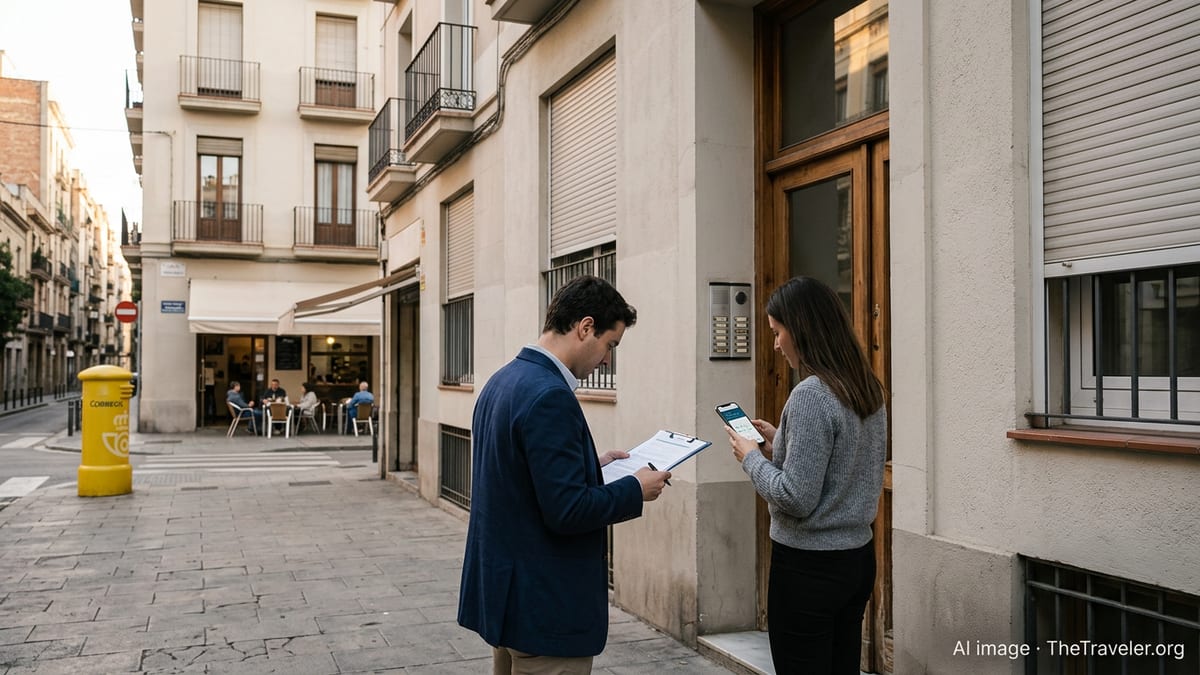
Strategic Overview of the First 90 Days
The first three months in Spain are best treated as a structured implementation project rather than an open-ended settling-in period. Most practical setup tasks are interdependent: opening a local bank account typically requires an identification number and proof of address, while certain contracts may require a Spanish bank account and phone number. Understanding these dependencies in advance helps avoid circular bottlenecks.
For most newcomers, the first 90 days can be divided into three operational phases. Days 1 to 30 focus on basic identifiers and address registration. Days 31 to 60 consolidate financial tools, digital identity, and utilities contracts. Days 61 to 90 concentrate on optimizing, documenting, and closing any remaining gaps such as updating records with employers, landlords, and service providers.
Timelines are not identical for every profile. EU citizens, non-EU residents, remote workers, and retirees will encounter different formal requirements, but the functional setup sequence is broadly similar: identity, address, bank, communications, and digital access. Treating these as a single integrated workstream is the most efficient way to become operational in Spain.
New arrivals should also be aware that Spanish public offices, banks, and utilities providers often work by appointment and may have limited opening hours. Allowing buffer time for cancelled appointments or missing documents is essential when planning the first 90 days.
Core Identifiers and Local Registration
Spain relies heavily on formal identification numbers and registers to link individuals to contracts, payments, and public systems. The most important identifier for foreigners is the NIE (Número de Identidad de Extranjero), a unique foreigner identity number used for tax, property, employment, and many administrative interactions. It is not a residence permit in itself but functions as a core reference in most systems.
Many transactions that are part of a first-90-days setup, such as long-term employment contracts, vehicle purchase, or property transactions, will typically request an NIE. Spanish and EU sources describe it as the standard tax identification for foreigners engaging in economic or professional activities in Spain. In practice, some banks and service providers can begin a relationship using only a passport, but often with the expectation that an NIE or residence card will be provided later.
Alongside an identifier, most newcomers will need proof of local address through municipal registration known as empadronamiento. Registration on the padrón municipal at the local town hall links a person to a specific address and municipality. It usually requires an identity document plus evidence of occupancy such as a rental contract or signed authorization from the primary tenant or owner. Recent guidance notes that the physical certificado de empadronamiento issued by town halls is frequently treated as valid for around 90 days, after which many authorities request an updated extract for new procedures.
For planning purposes within the first 90 days, the priority is not the long-term validity of records but simply obtaining initial registration and the first certificate. Many municipalities issue the empadronamiento certificate on the same day when applying in person, though online requests can take longer and vary by locality. Because rules differ between town halls, newcomers should verify local document lists and book appointments as early as possible after securing housing.
Banking and Payment Infrastructure
Functioning day-to-day in Spain becomes significantly easier once a local euro-denominated bank account is in place. Domestic transfers, salary payments, rental deposits, and many utility and insurance payments are commonly handled by SEPA direct debits from a Spanish IBAN. While some landlords and employers accept foreign accounts, this is not guaranteed and may create friction in the first weeks.
As of early 2026, Spanish and EU regulations require banks to apply stricter customer due diligence, particularly for non-resident and foreign clients. Sector guidance indicates that banks will usually differentiate between non-resident accounts and resident accounts, with the latter often requiring proof such as a residence card, NIE, or empadronamiento certificate. New arrivals purchasing property or planning long-term stays are commonly advised to open at least a basic non-resident account quickly, then convert or replace it with a resident account once documentation is complete.
Typical document expectations for a newcomer opening an account include a valid passport, tax identification from the home country, and some form of address evidence. Many institutions now also request proof of income, such as an employment contract or recent bank statements. Several banks offer online account opening for foreigners, sometimes with the condition that the customer visit a branch in Spain within a defined period, such as six months, to verify identity. Requirements, fees, and minimum balance rules vary significantly between banks and even individual branches.
Within the first 90 days, the objective is to secure: a functioning current account with a Spanish IBAN, a debit card usable at local terminals and ATMs, and clear information about monthly account fees and card charges. Since euro transfers within Spain and much of the EU are now typically instant and low-cost or free by law, the focus should be on account maintenance fees, card charges for cash withdrawals, and the bank’s familiarity with international clients. Maintaining a backup multi-currency or home-country account alongside the Spanish account is often practical to manage exchange rate risk and cross-border transfers.
Communications: Phone, Internet, and Digital Identity
Communications infrastructure is a central component of first-90-days setup because it enables interaction with banks, public offices, landlords, and employers. A Spanish mobile number is often requested when booking public administration appointments, confirming bank transactions, or activating online services. In some cases, it is not mandatory, but lacking a local number can complicate two-factor authentication and access to digital portals.
Mobile services in Spain are typically available via prepaid (prepago) or contract (contrato) arrangements. Prepaid SIM cards can often be purchased with a passport alone, which makes them a useful short-term solution during the first days. Postpaid contracts, particularly with bundled mobile and home internet, are more likely to request proof of address and a Spanish bank account for direct debits. New arrivals should expect that providers will store identity documents as part of regulatory obligations.
Fixed internet installation times can range from a few days to several weeks depending on provider capacity and the building’s infrastructure. For those working remotely, it is prudent to maintain redundancy in the first 90 days through mobile data, portable hotspots, or coworking spaces until home internet is stable. This is particularly important given that missed installation appointments or documentation issues can delay service activation.
Over the first one to three months, many newcomers also benefit from establishing a Spanish digital identity for interacting with public administration portals. In Spain, this is commonly done through systems such as a digital certificate or electronic identification linked to a national or foreign identity number. While acquiring such credentials may require prior registration as a resident, planning for this step in the first 90 days positions new residents to handle future procedures online instead of relying solely on in-person appointments.
Utilities, Services, and Everyday Logistics
Beyond banking and communications, everyday logistics in Spain rely heavily on structured billing and contract systems. Electricity, gas, and water may either remain in the landlord’s name or be switched to the tenant, depending on lease terms. Where contracts are in the tenant’s name, providers typically require identification, address documentation, and a Spanish bank account for direct debit. Connection or reconnection can take several days, which should be considered when scheduling move-in dates.
Streaming services, gym memberships, and many subscription-based services in Spain also favor or require SEPA direct debit from a local account. While some services accept international cards, using a Spanish debit card plus local billing details often reduces card verification issues and failed payments. Within the first 90 days, residents should maintain clear records of which services are linked to which accounts for easier troubleshooting.
Parcel delivery and registered mail are also tied to having a stable address and clear name information on mailboxes or building directories. Couriers in Spain may call a local mobile number before delivery or use building intercom systems that assume the resident’s name is correctly displayed. New arrivals should ensure that their names are clearly marked according to local practice to avoid repeated delivery failures during the critical early period when official letters and bank cards may be arriving.
Waste disposal, building rules, and community fees are localized and often communicated verbally or through building notices rather than formal documents. During the first weeks, new residents should proactively ask landlords, neighbors, or building managers about rubbish collection schedules, recycling rules, and any community-specific expectations to prevent misunderstandings or fines.
Prioritization Timeline for the First 90 Days
Given the number of interlocking tasks, a structured timeline helps ensure that critical items are not delayed. The following is a practical sequencing framework rather than a legal schedule, designed for functional setup.
In days 1 to 30, the focus should be on securing accommodation, obtaining or confirming a foreigner identity number where applicable, and registering on the municipal padrón. In parallel, residents should aim to acquire a Spanish mobile number, initiate bank account opening, and capture all documentation provided by landlords or employers. These actions create the base data points that most other systems will reference.
Between days 31 and 60, the emphasis shifts to consolidating infrastructure: finalizing a resident or non-resident bank account, activating home internet and other utilities, and enrolling in any mandatory or employer-linked systems that rely on bank and identity details. This is also an effective window to establish digital access to banking apps, service-provider portals, and, where possible, public administration online services.
Days 61 to 90 are best used to optimize and document the new setup. This includes confirming that all regular payments are functioning via direct debit, updating service providers and employers with any new identification numbers or address changes, and ensuring that contracts and account credentials are securely stored. It is also the moment to close any temporary arrangements used during the transition, such as prepaid phone plans or short-term financial products, once stable long-term solutions are in place.
The Takeaway
The first 90 days in Spain determine how smoothly a newcomer will function in the country for the medium term. Rather than treating setup tasks as isolated activities, approaching them as a linked sequence of identifiers, registrations, banking tools, communications, and utilities creates a more predictable outcome. The dependencies between these elements are significant and should shape the order in which steps are taken.
Spain’s reliance on formal identity numbers, municipal registration, and SEPA-based banking means that early progress in these areas has an outsized impact on everyday life. At the same time, practical variation between municipalities, banks, and service providers means newcomers should plan for some flexibility and allow time buffers, especially when appointments are required.
A disciplined approach in the first 30, 60, and 90 days allows new residents to move from ad hoc workarounds to a stable, locally integrated setup. With core systems in place and operating reliably, later questions about employment, longer-term housing, taxation, or other strategic decisions can be considered from a position of practical stability rather than administrative uncertainty.
FAQ
Q1. Do I need a Spanish bank account within the first 90 days?
It is not legally mandatory in all cases, but having a Spanish bank account early greatly simplifies rent payments, salary deposits, utilities, and service subscriptions.
Q2. How soon after arrival should I register on the padrón municipal?
Registration should generally be completed within the first few weeks after securing accommodation, as the empadronamiento certificate is often requested for other procedures.
Q3. Can I open a Spanish bank account without an NIE?
Some banks can start non-resident or basic accounts using a passport, but many will request an NIE or similar identifier within a set period, so early planning is advisable.
Q4. Is a Spanish mobile number essential during the first months?
While not always legally required, a Spanish mobile number is highly practical because banks, public offices, and delivery services often use it for verification and contact.
Q5. How long does it usually take to get home internet installed?
Installation can take from a few days to several weeks depending on provider capacity and building infrastructure, so contingency plans for connectivity are recommended.
Q6. Should I switch utilities into my name in the first 90 days?
This depends on the lease. If contracts remain in the landlord’s name there may be no need, but where required, switching should be done early to avoid service interruptions.
Q7. Are prepaid SIM cards sufficient for the first 90 days?
Prepaid SIMs are usually adequate initially and easier to obtain. Long-term contracts can be arranged later once a bank account and proof of address are established.
Q8. How important is a digital certificate or online access to public services in the first months?
It is not always required immediately but acquiring digital access during the first 90 days positions new residents to handle future procedures more efficiently.
Q9. What documents should I keep organized during the first 90 days?
Key documents include passport, rental contract, empadronamiento certificate, bank details, employment or income evidence, and all signed service contracts and confirmations.
Q10. What is the biggest practical risk of poor setup in the first 90 days?
The main risk is administrative bottlenecks, where missing identifiers or accounts delay employment formalities, utilities, or payments, creating avoidable disruption and stress.